Category Archives: Birds

A couple reasons to see St Marks NWR

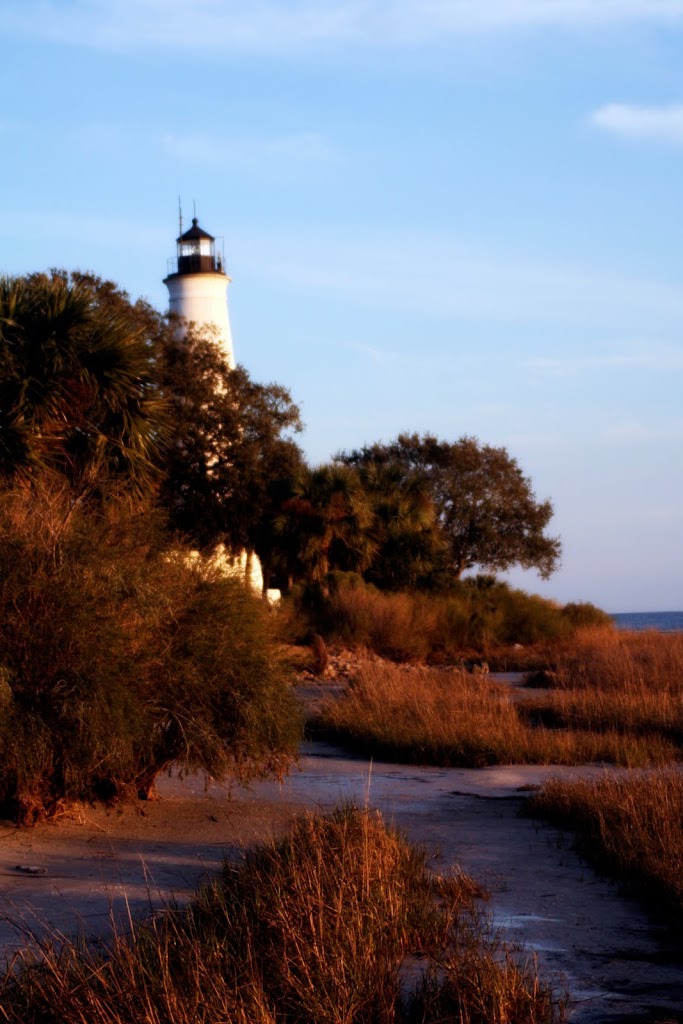
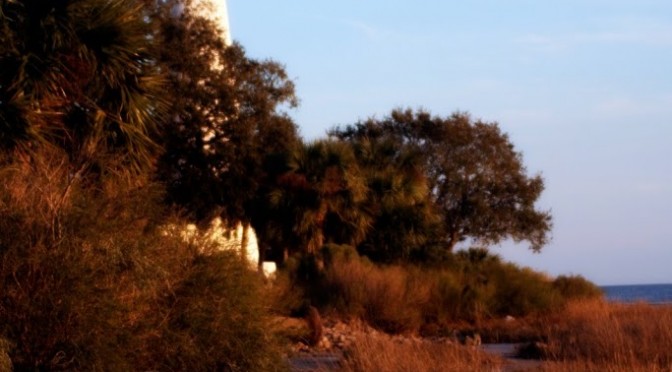
Reason #1: There was a blizzard raging back home in NJ when I took this pic of the lighthouse at St. Marks… I was barefoot with my toes in the muck.

😉

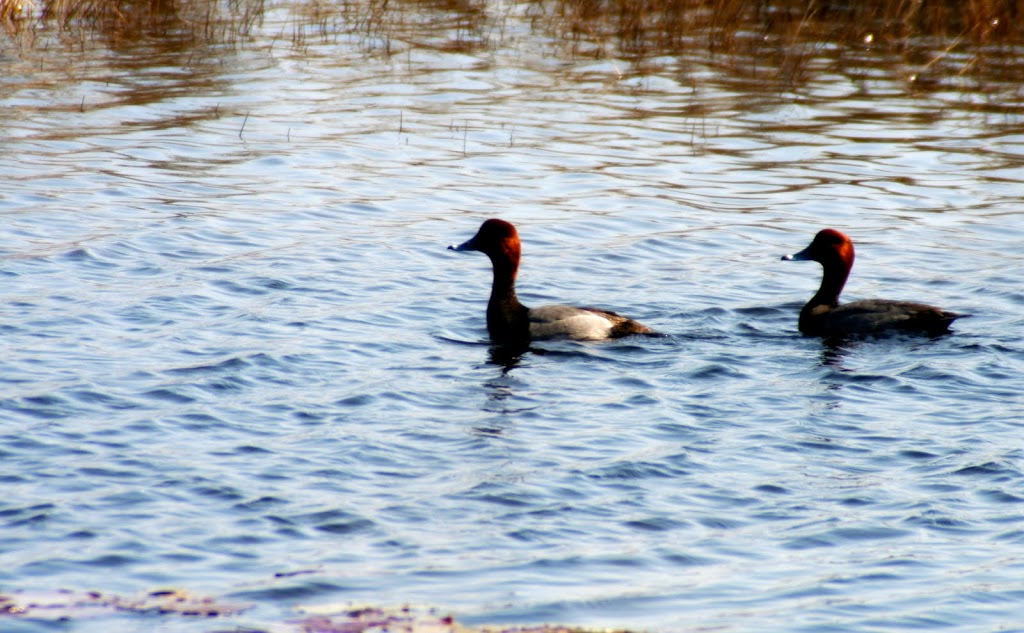
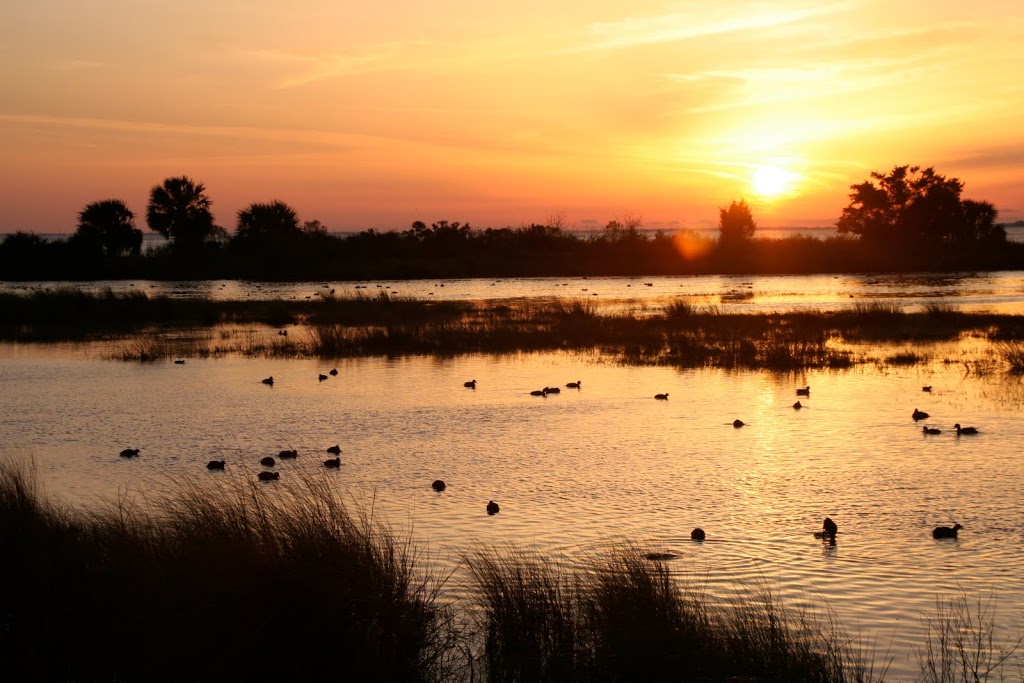
Reason #2: More Redheads than a person could easily count. Jay from birdJam (Hi Jay!) has been talking up St. Marks for ages, but I hardly believed anyplace could have better ducks than NJ. Granted, there wasn’t the variety that I’m spoiled with in NJ, but I didn’t have to freeze my butt off to see these ducks, either.

There is something very magical about seeing “winter ducks” with tree swallows twittering low above their heads.

😉

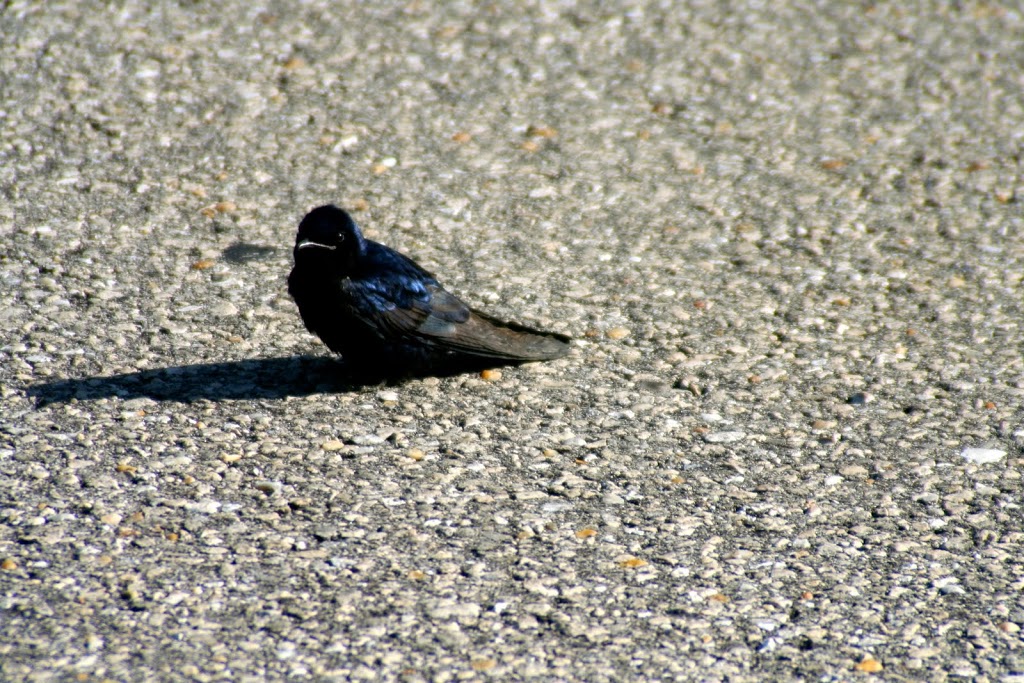
Reason #3: Purple Martins in February!

I’ve hardly seen a Purple Martin sit still, let alone bask on the blacktop for warmth… they all looked pretty miserable because it was so cold for a Florida winter.

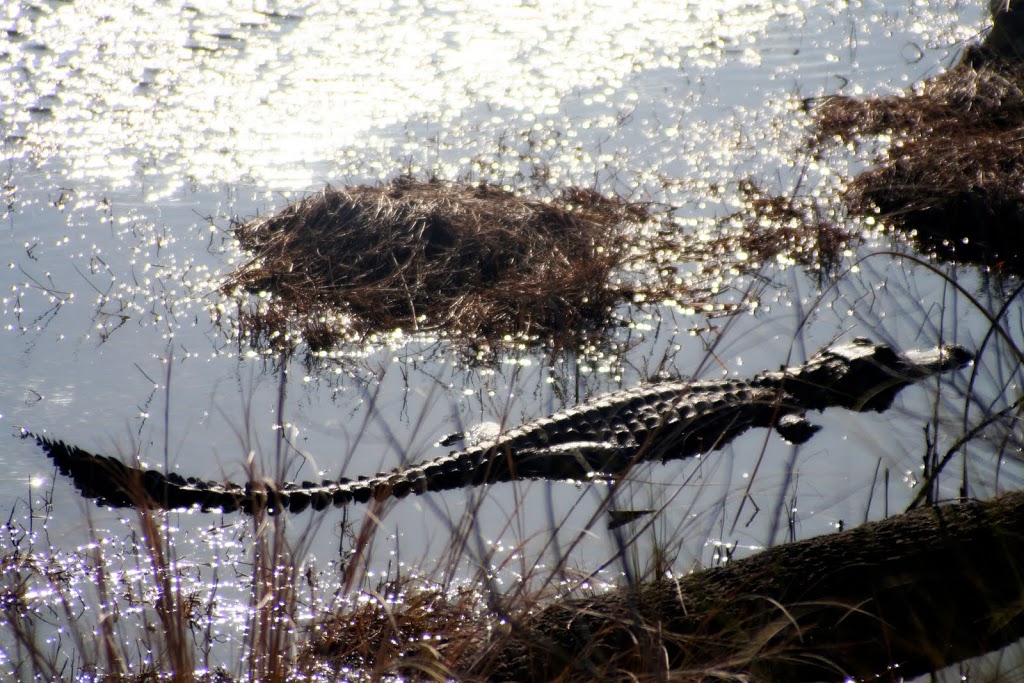
Reason #4: Alligators… alligator awareness must be a learned habit. I had to keep reminding myself of their possibility… I’m pretty sure the gators at St Marks serve as an efficient population control for all the Coots that winter there.

😉

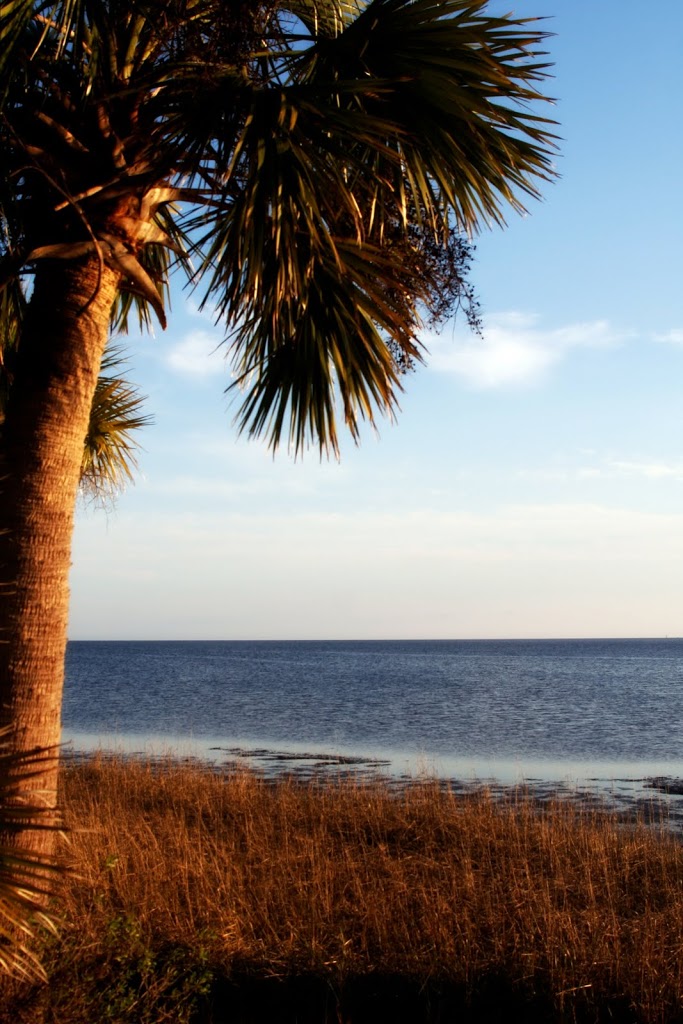
Reason #5: Palm tree-inspired views… every so often a small squadron of Brown Pelicans would interrupt the horizon and my daydreaming. White Ibis and Tri-Colored Herons were a treat, too.

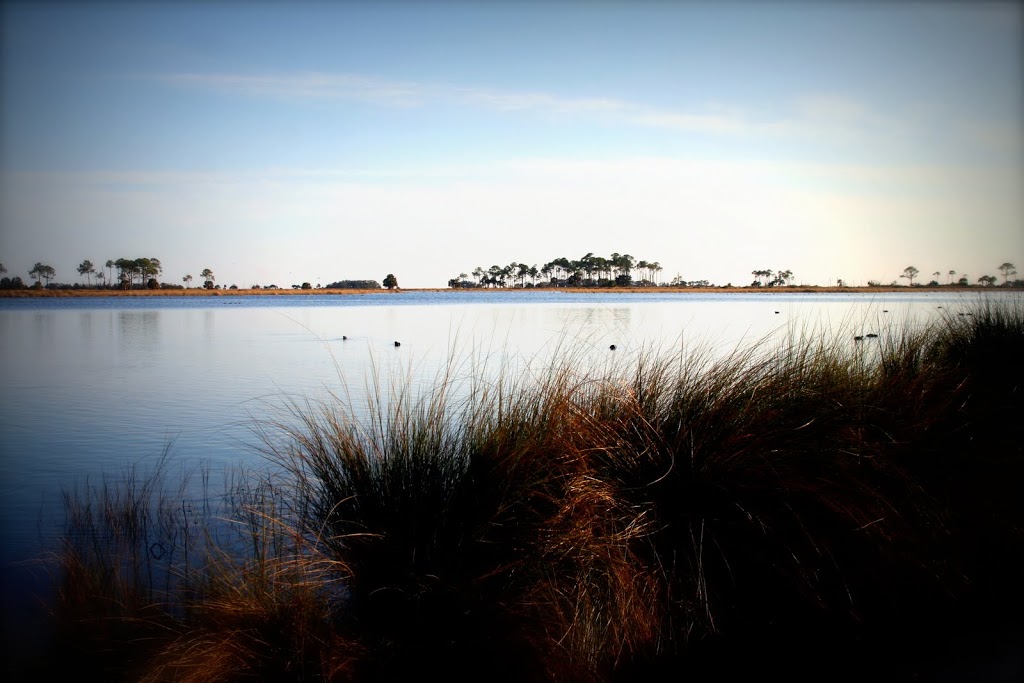
Reason #6: St. Marks is just a beautiful place, especially so in mid-winter at sunset.

I wrote more about my visit to the refuge here and here and here and here.

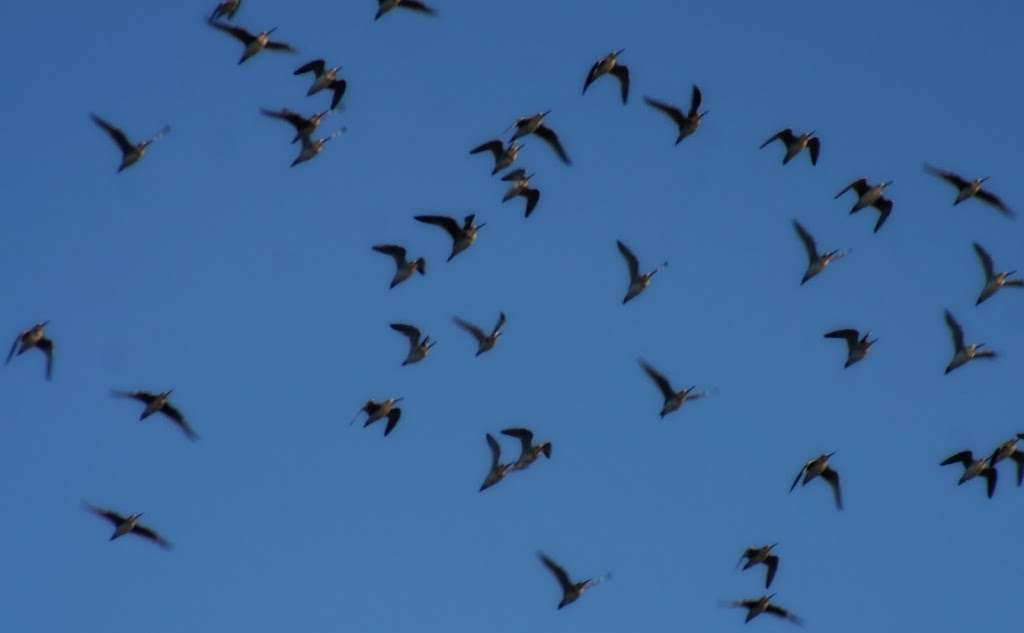
Bad bird photo of the week

Longish bills, pale bellies, dark wings, chunky birds… um… um… dowitchers?

I really have no clue and know better what they’re not, which doesn’t help much.

St Marks NWR held a fair number of shorebirds which I mostly ignored in favor of the ducks – no surprise there! Shorebirds are just baffling and I’m almost at the point that I’m ready to tackle them, but don’t know where to begin. I have probably all the books, but wonder if someone can recommend which of them is best.

A dream of cranes

Just once we thought we’d caught a glimpse of white from the horizon, from that far edge between palm trees; a ripple of movement and a rising, the sound of rushing wings and bugled calls: a dream.

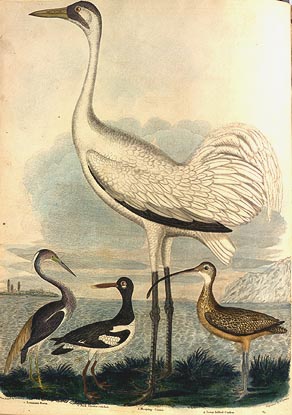
For centuries, cranes have evoked a strong emotional response… their behavior, unique calls, graceful movements, and stately appearance have inspired art, mythology and legend in cultures around the world.

Their tall, angular figures, made up of so much wing, leg, neck, and bill, counterpoised by so little body, incline the spectator to look upon them as ornithological caricatures. After balancing himself upon one foot for an hour, with the other drawn up close to his scanty robe of feathers, and his head poised in a most contemplative attitude, one of these queer birds will suddenly turn a somersault, and, returning to his previous posture, continue his cogitations as though nothing had interrupted his reflections.
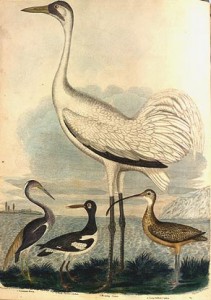
With wings spread, they slowly winnow the air, rising or hopping from the ground a few feet at a time, then whirling in circles upon their toes, as though going through the mazes of a dance, Their most popular diversion seems to be the game of leap-frog, and their long legs being specially adapted to this sport, they achieve a wonderful success. One of the birds quietly assumes a squatting position upon the ground, when his sportive companions hop in turn over his expectant head. They then pirouette, turn somersaults, and go through various exercises with the skill of gymnasts. Their sportive proclivities seem to have no bounds; and being true humorists, they preserve through their gambols a ridiculously sedate appearance.

–Nathaniel H. Bishop,
Four Months in a Sneak-Box, 1879
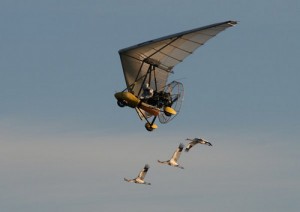
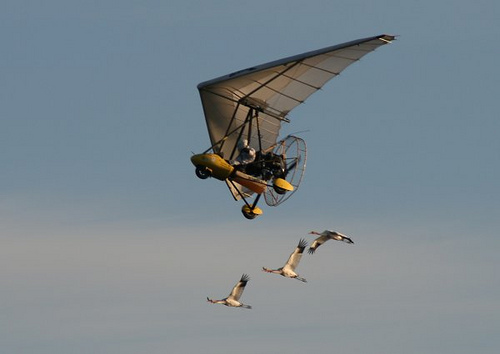
Whooping Cranes exist, now, perilously close to extinction. Various public and private organizations are doing improbable things to rescue them from that sad fate. Cranes historically wintered at only one location: Aransas NWR in Texas, which leaves the entire naturally-occurring population of Whooping Cranes quite vulnerable to disaster. Recovery efforts have thus focused on establishing a second Eastern population of Whoopers that breeds and winters in a separate location. In Florida, I got the chance to meet the ultralight pilot who, as part of Operation Migration, flew a group of twenty cranes from Wisconsin to St. Mark’s NWR and Chassahowitzka NWR to spend the winter there. I also learned (a bit too late!) that the likelihood of seeing a Whooper there is small, as they are secluded away in a far corner of the refuge.

So be it… it’s enough to know that these birds still live in wild places, far beyond the reach of my vision.

For the Whooping Crane there is no freedom but that of unbounded wilderness, no life except its own. Without meekness, without a sign of humility, it has refused to accept our idea of what the world should be like. If we succeed in preserving the wild remnant that still survives, it will be no credit to us; the glory will rest on this bird whose stubborn vigor has kept it alive in the face of increasing and seemingly hopeless odds. –Robert Porter Allen

I’d love to hear your stories of Whoopers, if you have any.
IATB #119: The Cult of Birds

“The observation of birds may be a superstition, a tradition, an art, a science, a pleasure, a hobby, or a bore; this depends entirely on the nature of the observer.” –James Fisher

There was no particular motive that spurred me to buy binoculars and a field guide; I simply found myself doing so one day. In this same “why not give it a try” manner, I found myself walking beside long-abandoned railroad tracks a few weeks later on my first organized bird walk. My epiphany about birds occurred that day in the form of an Indigo Bunting. The unfamiliar binoculars were more of a handicap than a useful tool, but once I managed to find a bird with them and achieved focus, my field of vision was entirely occupied by the peculiar blue of an Indigo Bunting. Time seemed to stop and it felt as if the world contained only that bird of otherworldly blue and me. This is the magic that birding holds for us, I think; that loss of self-consciousness and the greater perception of the other in our lives. My instinct that first day was, and still is, to bow down and pay homage to the presence of the wild around me.


I once read an article that suggested, perhaps tongue-in-cheek, that birders, rather than being immersed in a sport, or a simple game of recognition, or some benign form of hunting and collecting, are instead involved in something strange and archaic, something more like a pagan religion than a hobby: a cult of bird worship, a theology inspired by the natural world. While none of us actually worship birds (at least I don’t think any of us do!) an examination of our various rituals, from the casual to the most fanatic among us, might lead to an understanding of our reasons for watching birds. There are many reasons, probably as many reasons as there are people who do it, just as there are countless levels of experience or devotion to the craft of it.

Ornithologists are at the top of this hierarchy for having devoted a lifetime to bird study; their admiration leading, perhaps, to reverence at the exquisite subsong of a grey shrike thrush, a suspenseful discussion of the intricate details of empid flycatcher identification, scholarly presentations on the evolution of flight, frigatebird mating secrets, sparrows with sherpa-like abilities, humorous accounts from the field about recording seabirds as they perform a “kazoo opera” from an island in the middle of the Indian Ocean, reflections on dew bathing among birds under drought conditions or pondering the variety of birds attracted to a fruiting shrub… this form of bird worship causes the more garden-variety among us to stand in awe in the presence of such piety and expertise.


Only slightly less devout are the enthusiasts who keep not only life lists, but year,
world, month, country, trip, state, day, competition, day-after-competition, pond, yard and seen-while-driving lists.

Yes, I’m poking mild fun at listers.


😉

I respect those who keep careful lists and thus help the serious study of birds. I shy away from it myself, however, because I continue to believe that a solitary way of seeing birds is the most enriching. Each of us has a unique way of experiencing the world that reflects the multitude of events that make each person’s life story different from another’s… the almost sacred revelations that come in odd ways and that may seem trivial or meaningless to the non-birder. These experiences of the sacred may be sung, chanted, danced, put into a poem, shared with children or embedded in stories.

Something like a right of passage occurs, though, in this transition from novice to communicant in the keeping of lists, I think. Some of us find ourselves obsessed with a particular species; owls for example, or ravens, maybe the birds that frequent a particular backyard tree; the obsession may also manifest itself in the care of injured eagles on our lunch hour or in the daily routine of a raptor educator.


By necessity, birders become
specialists in categorizing the birds they see and must develop the virtues of careful observation and ruthless honesty by which a species may be legitimately added to one’s list. And while sightings often occur to individuals, birders do form a unique community of shared experience. It is this sense of community that teaches us to see, to feel and to act in a reverential manner and to understand the frustration a birder feels when birds aren’t where we hope to find them.

I imagine the most fanatical among us drifting off to sleep with visions of 700 birds for their ABA year list or traveling to far-flung locations, visiting newly-restored wetland habitats on the other side of the world, rising at dawn to stand in a freezing cold Minnesota bog, visiting malarial swamps, the tropics (only to see familiar birds in an unfamiliar place), or heaven-forbid New Jersey of all places… so long as there are birds to see. This level of devotion to birds may come at a high expense to one’s personal relationships and provoke heartfelt appeals for the conservation of bird species.


I’m not sure where I would place myself among this hierarchy of birders… I’ve never traveled to a tropical rainforest or studied bird skins, but I have held the feathery spirit of an Ovenbird while it was being banded and sat contentedly for hours while a pair of Orioles built a nest in my backyard. I can distinguish the song of a Pine Warbler from that of a Chipping Sparrow, usually. I’ve slept in a cold and damp tent in the Blue Ridge Mountains happily serenaded by Whippoorwills and crawled on my belly in the sand of countless beaches hoping for a masterpiece photograph of a Sanderling, sidelit by a warm September sun. All of which feels very much like the telltale signs of a fully-fledged birder. Most of my experiences with birds are deeply personal and so ineffable and idiosyncratic that I don’t often know how to talk about them, but I try here on this blog to understand the ways I’m changed by these encounters with birds and the natural world.

I think what makes this cult of ours unique is our susceptibility to be awed by the world around us and our inclination to celebrate that awe with others. We know well the joy that is revealed in pursuit of what is beautiful and sacred. Birds can lead us to reverence for all life and the grace of seeing the extraordinary in the everyday.


– – – – – – – – – – – – – – – – – – – – – – – – –

Thanks to everyone who sent submissions for this edition! Direct links to their posts are below, in the order in which they’re used in my rambly essay. There are some really fabulous bird blogs out there – please visit a couple new ones today! Deb is hosting the next I and the Bird at Sand Creek Almanac on 3/4/10.
– – – – – – – – – – – – – – – – – – – – – – – – –
IowaVoice.Com – Eagle Flying Over River ** Listening Earth Blog – Subsong of a Grey Shrike Thrush ** Living the Scientific Life – Mystery Bird: Least Flycatcher, Empidonax minimus ** Round Robin The Cornell Blog of Ornithology – Live from the 2010 Ornithological Conference in San Diego and Field Report: Birds that Sound like Kazoos ** Birds Etcetera – Drought and Birds: Dew Bathing ** Ben Cruachan – Ripe Fruit ** Photo from The House and Other Arctic Musings ** The Hawk Owl’s Nest – Puerto Rico Day 1 & 2 ** Sycamore Canyon – Big January 2010 Photo Essay ** Count Your Chicken! We’re Taking Over! – Trinidad and Tobago Day 10: Part II: Rufous-tailed Jacamars ** From the Faraway, Nearby – It’s a Nice Day for Some White Birding ** Picus Blog – Bloggerhead Kingbird Wrap-up Post ** A DC Birding Blog – Scoping for Seabirds ** Nature Knitter – FeederWatch Wednesday ** Somewhere in NJ – Sea dog, jetty birds and the distance ** Xenogere – Bad birds of Aransas ** Microecos – Aeronauts ** Search and Serendipity – Purple Martins in Snow and 100,000 blackbirds ** Wanderin’ Weeta – Blue summer, green spring ** Coyote Mercury – Hummingbird Heading Out to Sea ** Behind the Bins – Still in Winter’s Icy Grasp ** The Nutty Birder Blog – Lakefront and Eagle Creek ** The Miss Rumphius Effect – Thematic Book List For the Love of Birds (Poetically Speaking) ** Beginning to Bird – Rio Grande Valley, Birding Day 2 ** Woodsong – Wowed by Owls ** It’s Just Me – Sharing the Air ** Nature Remains – Buckeye Birds ** Bird TLC – How about a transfusion for lunch? ** Susan Gets Native – Some time on the scale, everything you ever wanted to know about raptor poop but were afraid to ask, and Lucy plays a game ** Photo from Vickie Henderson Art ** Vickie Henderson Art – Florida Scrub Jays A Specialist Species ** Recycled Photons – The Obvious, Unseen ** Andy Gibb: Twitching with Transformation – Good News, Bad News ** The House and other Arctic Musings – Best GBBC twitch, ever ** My Life with Birds – Dispatch from Space Coast Day One ** The Greenbelt – Anchorage Corvids ** 10,000 Birds – Riding the Ecoroute ** Peregrine’s Bird Blog – WWT Castle Espie ** Hasty Brook – Sax Zim Bog Winter Birding Festival ** The Drinking Bird – Guatemala: Familiar Birds in Unfamiliar Places ** Ohio Birds and Biodiversity – Return to Joisy ** Birdchick.com – Dear Non Birding Bill ** The Birder’s Report – California Department of Fish and Game Exposed: Burrowing Owl Guidelines Suppressed ** Anybody Seen My Focus? – Great Blue Heron (Ardea herodias) ** Photo from From the Faraway, Nearby

The next IATB

IATB #119 is here next week sometime… the 18th to be exact.

😉

I need to get a handle on this, I think.

(mild panicking)

THE bird blog carnival is coming to Somewhere in NJ.

(deep breath)

I’ve studiously avoided it for years, but it’s my turn, now.

(another deep breath)

If I’ve not contacted you directly to ask for a submission, it’s only because I don’t have an email addy for you. So I’ll make it easy… send me something wonderful and birdy (by 2/16) at lc-hardy@comcast.net

(please!)

I’d like something vaguely poetic or literary or rambling…

(typical of what you mind find here)

😉

The current edition of IATB, # 118, is up at Ben Cruachan’s Blog.

Have a look and thanks.

😉

Of owls and seeing

Pete Dunne tells the story (and I like to repeat it) that one must be pure of heart to see most owls. He was speaking specifically of a particular barn owl that was purported to roost in a hacking box at Brigantine Wildlife Refuge years ago. At the time, I suspected his tactic was common among field trip leaders; an excuse for failing to produce an owl for a group of disappointed birders after having stood around in the freezing cold for hours, waiting.

In the intervening years, since having waited many times in the freezing cold for my own fair share of owls, I’ve come to understand the truth in Pete’s story. Owls are the stuff of imagination. Seeing these keepers of shadow requires exploring the edges of light… if one fails at it, the fault lies not in the seeing, but instead with one’s way of looking.

I’ve been sort of surprised in the last couple years to discover that I’m having trouble spotting birds… my distance vision is deserting me to the point that before long I’ll have to wear glasses when birding; glasses that I’ve stubbornly (and vainly) refused to wear anytime other than when I drive. I’ve become a dedicated listener instead: birdsongs I don’t recognize or can’t identify will drive me to distraction, but songs or calls help with only the easiest of owls.

Just as the omnipresence of noise makes it difficult to distinguish any one singer in the dawn chorus, the profane in a grove of pines can fill every nook and cranny of our time and space; the fertile silence that makes looking (and really seeing) is easily lost. When spotting owls, the looking is an art. Without true attention to it, an integral part of the reverence is destroyed… only the pure in heart are granted sight.

(Or you have a friend along who’s better at it.)

I was distracted with the trees and the pellets and the scattered bits of bone and feathers, the place this little forest made around me; no two trees the same, every branch saying HERE. I couldn’t stand still and let the trees (or the owls) find me.

It is the moon
not the finger
pointing at the moon
that calls us
back to ourselves


*Long-eared owl, regarding its own darkness in a well-known secret communal roost in Pa.

Swift hawk, Striker

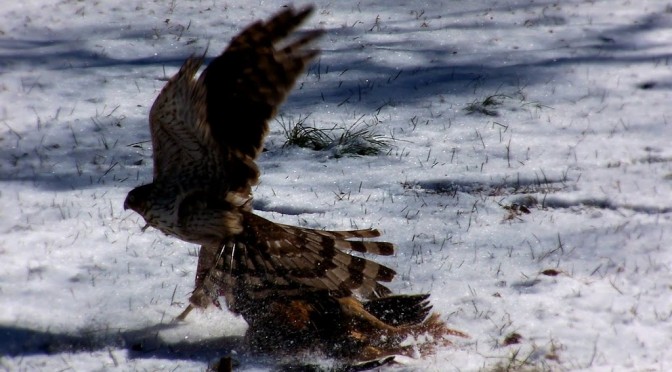
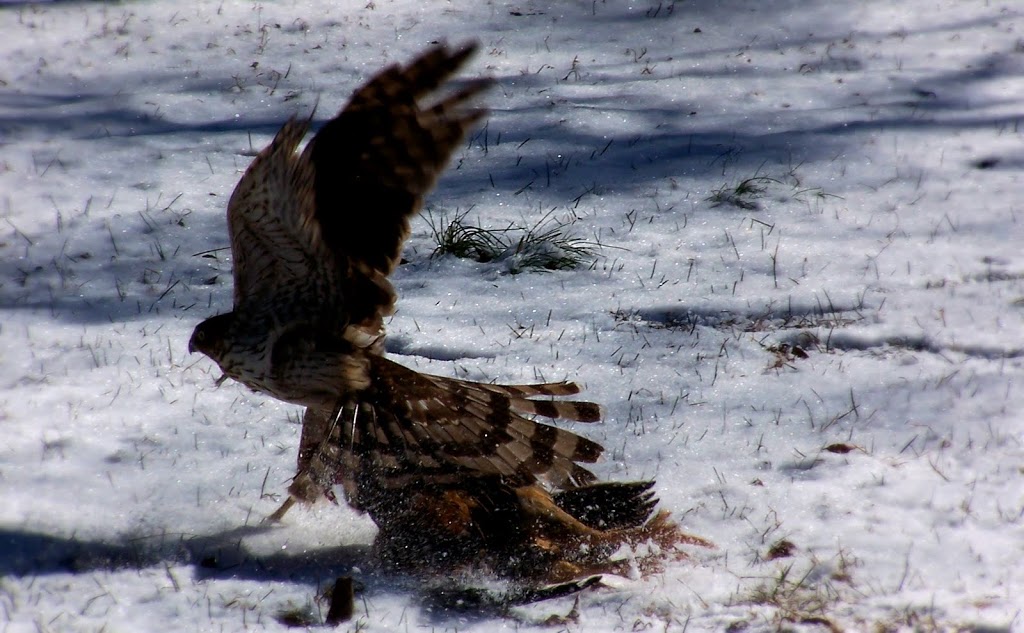
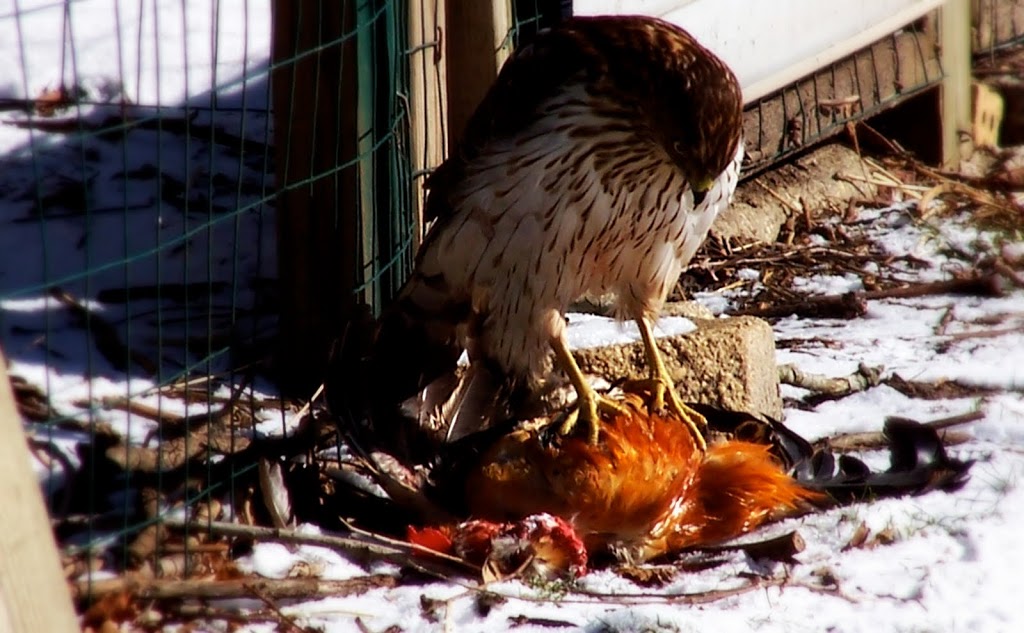
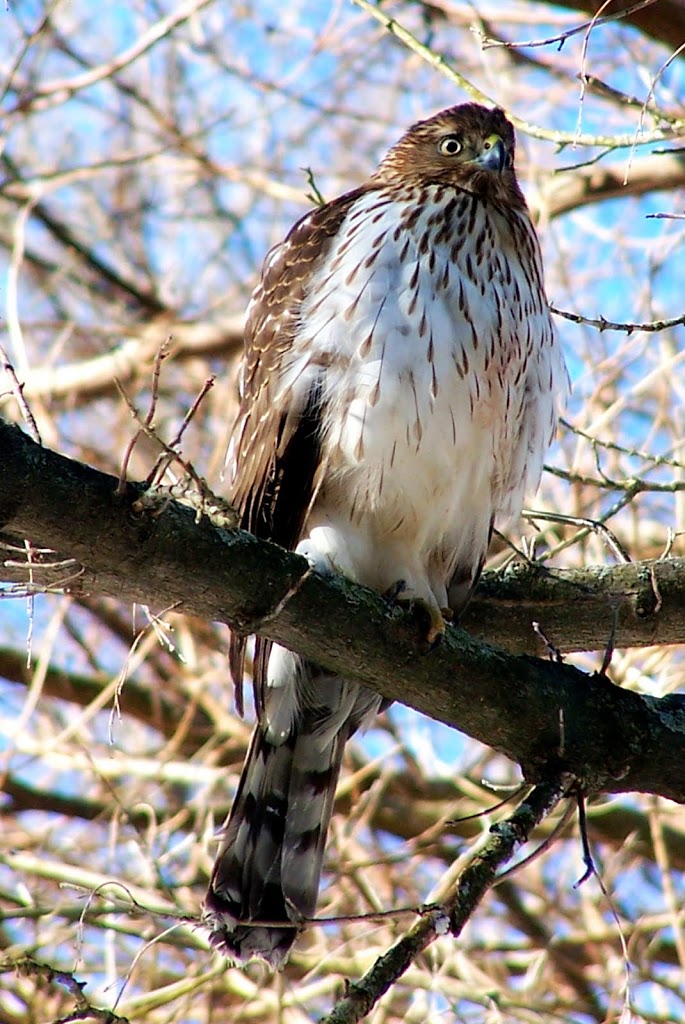
“The resemblance between Cooper’s Hawk and the Sharp-shinned is not confined to color, but extends to habit, the Cooper being, if anything, because of its superior size, fiercer and more destructive. It will dash into the farmyard like a bolt, passing within a few feet of individuals and carrying off a young chicken with incredible swiftness.”

“The attack is accomplished so suddenly that, unless the gun is in hand, the robber always escapes. There is no time to run even a few yards for a weapon – the thief is gone before it can be reached. If there is plenty of thick cover in the run, the chickens will often escape, especially the more active breeds, like Leghorns. At my home, I have repeatedly seen them strike, but as the foliage is dense and brushy they have invariably been unsuccessful in securing the quarry. In four years we have not lost a chicken by Hawks.”

An idea, maybe, Kev?

“Cooper’s Hawk is preeminently a “chicken hawk” and is by far the most destructive species we have to contend with. Although not so large as the Goshawk, it is strong enough to carry away a good-sized chicken, grouse, or cottontail rabbit. It is especially fond of domesticated Doves, and when it finds a cote easy of approach or near its nesting site, the inmates usually disappear at the rate of one or two a day until the owner takes a hand in the game.”

How field guides have changed in 90-some years!

Hawks, however, haven’t changed in all those years. Late winter is lean for them and they’re getting desperate. Backyard chickens make for an easy meal. I’m glad my brother saves his ire for the woodchucks that raid his garden and reaches for his camera when Cooper comes-a-calling, rather than a weapon.

Reference info from Birds of America, first published in 1917.

All pics by the Reluctant Chicken Farmer.

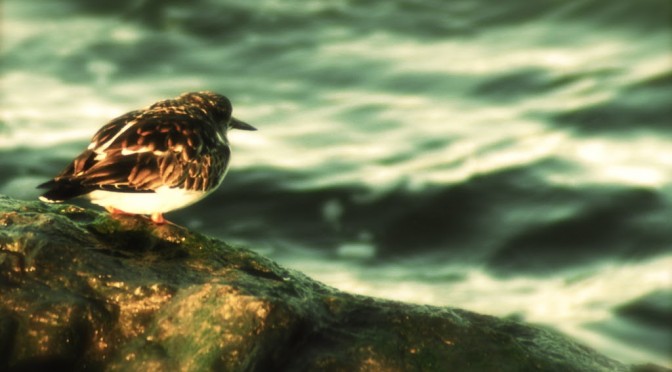
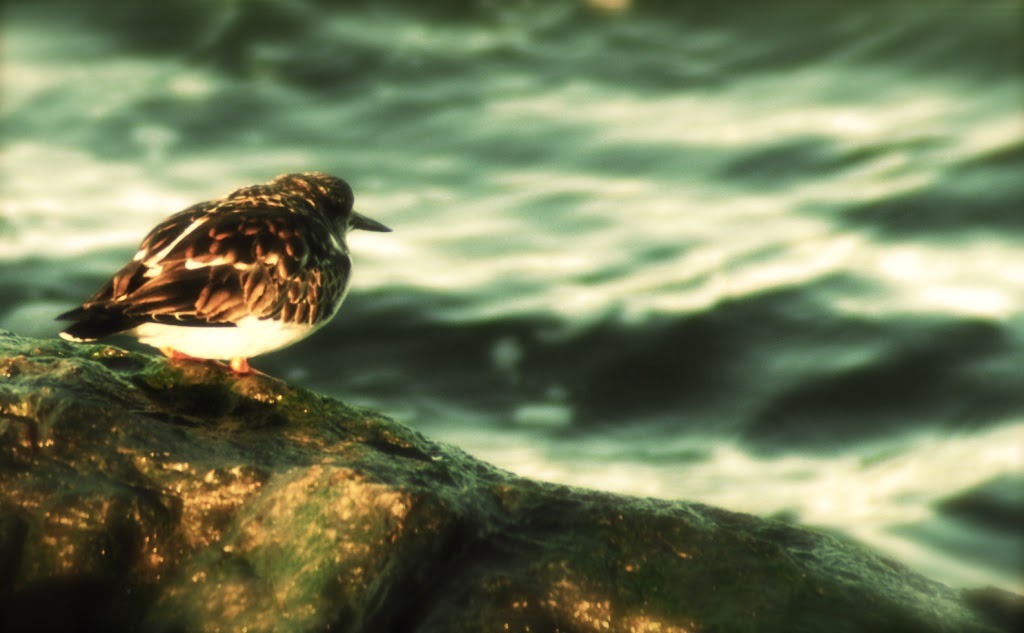
Ruddy turnstone

Other names: Sea dotterel; Sea quail; Sand-runner; Stone-pecker; Horsefoot snipe; Brant-bird; Bead-bird; Checkered snipe; Red-legs; Red-legged plover; Chicken plover; Calico-back; Calico-jacket; Sparked-back; Streaked-back; Chuckatuck; Creddock; Jinny; Bishop plover.

… I had an exceptional chance to watch… The select company was “one little Turnstone and I,” the latter armed with binoculars, the former too busy to notice intruders. He was a fine gentleman, dressed in the gaudiest calico possible for the fall fashions, yet not too proud to work for his supper. His method was not unlike that of the proverbial bull in the china shop, for he trotted about, tossing nearly everything that came in his way. Inserting the wedge of his bill under a pebble, a shell, or what not, he would give a real toss of his imperious head, and flop over it would go. His efforts seemed to be well rewarded, for he fed there for some time. It is in search of such prey that the turner of stones operates, a cog in the wheel of the system of nature, which decrees that every possible corner and crevice of the great system shall have its guardian, even the tiny spot of ground beneath the pebble on the beach.

Info from Birds of America, first published in 1917 and which includes color plates of Louis Agassiz Fuertes’ paintings. Said book made for good company this evening.

– – – – – – – – – – – – – – – – – – – – – –

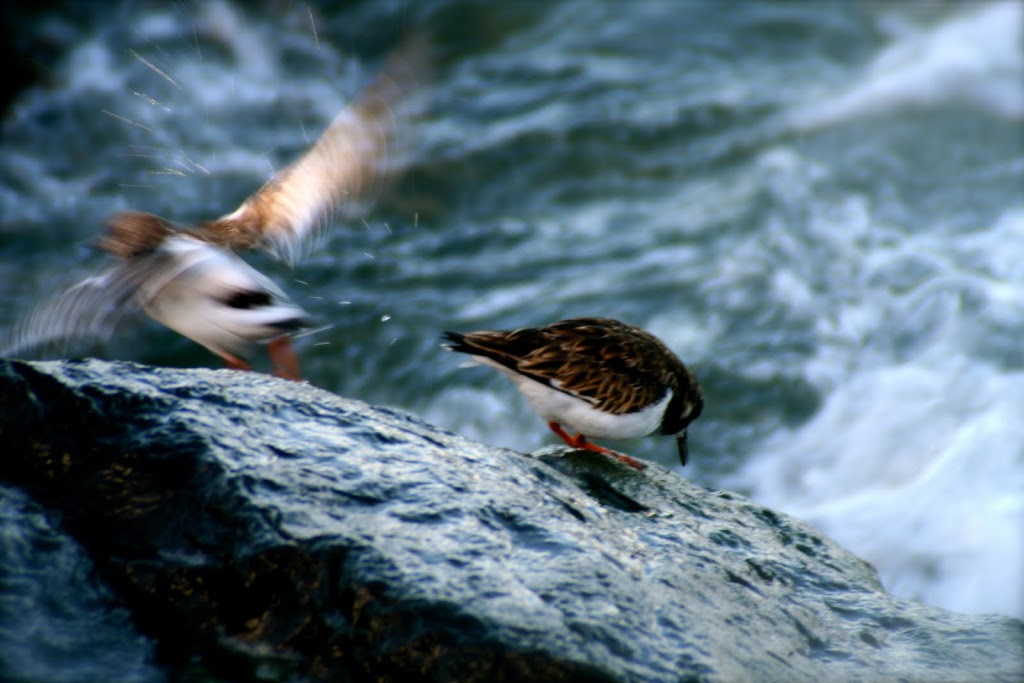
The Turnstones were not so much trotting about as they were, instead, slip-sliding along the jetty rocks yesterday while they fed. There were no stones to be turned; in fact I wondered just what they were finding edible among the waves.

Sea dog, jetty birds and the distance

A return trip today to Barnegat Light with the Monmouth County Audubon Society was graced by many of the same species as last week’s visit, plus a new one!

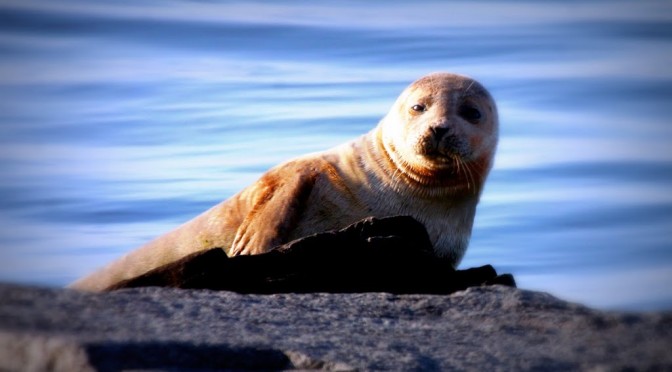
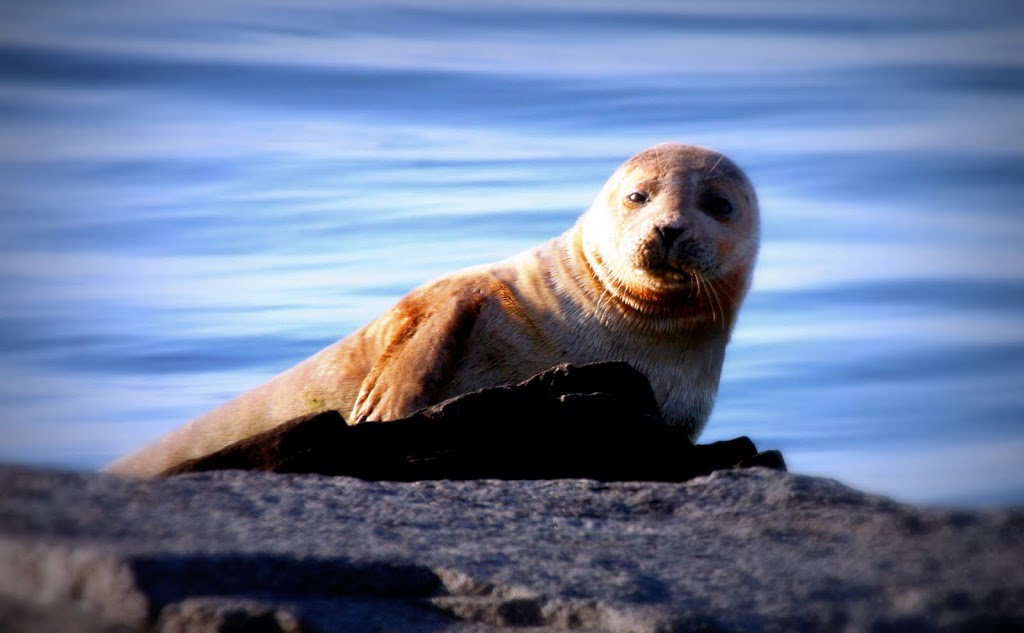
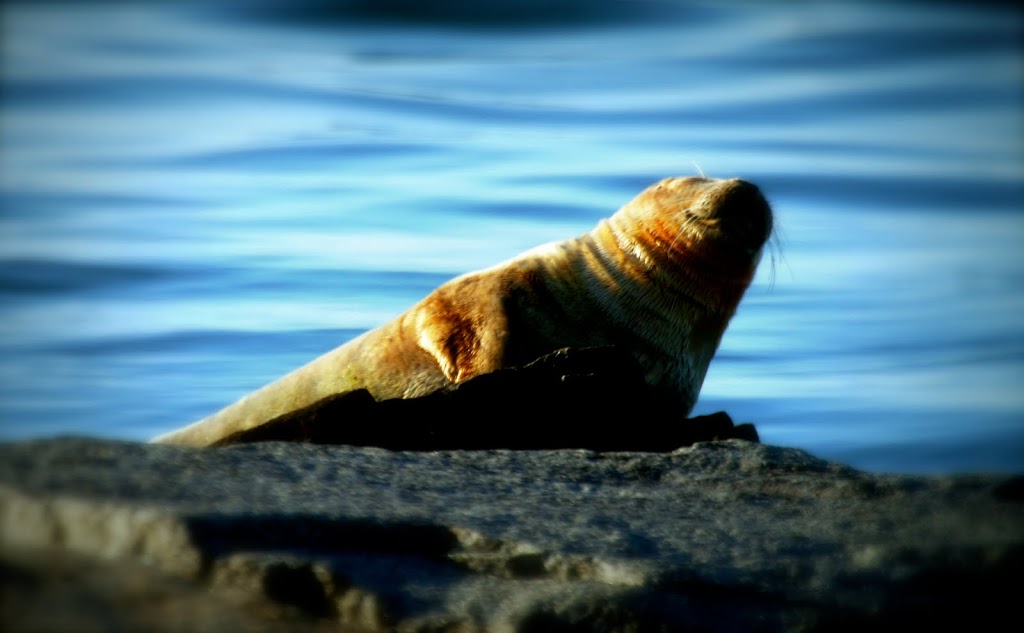
This harbor seal had hauled itself up onto the rocks of a small jetty behind the lighthouse to rest and soak up some sun, much to our delight. They’re fairly common here in winter, but this is the closest I’ve ever seen one. They have small rounded heads and whiskered snouts, but it’s their huge and soulful eyes that establish the resemblance with a more blubbery version of man’s best friend.

Click for whisker views!

It was really sweet to watch it nearly tipping off the rocks as it napped! The seal seemed well aware of, yet unconcerned with the group of admirers that had gathered at the base of the lighthouse to watch it.

Many thanks to Steve for letting me use his big lens for these closer-up views.

High tide and a heavy surf had rearranged the sea ducks and shorebirds in new patterns. The jetty was impossibly dangerous today… so hardly any harlequins were within view, but the crashing waves beyond the jetty were black with ducks!

😉

There were big numbers of long-tails and lots of scoters (black and surf) close within the inlet, disappearing and reappearing behind the swells… a real treat! I also saw quite a few common eiders looking just like the field guides say they should… sweet!

(Of course there’s no pictures… I wasn’t about to climb up on the jetty and get soaking wet or worse.)

The purple sandpipers, dunlin, ruddy turnstones and a lone sanderling were mostly feeding on the lee side of the jetty… out of the wind and the crashing waves. They’re all so inconspicuous somehow, looking like nothing more than jetty rock, until you realize that the rocks are moving and alive with birds.

– – – – – – – – – – – – – – – – – – – –

I often wonder why in the world I do this… why I stand out in the cold until my hands and lips are numb… just to see birds that I’ve seen any number of times before in much less awful conditions?

It’s mostly ritual, I think, like waiting for woodcock in an early spring dusk or estimating the number of swallows that might rise from the phragmites at North Pond on a late summer dawn.

What’s not often mentioned among birders is the time spent scanning the horizon, that distant magic place where sky and sea or sky and land converge to ignite the imagination. The time spent looking at nothing. You have to be patient when you look there. You might not see anything new… or see anything at all, but you have to look and wait, just in case.

Some people don’t ever want to look into that distance. Some people won’t tolerate the discomfort of it.

(Wimps!)

Sometimes the best thing I find while scanning that distance is inside me, anyway.