Category Archives: Birds

World Series Day

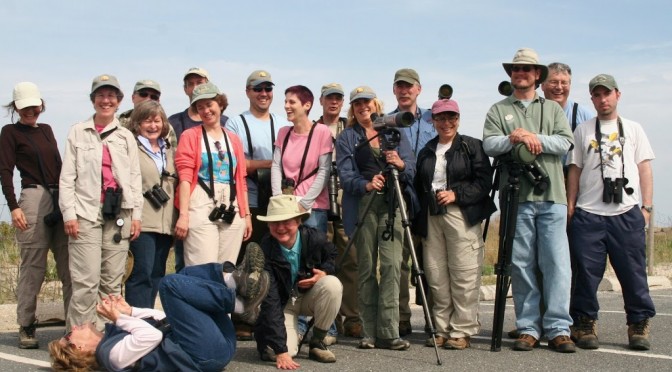
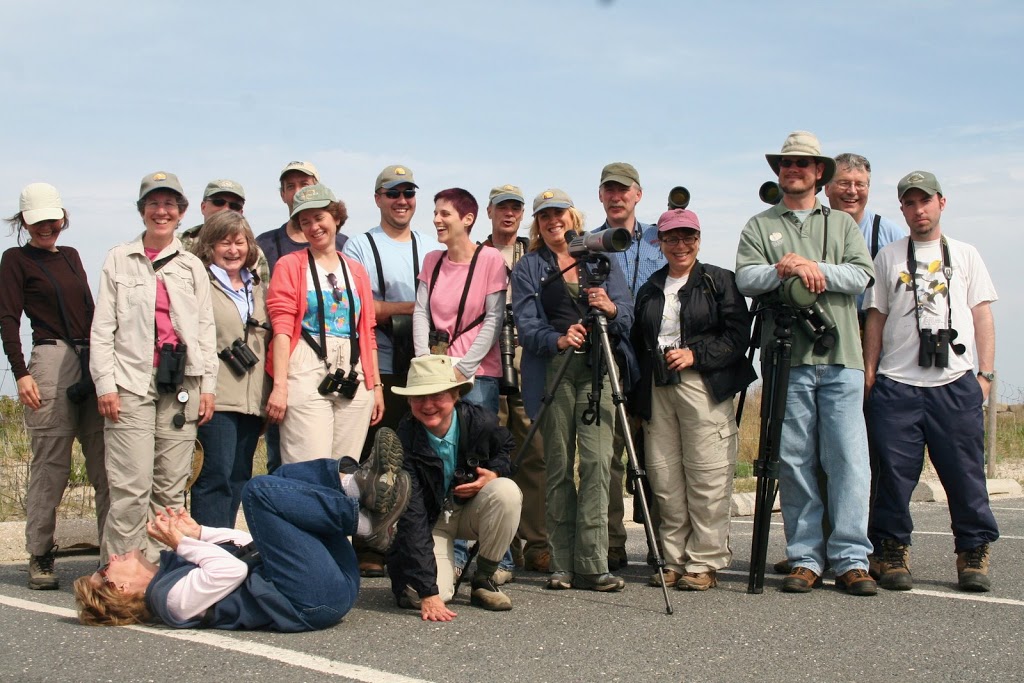
Sandy Hook Century Run Team 2009

(except for the ones who bailed out before 5 pm.) Note Linda in front in dead bug posture.

We had a fantastic day and ended with 134 species! Wow! What I love about Sandy Hook, and what I guess I missed birding in W. Va. is variety and the chance to witness migration as it happens.

There were Palm Warblers in every beach plum

and Clapper Rails that played hide-and-seek all day long

cooperative Cuckoos

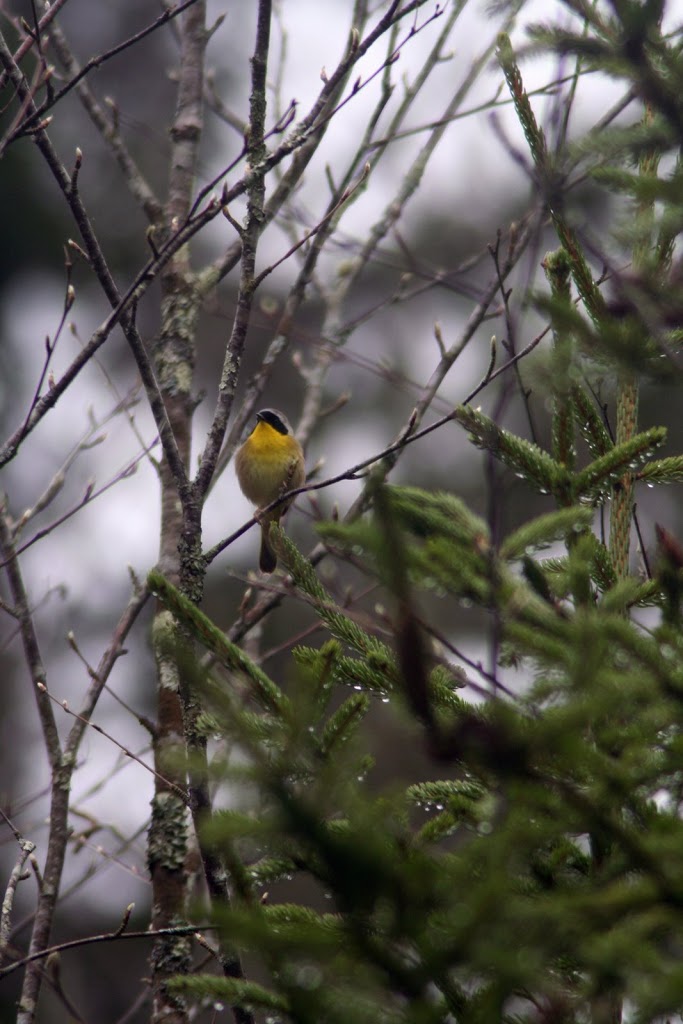
and Yellow Warblers willing to pose

and the most spectacular sunset to end the day.

But there were also flocks of shorebirds, and Blue Jays, and a nice little hawk movement when the fog finally lifted, and Fowler’s Toads calling in the dunes, and Nighthawks, and a Mississippi Kite or two, and night herons taking off from North Pond at dusk…

I could go on and on, but I’m tired enough to be delirious. 16 hours of birding will do that, I think.
A nearly shameless plug

This Saturday is World Series Day here in NJ when teams of birders set out to find as many species as possible in one day. I’ll be out there, for the 11th year in a row, with the Sandy Hook Century Run Team. My first year, it rained buckets all day and I’m afraid the weather is shaping up to be the same this Saturday.

Migration is at its peak in NJ during this, the second week in May, and all told World Series teams have raised more than 8 million dollars through the years for conservation causes.

Our team is birding in support of the Sandy Hook Bird Observatory where I volunteer and I’d love it if you’d toss some money our way! A fun way to pledge is an amount per species… we usually see between 120 – 130 species from dawn to dusk.

So far I have pledges for 37 1/2 cents per species… I’m hoping to get that to $2.00 per species. Leave me a comment if you’d like to pledge.

Thanks! Wish us luck!

A place for silence

A visit to Cranberry Glades Botanical Area was the field trip I was most looking forward to in West Virginia. Part of the Monongahela National Forest, these wetlands hold plants more typically found much further north; ones I know from the Pine Barrens here in NJ and from my visits to the bogs of the Adirondacks. The landscape is unexpected and especially beautiful for its peculiarity here.

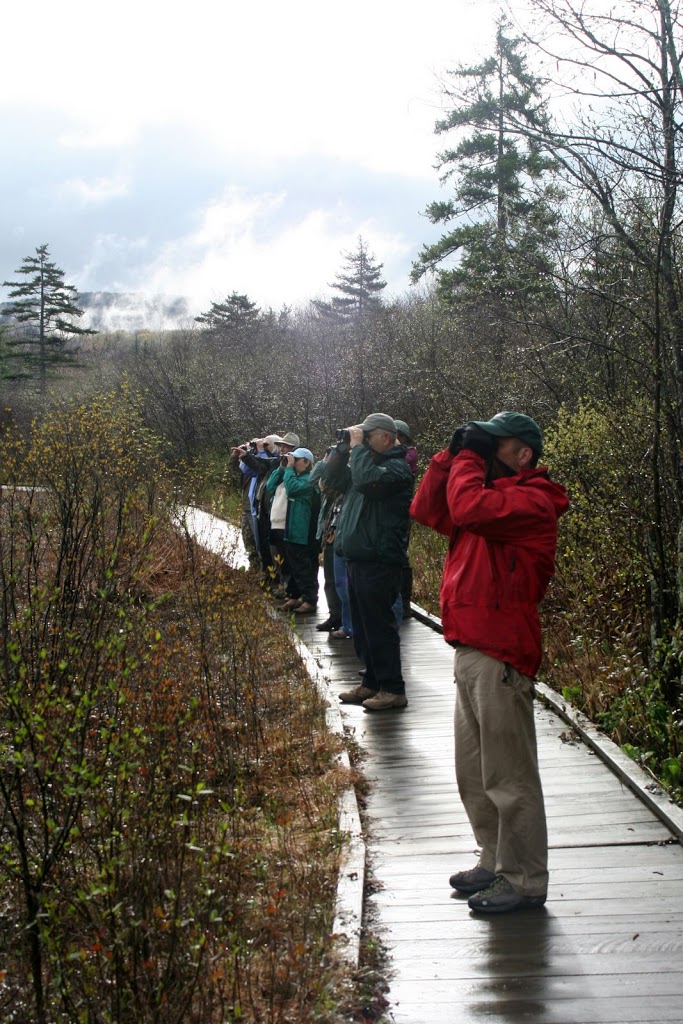
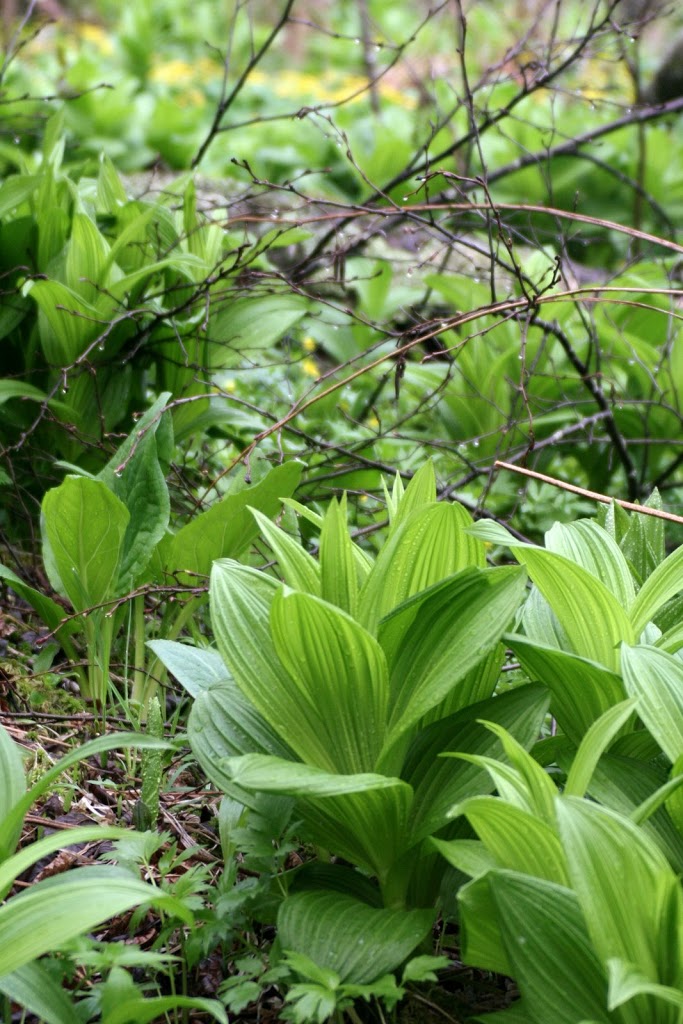
A half-mile boardwalk through the glades and surrounding bog forest protects the fragile environment while allowing close looks at False Hellebore and Marsh Marigold growing among Red Spruce, Hemlock and Yellow Birch trees, all of which can live shallow-rooted in such a wet area. Late summer will have the glades stippled with Orchids and Cotton Grass under a bluer than blue sky. Sundews and Pitcher Plants will be devouring insects under the hot sun.

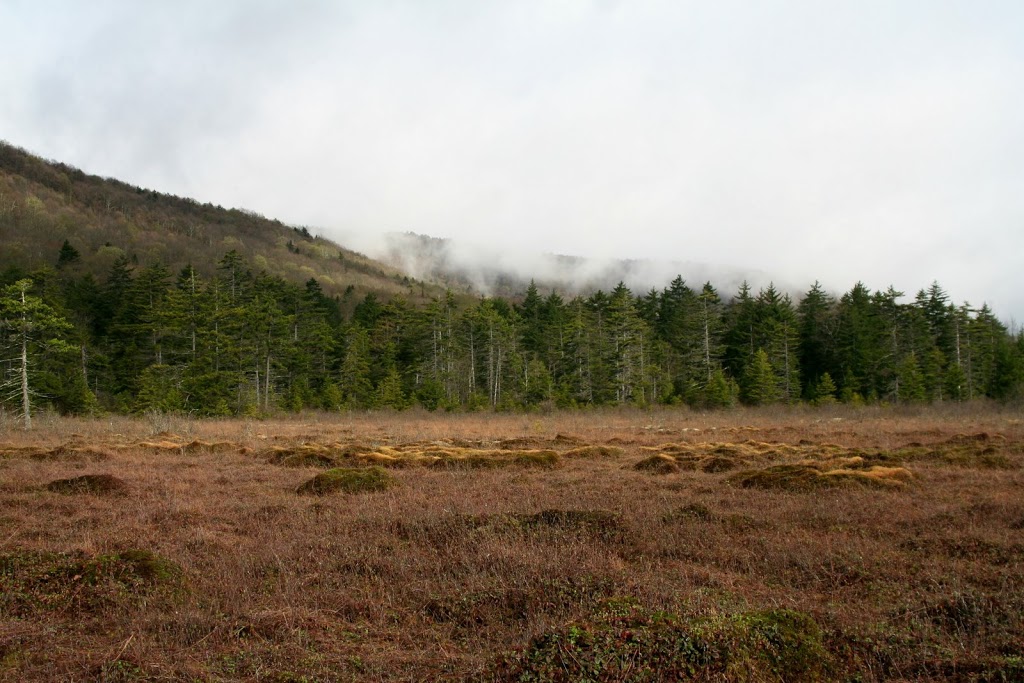
The views are dramatic: rimmed by mountain ridges and pines, made even more primordial steeped in fog, garnet-colored Cranberries leftover from last fall lie hidden among the tiny vines covering the peat and Bog Rosemary and Serviceberry were in bloom. You can see winter there, still, up on the ridge. Cranberry Glades is nestled in a bowl among the mountains at 3400 feet.

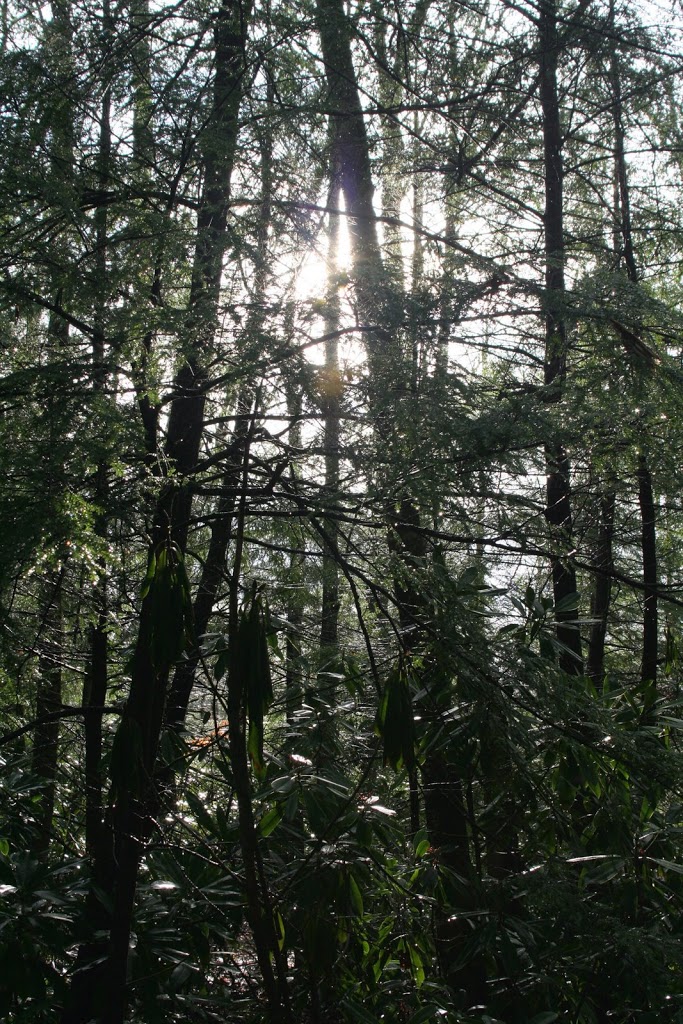
As is my habit, I fell back from the group at every opportunity, preferring instead the tranquility of Hemlocks and Rhododendrons bathed in sunlight. Louisiana Waterthrushes and Blackburnian Warblers sang insistently with the Spring Peepers as I tried to appreciate the lack of human noise in this otherwordly place. Ravens called to one another above me.

Moments of grace and beauty were plentiful on this trip. My camera captured only a few of them, but being out there to experience them fully is what makes the day for me. I struggled for pics of the Canada Warbler that taunted and sang just out of view, but once I gave up on that, this little guy popped up and posed as pretty as could be.

A tag back

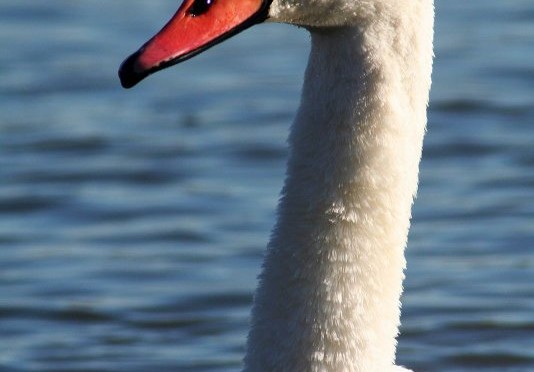
A week or so ago I got this very official-looking letter from the United States Department of the Interior USGS Patuxent Wildlife Research Center. Turns out it was the anticipated Certificate of Appreciation for the tagged Mute Swan that I’d submitted sighting information for back in January of this year.

The banding data included on the certificate indicated that the bird was a male banded in Ulster Park, NY on 8/4/2006. The certificate also included the bander’s name and that he was banding for the NY Department of Environmental Conservation. No other encounters were listed on the certificate, so I’m guessing this was the first time this band was reported.

People often ask me why bird banding is important; the statistics included on the certificate are pretty dismal… some 60 million birds have been banded in North America since 1904, yet only 4 million bands have ever been recovered and reported. 4 million is a huge number, of course, but tiny in comparison to the effort put forth to monitor bird populations. The data retrieved supports national and international conservation programs to restore endangered species, study the effects of environmental contaminants and set hunting regulations, for example.

Bird bands can be reported at www.reportband.gov or by calling 1-800-327-BAND.

It’s easy enough to do and voluntary reporting is the backbone of any banding program.

Are we there yet?

*gasp*

*checks calendar*

The New River Birding and Nature Festival is just around the corner!

*rummages through pile of papers to find plane tickets*

*looks askance at very small suitcase*

*mentally juggles space requirements of clean clothes versus camera gear*

*wonders if farmhouse has a washing machine and linens and wireless*

*maid service, maybe?*

*briefly considers pre-writing blog posts but decides most everyone who reads this blog will be in W. Va. too*

*panics*

Please tell me someone of us, someone responsible, HAS IT ALL UNDER CONTROL AND TAKEN CARE OF.

😉

Cause me… my plans extend only about as far as getting myself there. I’m thinking of it as something like the first day of summer vacation. Remember how that felt? You’re ten or twelve maybe, and school’s out and the world is stretching itself out into one long basking day after another. Maybe your dad’s driving the family station wagon to the beach house with his one arm hanging out the window, drumming his fingers on the car door.

I see myself sitting in the backseat (as the youngest, I always got stuck in the back), sitting on one folded leg to get a little height so I can be the first one to see the ocean as we go over the bridge. We’re getting there, but I’m trying not to throw up from too much excitement and too much time in the backseat.

Only this time, the air won’t suddenly begin to smell like salt and it won’t be the ocean I’m aching to catch a glimpse of. Instead there’ll be mountains and it’ll be Mary or Susan or Lynne (or one of the dozen-or-so others) that I’ll be trying to spot first.

It’ll be the heart of the day and the sky will be huge and blue. There’ll be laughter. And birds singing, beckoning us into the woods. There’ll be plenty of time, time enough to squander on pure silliness and the joys of friendship.

That last part may be a mixture of fiction and dream and desire, but I’m anchoring myself there. It’s an idea I have inside me. The beach from my childhood that I keep walking on; the summer I keep longing for. That group of friends that belong only to summers past; the ones we built sandcastles and dreams and forts at the pool club with, the ones we watched pack up the family car and go back to real life until next summer.

Things unseen

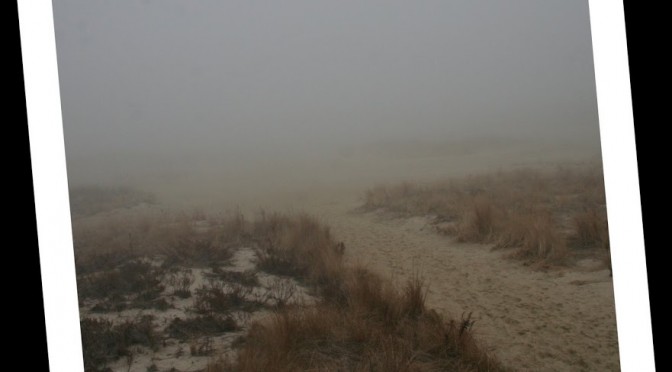
I’ve no idea how far I walked in the fog today, but long enough that by the time I was back at the parking lot my hair fell wet in ringlets, sticky with salt. The fog had obliterated any landmarks along the beach and it was only my vague sense that hours had passed that caused me to turn back. This was no sunny, invigorating winter beach; it felt neither wide nor expansive. There was no winking promise of spring in the air, either. White-bellied gulls appeared out of the nothingness ahead and the only sound was that of the waves churning the sand.

The edges of things: the shoreline and the horizon were all so soft with the fog that my camera mostly refused to focus. It was pleasant to imagine nothing beyond the couple hundred feet I was able to see ahead of me. Out of the salty haze I finally spotted what I’d come looking for; back for a week or two, a lone piping plover fed along the wrack line at the very limits of my imagination. The harder I tried to see it, the faster it ran and blended into nothingness.

Poof! Gone.

A couple hundred steps ahead and I’d spot it again for an instant, this time running crosswise to me in the dry sand, blending into a driftwood and clam shell background. In and out of my awareness, I think it must have accompanied me quite far, just out of clear view, a bit of fog drifted sand on still winter-black legs. These birds are hard to spot on a clear day even when they’re running; their markings blend so expertly with drift sticks and sand. I like to meet them for the year on this type of day, for whatever reason, when the hot sun and crowds of a June day seem an impossibility.

Skywards

“It is a most beautiful spectacle although often difficult for us to observe. After catching a fish, the male gains height as he returns to the nesting area and while still several kilometres away he starts his display. To me the display call is very distinctive; it’s a high-pitched ‘pee-pee-pee-pee…pee’ and if I search the skies I will see him soaring majestically, maybe a thousand feet above, as he moves in sweeping circles closer and closer to the nesting site. He climbs several hundred feet upwards with rapidly beating wings, then hovering briefly, with fanned tail, he performs a breathtaking dive showing the fish grasped in outstretched talons. He pulls out of the dive and powers sky-wards to repeat the performance. All the time his calling can be heard by his mate and finally his last stoop takes him in a long power dive right to the eyrie, where the fish is presented to his mate.”

(Ospreys, by Roy Dennis, Colin Baxter Photography Ltd, 1991, p13)

There’s no sweeter sound in late March than an amorous Osprey, save perhaps, the lonely peeplo calls of Piping Plovers. To those of us who love the shore and its birds and who miss them for the months of their absence, both are enough to bring tears to our eyes.

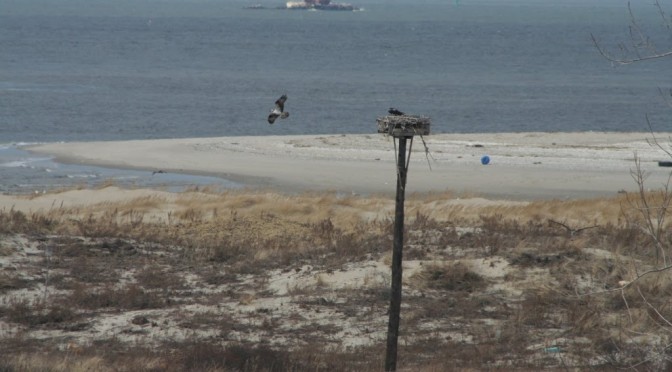
There was a bit of female rivalry taking place at this northernmost nest on Sandy Hook yesterday. A female interloper repeatedly interrupted the male’s courtship flight… whether to steal the fish he meant to present to his mate below or perhaps to steal him away from her.

😉

Click on the pic for a slightly more satisying view. Can anyone name the channel marker thingy for me?