 I’ll let you all in on a little secret, so long as you promise not to take too great an advantage from it:
Ducks are the way to my heart.
Stand with me beside the bay on a freezing winter day, face streaked with tears from the biting wind, ducks bobbing in the distance and you’ll have found a friend for life.
If it’s June and there are no ducks to be had in NJ, find an excuse to be in ND and coast with me along deserted roads, bordered by great puddles filled with all manner of breeding ducks and I’ll think you the best birding-buddy a person could find.
And if it’s late September, when only the earliest of Northern Pintails can be found on some secret shallow marsh, go with me to the decoy show and let me anticipate the arrival of my most favorite class of birds.
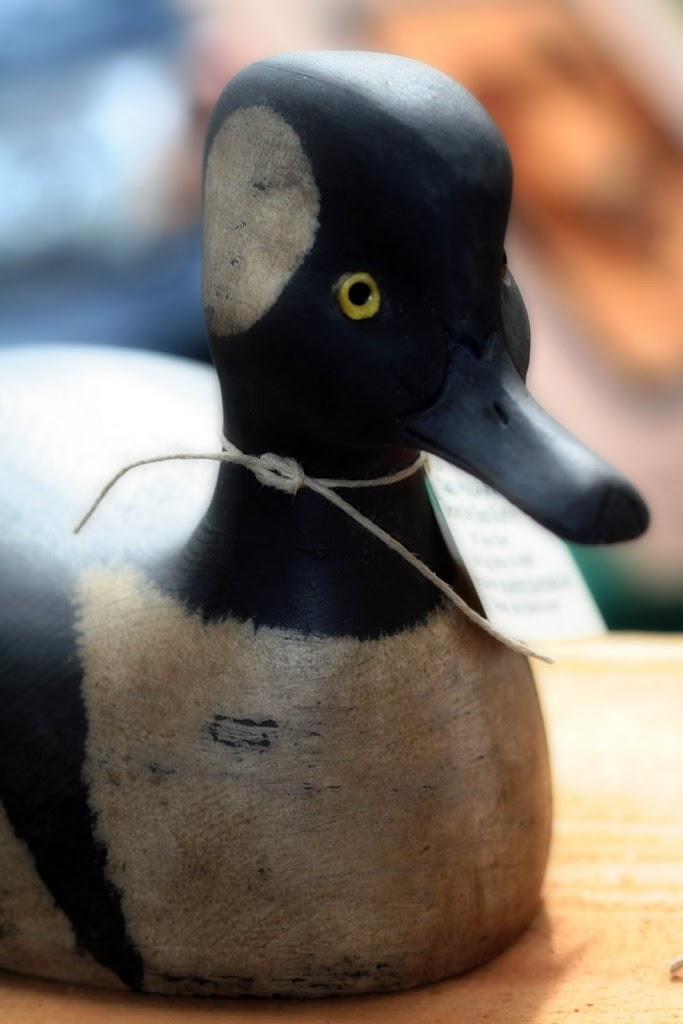
Humor me as I agonize over which decoy I’ll bring home.
Try not to be too impatient with me as my questions elicit yet another story about how an ex-insurance broker came to carve shorebirds and paint lighthouses in his retirement. Or how another came to copy the great carvers who made their living from decoys in the days of market-gunning.
Don’t be embarrassed when I (too loudly) compare the antique animal traps at the taxidermist’s “display” to barbarian torture devices. Be proud, in fact, that I don’t back down from his smart-ass response to overhearing my comment.
This is a decoy and gunning show, remember.
And I’m a duck-watching, tree-hugging, dirt-loving fool.
For all that pains me about it, there is almost nothing that I don’t love about the heritage this show represents. Historically an impoverished a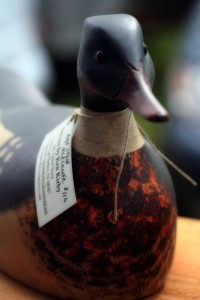 rea of the state, the baymen who made their living there did so in cycles, commercial fishermen in season and boat builders or electricians or decoy carvers in winter. Cranberry and blueberry harvesters or chicken farmers on the side.
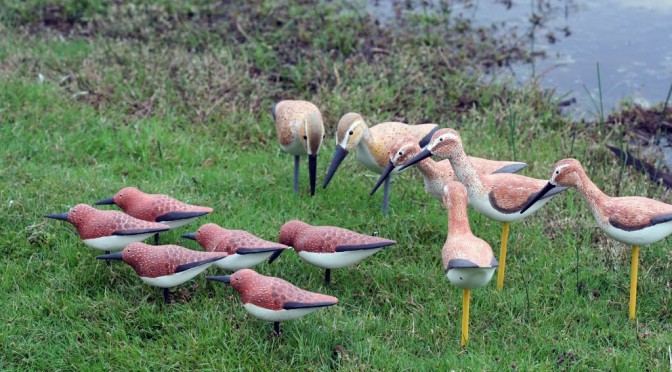
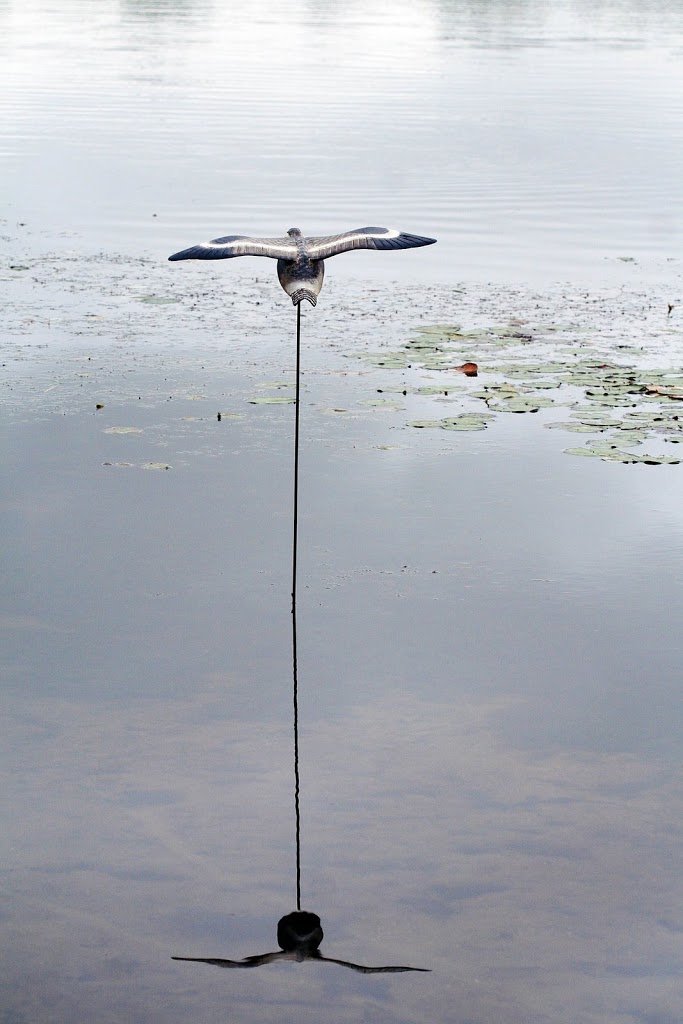
Collectible decoys are an artifact of tools that have outlived their usefulness. The draw for me is the workmanship; the finest of floating sculpture that was designed to be tossed in salt water and into the line of fire. Gone, mostly, are the days when decoys were used to lure ducks and shorebirds to the hunter’s gun and then on to restaurants or the millinery trade.
The 1918 Migratory Bird Treaty Act put an end to the commercial hunting of wild birds and so we’re left with a piece of history. A piece of that heritage remains in the decoy, more sophisticated now than the early carvings meant just to evoke the likeness of a bird and thereby bring the real thing into the sights of a hunter’s gun.
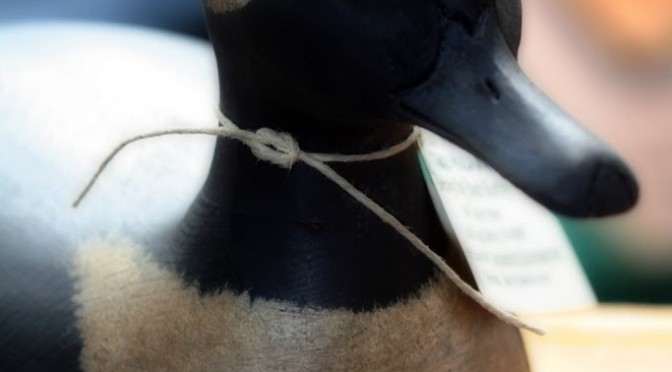
Of course it’s those primitive-style decoys that I prefer. I think it must be partly because they remind me of the way I experience ducks as a birder; old style decoys are all about field marks: cheek patches and tail shape and bill color. There’s no time to see the fine-feather detail on the flanks of a Bufflehead as they bob like little rubber ducks in the frozen bay, anyway. Too much detail distracts my eye, makes me keenly aware that what I’m seeing is, after all, a decoy.
The Ocean County Decoy and Gunning Show continues tomorrow in Tuckerton.

 As idle as a painted ship upon a painted ocean.
  Sailboats and cormorants in the harbor at Keyport NJ
 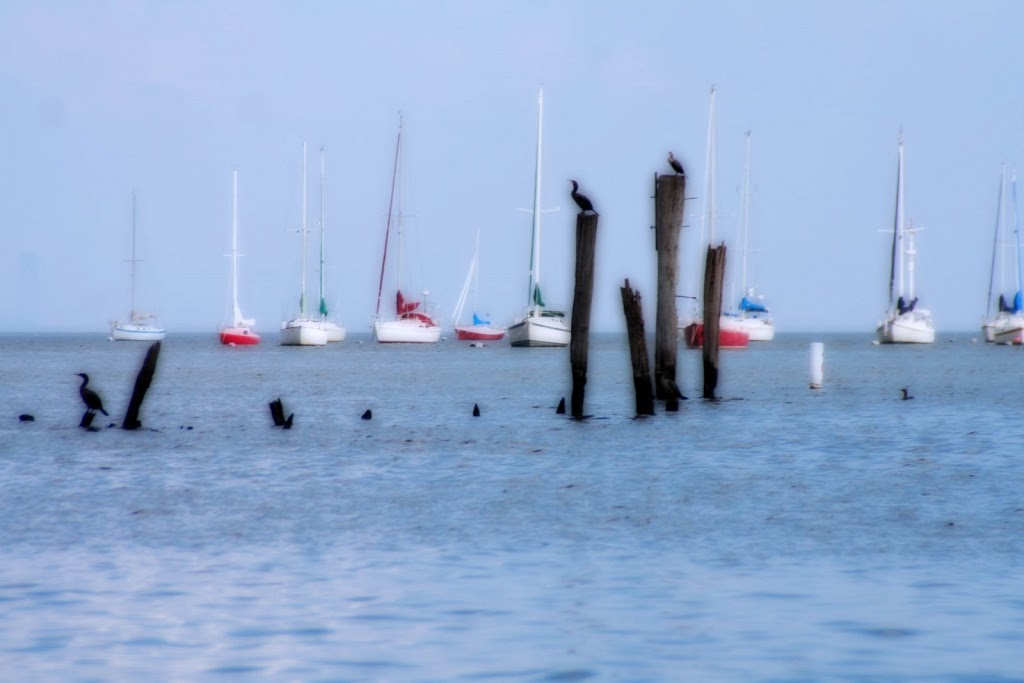 Sailboats and cormorants in the harbor at Keyport NJ