Category Archives: Birds

Considering Scaup with Crossley

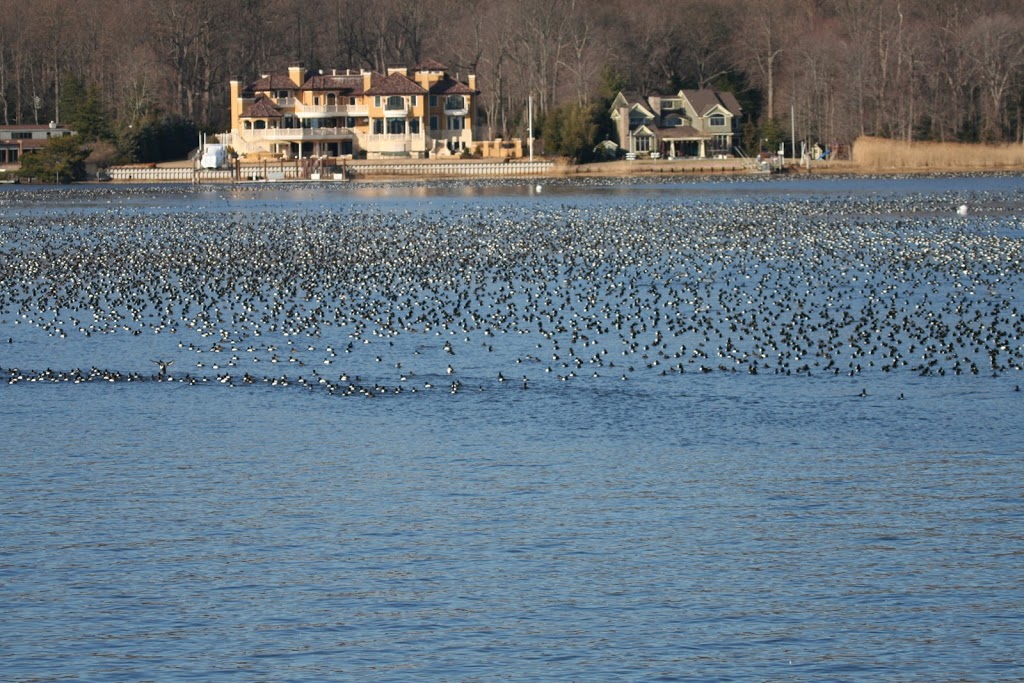
So there’s been this huge flock of Scaup resting at the base of the Oceanic Bridge between Rumson and Middletown the last couple weeks… quite the spectacle for local folks who never pay attention to such a thing.

Busy with tennis and lunch dates, you know.

*snark*

I was glad to find people there, glad to find “normal” people curious about this big conglomeration of ducks that seemed to appear from nowhere.

The great mass of them were Scaup sp. with a couple Red Heads mixed in, Brant and Ruddies at the fringes of the flock.
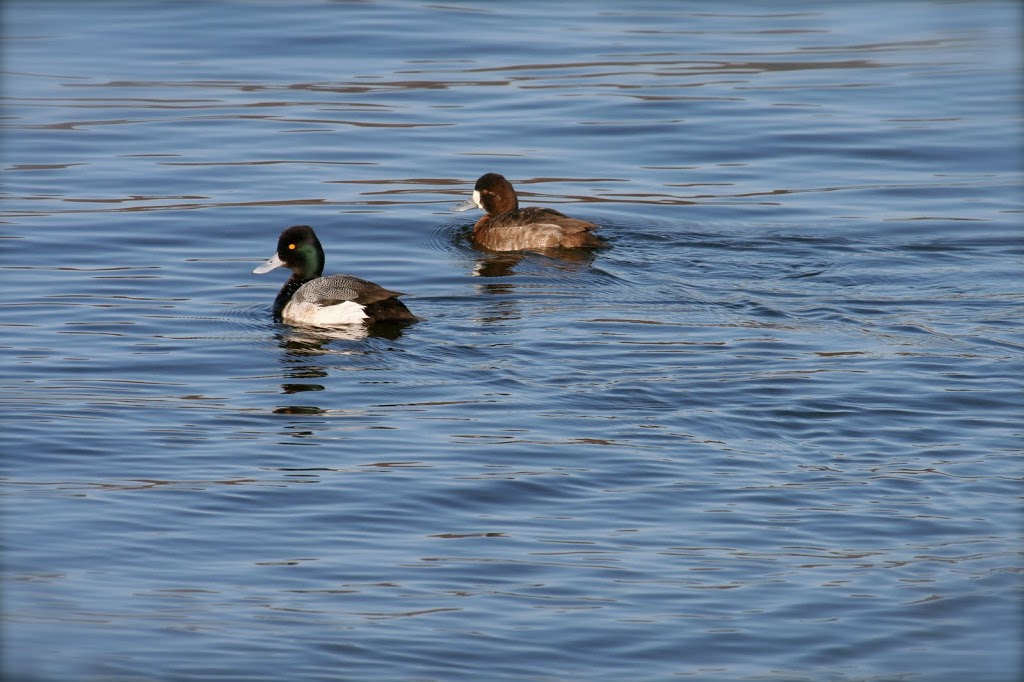
While I “know” that these are mostly Greater Scaup, I wondered what wisdom Crossley might have to offer…

Lesser on the left… Greater on the right

Greater is known to form large flocks in winter in coastal estuaries.

Check.

Frequently mixes with very similar Lesser Scaup.

Durn.

Sometimes obvious, but at other times separating from Lesser a real head-scratcher.

Yep.

Iridescent green head often appears black, but rarely purple.

Check!

I finally saw that purple iridescence on a couple Lessers on Lake Como this weekend and it’s so very obvious when the light is right…

(one hardly needs to pay attention to the bulgy cheeks of the Greaters that Crossley mentions!)

I’m enjoying sorting through the local waterfowl with the new Crossley Guide… have you bought a copy yet? What do you think?
The places we go back to

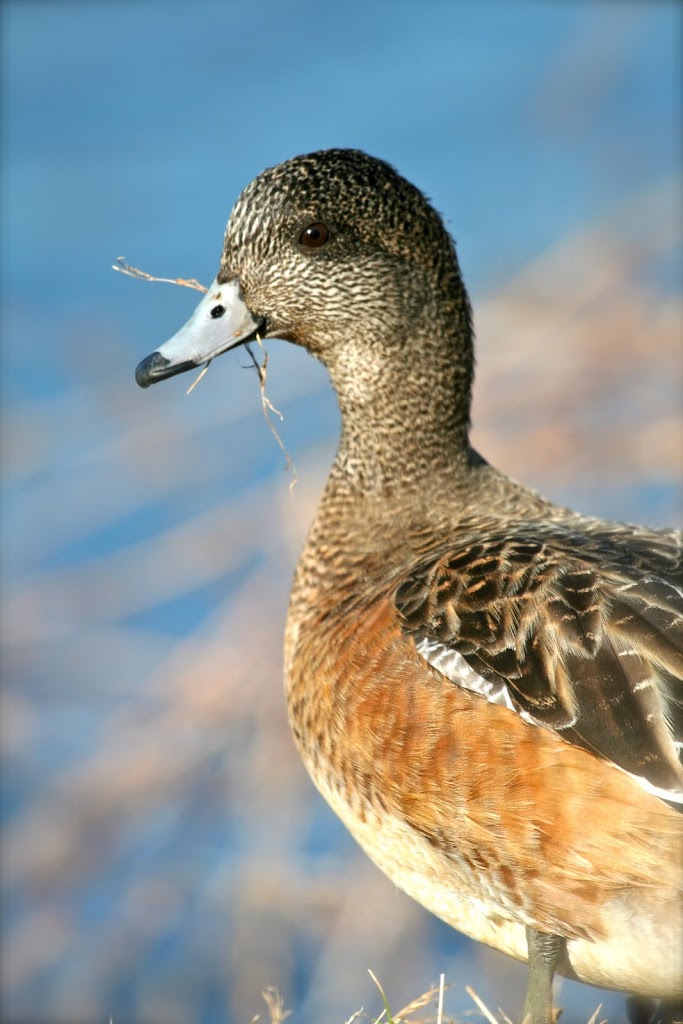
Photo by Nina

To some, the mention of West Virginia conjures images of moonshine, hillbillies and mountains leveled by coal companies. The string of small, almost threadbare towns one finds tucked into the hills in the southern part of the state only reinforces the reputation of the place as somewhat benighted.

Yet I keep wanting to go back.

There are no life birds for me there. As a birder, you can understand the equation necessary between limited travel funds and the possibility of life birds added to one’s list.

Birds are not really why I go.

There’s some other appeal in the homespun spirit of the New River Birding and Nature Festival that draws me back late each Spring. It’s run in such a way that it does end up feeling like summer camp for birders, as Bill Thompson says about it. It’s funny to me now to remember a similar feeling before I ever even went to this festival for the first time.

The field trip groups are kept wonderfully small; intimate, even, compared with most popular birding festivals. The trip leaders, besides being experts, are personable and enthusiastic and actually learn your name. Profits from the festival benefit local schools.

These are important things in my book.

This is the perfect festival for The Flock, too. They spread each of us out among the daily field trips – probably so that no one group will be subjected to the bunch of us together – and give us the chance to spend evenings together at dinner and the presentation. Then they secret us away for the night in a farmhouse in the middle of some marsh where no one can hear our silly antics.

; )

I’ve made lifelong friends there. I’ve seen gorgeous birds and beautiful sights shrouded in mist. There are hillsides drenched in wildflowers. There’s biscuits and strawberry jam at every breakfast. A porch swing and Susan.

Is there any wonder why I go back?

There’s still a couple openings for this year’s festival… join us! If not this year, do put it on your list for someday soon.

Bad bird photo of the week

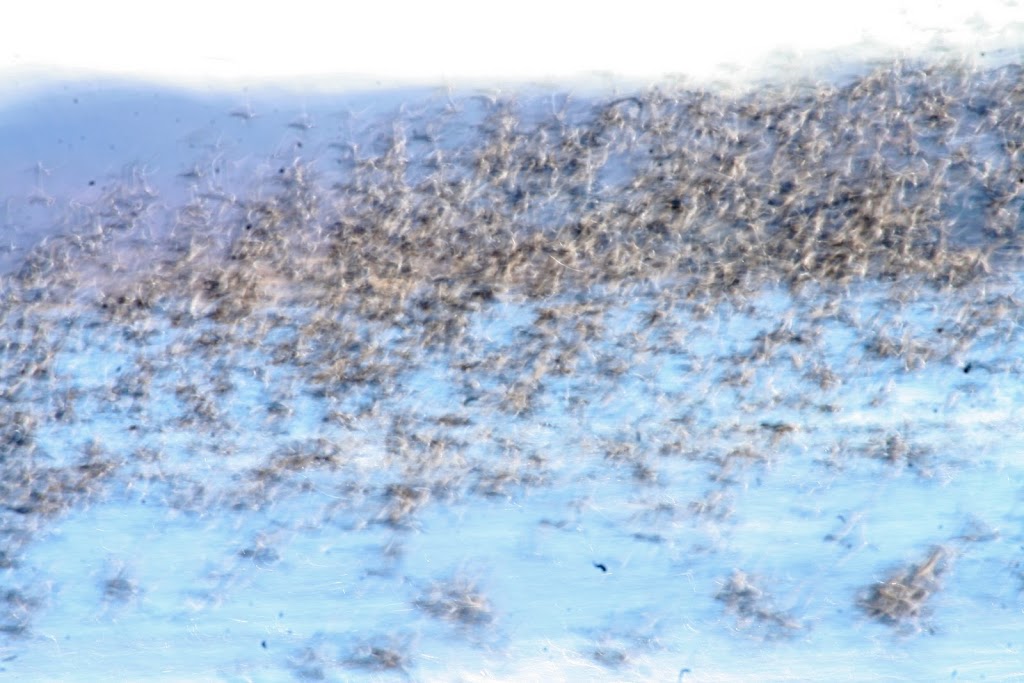
Scaup taking wing…

So I happened to come across this article about a local duck phenomenon and made it a point to find my way there today, in my traveling from one end of the county to another to see clients. For many years this was THE place to go locally for huge numbers of Scaup, but in the last couple of years, not so much. I’d drive by, over the Oceanic Bridge hopeful, but nothing the last few years.

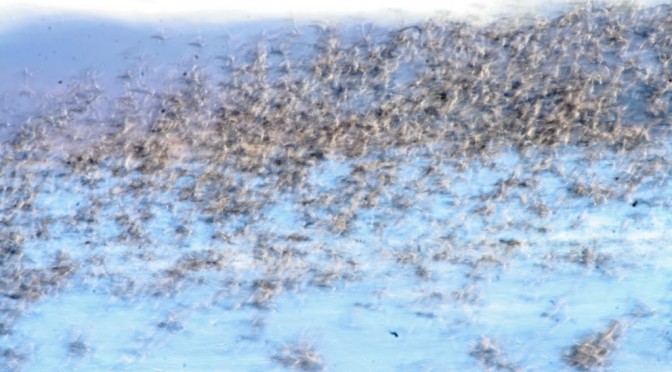
I found them there today, but completely panicked when they all took off at once from the water…

It was really beautiful, though.

(Darn camera!)

; )

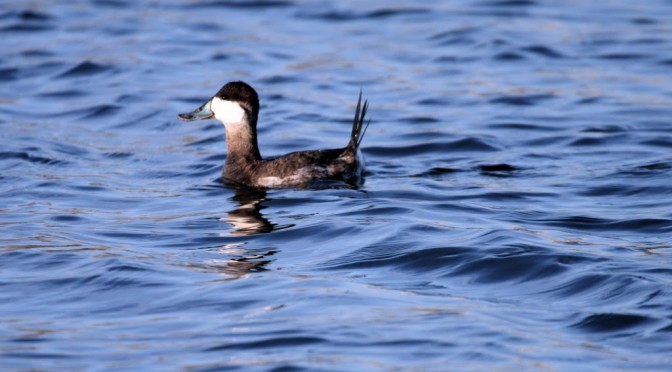
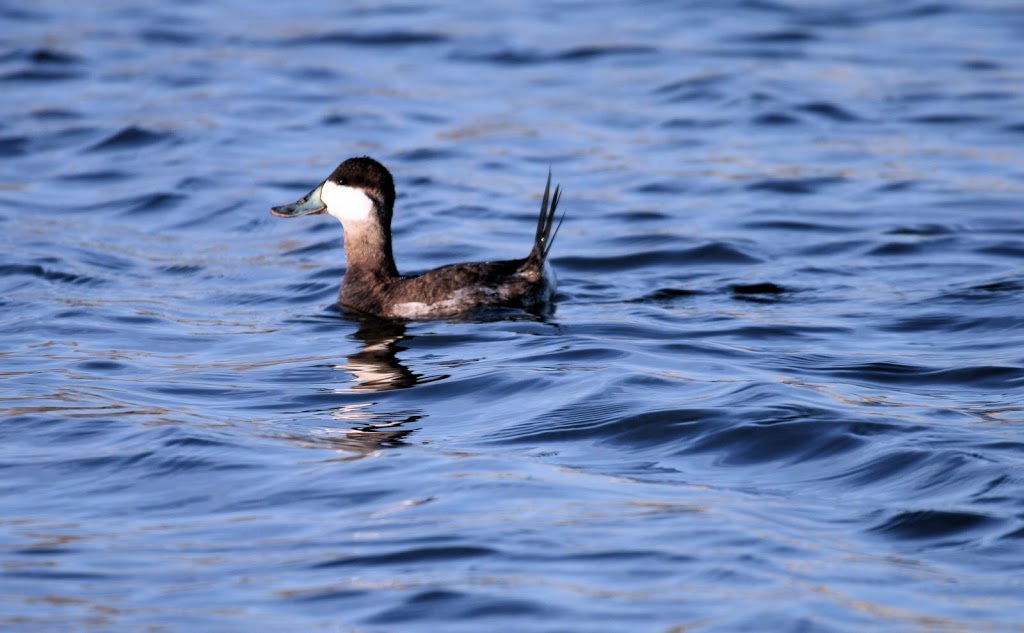
Ruddies

There are finer, more carefully focused and composed photos from a chance encounter with a group of Ruddies the other day… but this is my favorite because the details give away so much about this little duck… the bluish bill, the outstretched neck and jaunty tilt of the tail.

They’re usually easy to find in the neighborhood ponds and almost always bring a smile.

: )

My go-to book for historical bird names has a very long list for the Ruddy Duck; many of which are hysterical…

Dumpling Duck, Daub Duck, Deaf Duck, Fool Duck, Sleepy Duck, Butter Duck, Brown Diving Teal, Widgeon Coot, Creek Coot, Sleepy Coot, Booby Coot, Ruddy Diver, Dun Diver, Sleepy Brother, Butter-Ball, Batter-Scoot, Blatherskite, Bumblebee Coot, Quill-tailed Coot, Heavy-tailed Coot, Stiff-tail, Pin-tail, Bristle-tail, Sprig-tail, Stick-tail, Spine-tail, Dip-tail, Diver, Dun-bird, Dumb-bird, Mud-dipper, Spoon-billed, Butter-ball, Spoonbill, Broad-billed dipper, Dipper, Dapper, Dopper, Broad-bill, Blue-bill, Sleepy-head, Tough-head, Hickory-head, Steel-head, Hard-headed Broad-bill, Bull-neck, Leather-back, Paddy-whack, Stub-and-twist, Light-wood-knot, Shot-pouch, Water-partridge, Dinky, Dickey, Paddy, Noddy, Booby, Rook, Roody, Gray Teal, Salt-water Teal, Stiff-tailed Widgeon.

Edward Howe Forbush (1917) explains that many of the common names stem from the difficulty in hunting them…

(Stub-and-twist is a personal favorite!)

What’s not to love about this man?

Image courtesy Princeton University Press

He’s handsome, smart, likes birds, has that incredibly cute accent, not to mention the humungous camera lens…

(which, btw MevetS, he handholds!)

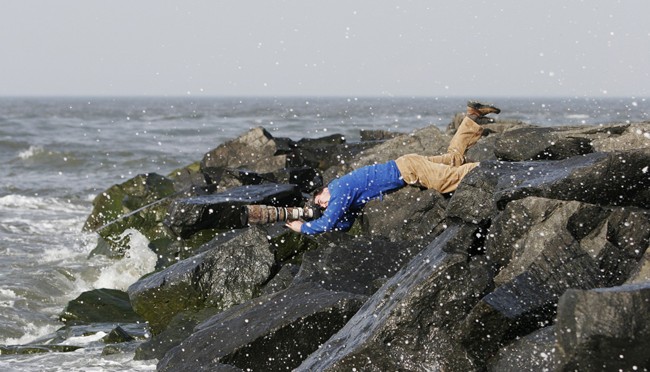
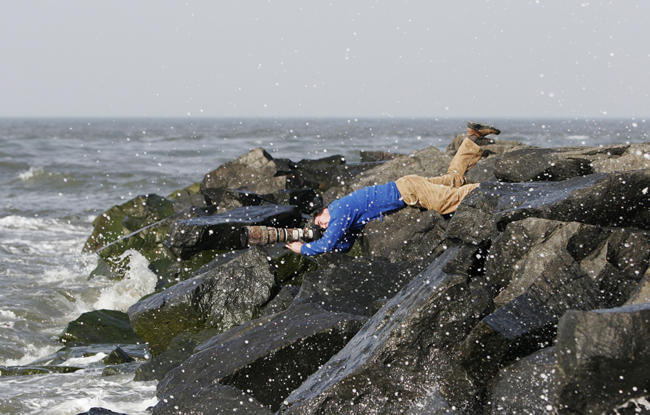
Besides the avant-garde fashion sense (look at that blue jacket!) he’s also, clearly, very brave. I imagine him to be risking life and limb to photograph Harlequins out at the end of the Barnegat jetty, don’t you?

Have I mentioned that he’s just published a book? And a book about birds, no less!

(swooning)

My momentary infatuation is directed towards Richard Crossley and his Crossley ID Guide: Eastern Birds. I’m planning to spend this Valentine’s evening curled up with it by candlelight, maybe with a glass of wine.

Like with all tender new love, all I can say is, “Wow!”

and,

“He’s sees birds just like I do!”

and,

“Where has this field guide been all my life?”

and,

“Gosh… it’s so sexy when he uses alpha codes!”

; )

It really is a cool guide; his approach is unconventional and that’s exactly what excites me most about it. I’ve not ever been one to rely on a field guide. I collect them, yes. But use them? Hardly.

This is a book I want to spend time with and get to know better. I think Richard Crossley can make me a better birder.

*Please note that, while Princeton University Press has kindly provided me with a free copy of The Crossley ID Guide to review, this is not my proper review. I promise to do that once I’m over the puppy-dog stage of love and can see things more clearly.

**Please also note that I have no personal relationship with Mr. Crossley, nor do I desire such. There was a brief interaction at the Cape May Hawkwatch this fall involving the ID of a sparrow, however. I am happy to report that Mr. Crossley did not laugh me off the platform at that encounter.

(Imagine the pressure of having THE RICHARD CROSSLEY toss a roadkill sparrow your way and demand that you ID it, in hand, before he’ll even make eye contact with you.)

Thanks for that experience Wren!

Have a listen as he describes the book (oohh that accent!)

And Happy Lover’s Day!

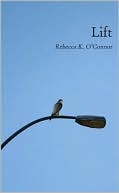
Lift

Comments a couple months ago on a post I wrote about falconry led me to Rebecca’s blog and most recently to her book, Lift. A memoir, it shares the lessons learned in the practice of training a Peregrine Falcon.

I’m not very far into the book, yet, but expected from reading her blog that I would enjoy it. My impression, just 80-some pages in, is that she writes well and passionately about her falcon. Already she’s spoken to one of the questions I raised in that earlier blog post, on training her falcon to fly to a lure:

The falcon and I look at each other, both startled. Then he bows his head slightly over the bird in his feet, snaps the neck and looks back up. He allows me to meet his gaze, seeing deep into his falcon’s eyes and I understand that I could keep this predator on a line forever, but he will never be my pet. Over that shared look our relationship changes just a bit, because suddenly, we both grasp an obvious truth. I am looking into the eyes of a wild peregrine. It’s so soon, only ten days, but it’s time to let him fly free.

Yes, it is dangerous to be bound to something that can break your heart.

She’s lost her bird once already to the sky and reclaimed him, changed, after only five hours on his own. I’m looking forward to learning how their relationship continues to develop.

Sea mice

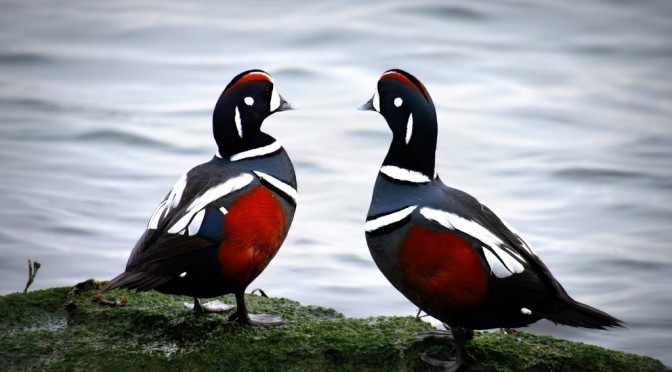
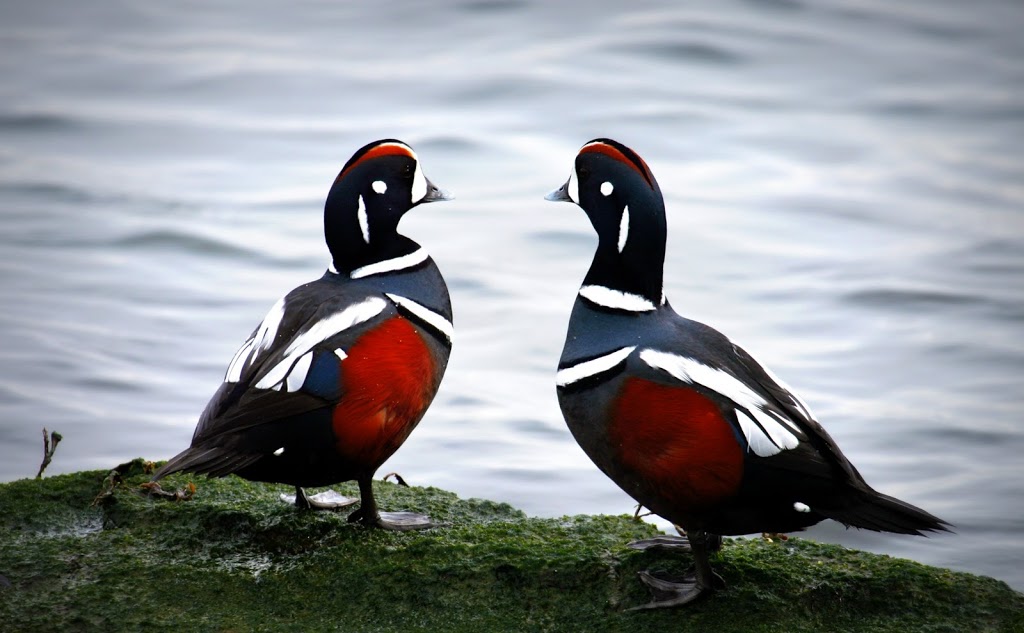
also Painted Duck, Mountain Duck, Rock Duck, Lord and Lady, Squealer.


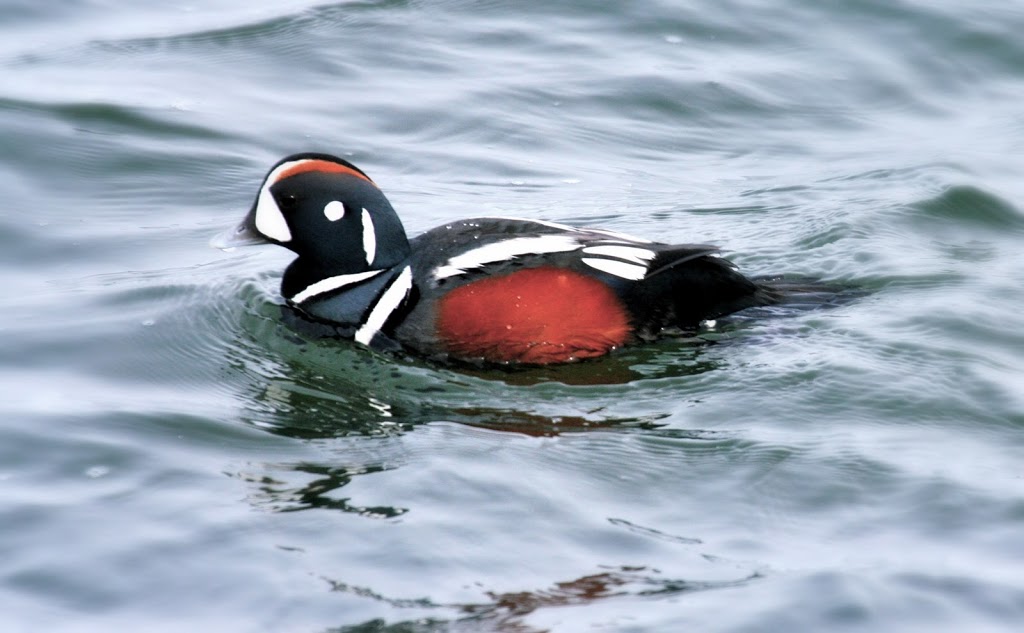
“Harlequin, well named! Fantastically decorated, but still a thing of beauty! Delightful in color, elegant in form, graceful in carriage, rightly are its little companies called the “Lords and Ladies” of the waters. This is the loveliest of the Sea Ducks, but its beauty is reserved mainly for the cold and inhospitable North and the wave-lashed rocks of isolated ledges in the wintry sea.”
–Edward Howe Forbush in Birds of America (1936)

Monmouth County Audubon’s annual frozen pilgrimage to see the Harlequins at Barnegat Light was last weekend. We had a very small group… probably due to the especially frigid temps.

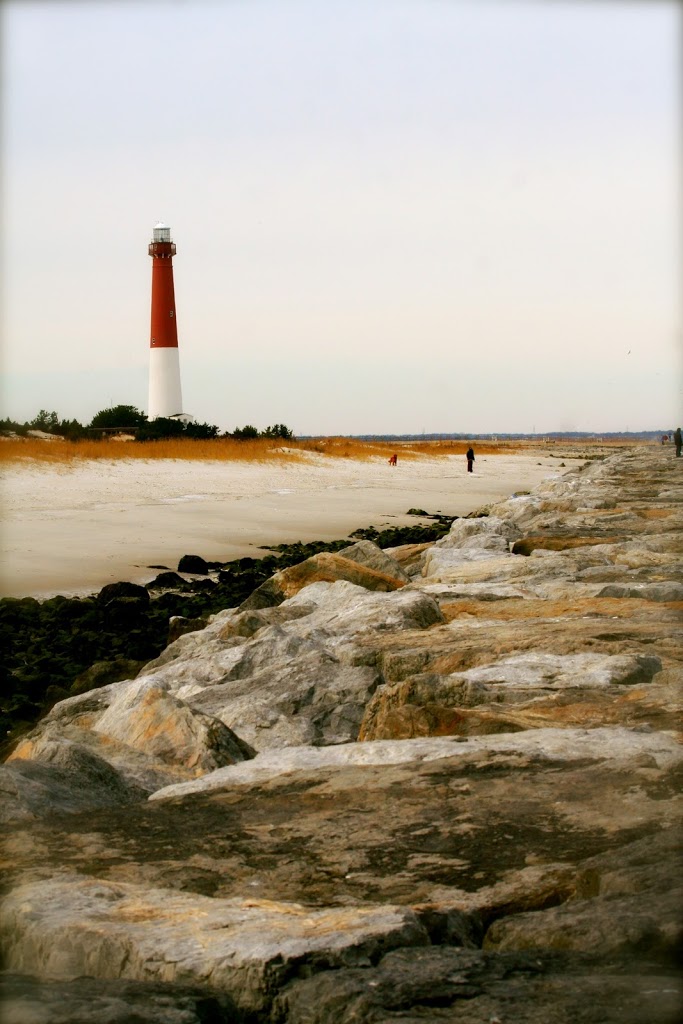
It’s one of my favorite places in the world, but the walk out the jetty to see the Harlequins is not for the faint of heart. We were blessed that day with a gentle wind out of the right direction and a low tide… so the boulders that make up the mile long jetty were mostly dry and free of ice.

Still… I mostly walked along the sand beside the jetty… looking for Sparrows and Snow Buntings and Horned Larks and leaving the dangerous stuff for the foolhardy members of the group!

The jetty was constructed to protect the shoreline and prevent sand from filling in the inlet. It and a parallel jetty on the north side of the inlet are designed to keep the channel from the ocean to Barnegat Bay deep and navigable.

If you’re lucky, as we were, a couple Harlequins will be feeding in tranquil waters at the very beginning of the jetty where there’s a concrete walkway and a guardrail; oftentimes it’s necessary to walk the full length of it to the roiled waters and slippery rocks at the very end to find them.

We walked all the way out anyway because the jetty and its boulders attract a variety of marine growth (like mussels which the Harlequins feed on) and which otherwise attracts fish, which, in turn, attract more birds like Loons, Scoters, Eiders, Mergansers and Long-tailed Ducks. Purple Sandpipers, Dunlin, Ruddy Turnstones and Sanderling populate the mossy crevices of the jetty.

Even if there weren’t birds to look at, one could hardly be bored with the constant threat of a broken bone or a concussion with any misstep!

; )

I’d imagine the Harlequins to be something of a boon to the local beach communities which are otherwise mostly deserted in the winter. Someone has to serve chocolate-chip pancakes and hot cocoa to all us shivering birders!

Barnegat Light is, for those who love the sea and the immediate shore, a very special place.

Any ideas to explain the “Sea Mouse” name?

Strange bedfellows

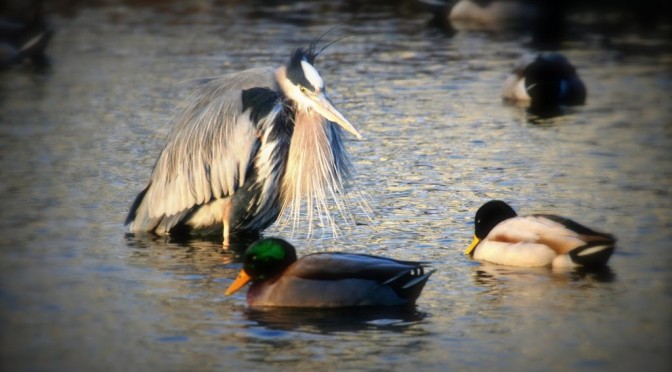
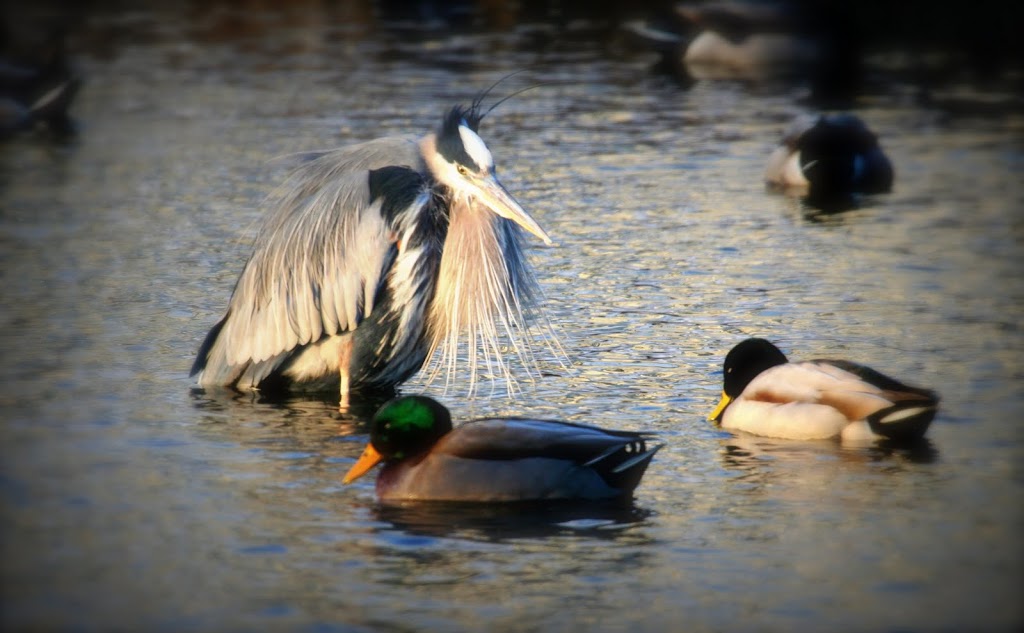
All the little ponds here along the coast are frozen solid, mostly. Each has at least some open water and that’s where all the birds are congregating. Fletcher Lake between Ocean Grove and Bradley Beach had this Great Blue Heron (who looks scarily hungry for some Mallard flesh!), many Mallards, a couple white domestic ducks, a Pintail(!!!), a Wigeon and a Black-crowned night heron sleeping along the shoreline.

A couple blocks away in Spring Lake we found a single Snow Goose feeding on the postcard-sized lawn of a beach house with a small group of Canada Geese.

Strange.

I find myself inclined to worry about wildlife when everything is frozen and snow-covered, but remind myself that wild things are good at surviving. They do much better than I ever could, for sure…