Category Archives: Birds

Wildlife tree

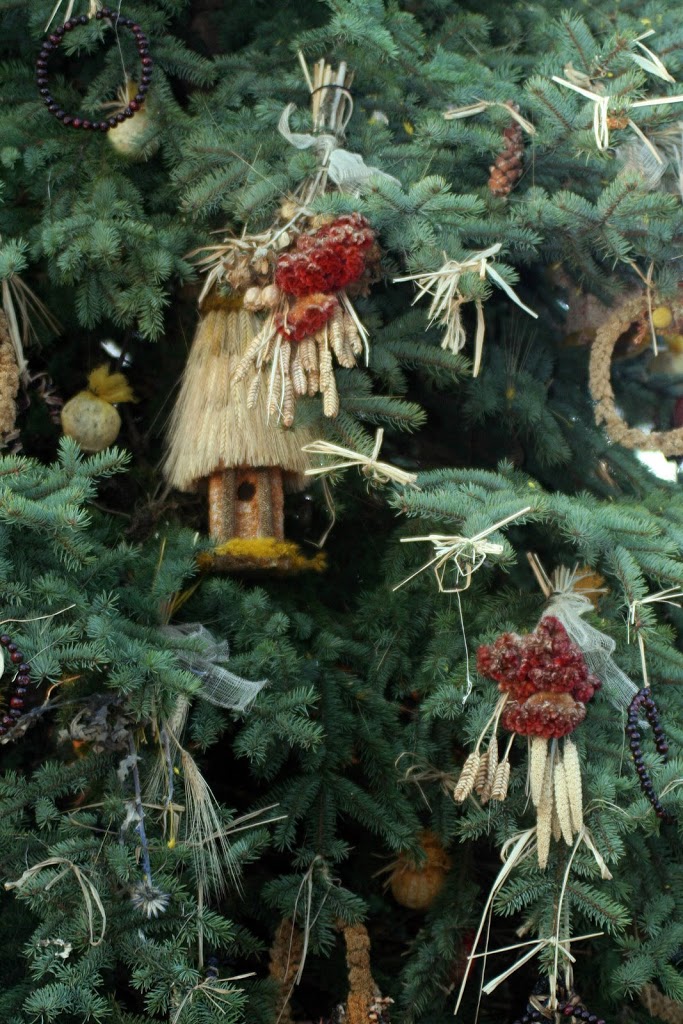
Ever thought to decorate a tree for the birds and other wildlife in your garden? As if you need something else to have to decorate?

😉

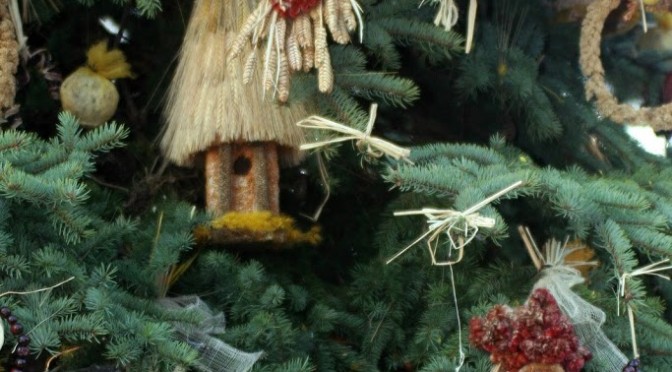
It might be something as simple as strings of popcorn and peanuts, cranberries and grapes, or something as elaborate (and pretty) as this wildlife tree at Longwood Gardens. The NWF suggests thin apple and orange slices, as well as pinecones coated with a mix of peanut butter and cornmeal then dipped in birdseed. Zick dough might be yummy too, I’d bet. And remember that your discarded xmas tree makes a great sheltering spot for birds and can be used as the base of a brush pile to attact other wildlife.

I took this pic last Christmas at Longwood and swore I’d make it back this past summer – didn’t happen. I wonder if anyone is going this Christmas? Heather in Pa. – is this tree a staple of the display? Do you know if the decorations are handmade?

Something else to add to the holiday to-do list.
Flock movements

Okay girls… where are we going next? It’s been a month or so since Susan last tried to tempt us to Ohio and Magee Marsh (which sounds pretty neat), but that second weekend in May is something of a sticking point for any of us in NJ as it’s World Series weekend.

Lynne is still quietly floating the idea of the flock visiting frozen Minnesota and Sax Zim Bog (which sounds really, really neat – Great Grey Owls!), but the frozen part is a little scary.

Mary in North Carolina? Delia in Pa.? Susan at Lake Life in North Carolina or is it Florida now? Pam in New York? Want to tempt us your way? Anyone else have ideas?

Hoodies

NJ is small and especially full of rude people, but we’ve got great birds, particularly in winter along the coast. You have to be the hardy type and enjoy the frigid wind in your face, but it’s worth the frostbite for the variety of waterfowl, gulls, raptors, and other goodies.

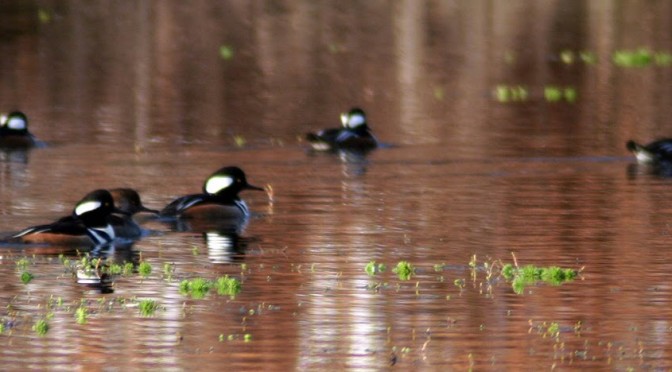
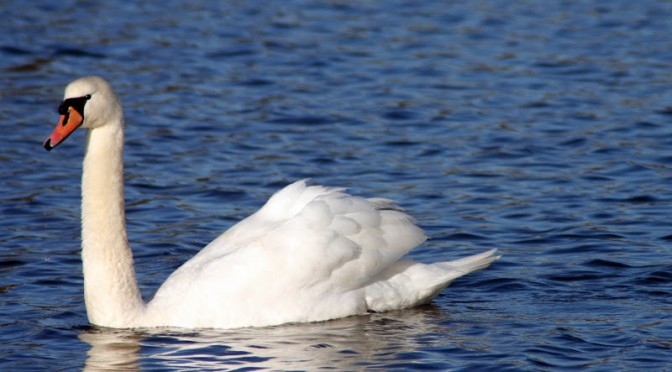
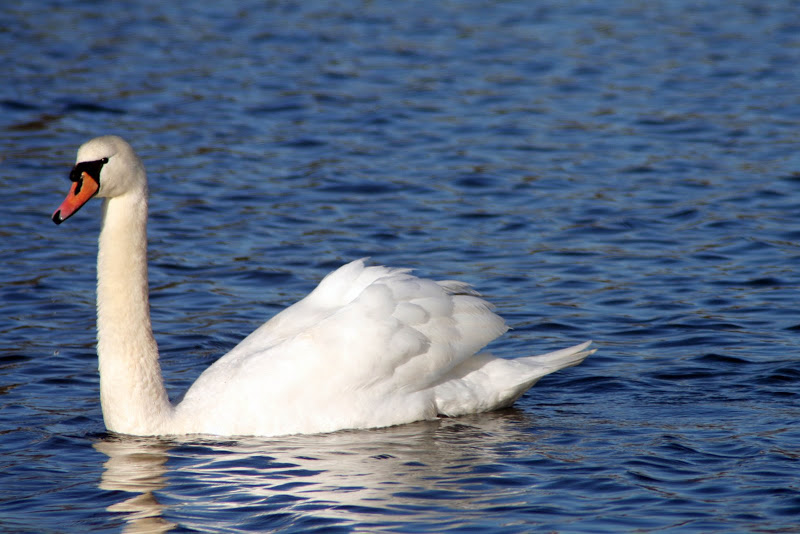
It’s still too early in the season for there to be great numbers of waterfowl, but I enjoy keeping up with whoever’s arrived in the neighborhood. On my days in the field, I plan my lunch hour around visiting a few of the coastal ponds that dot the north shore of the state. For whatever reason, the local ponds don’t attract the variety of the more southern ponds, but last week there was this nice group of hooded mergansers, a canvasback or two, some coot, and I think I may have imagined a ring-necked duck. Of course, the good ducks never get close enough for a decent photo, but there’s plenty of canada geese and mute swans to practice photography with.

There’s a lake along the ocean at the base of one of the senior citizen buildings that I visit that always has lots of gulls. I’m not often of a mind to sort through the ring-bills, herrings, and great black-backs but when the lake is frozen there may be bonaparte’s or a lesser. Mostly I have to be really bored to give gulls that much attention, but some birders are into that sort of mind-numbing exercise. I prefer the pretty ducks.

The ocean and bay have their own treasures; loons, grebes, oldsquaw, ruddies, bufflehead, harlequins. The marshes have harriers and short-ears, and rough-leggeds – the list goes on and on. But I’m getting cold just thinking of it.

So.. what birds get you outside in the winter? Or is it just the ones that wait beside the empty feeder?

😉

Sightings

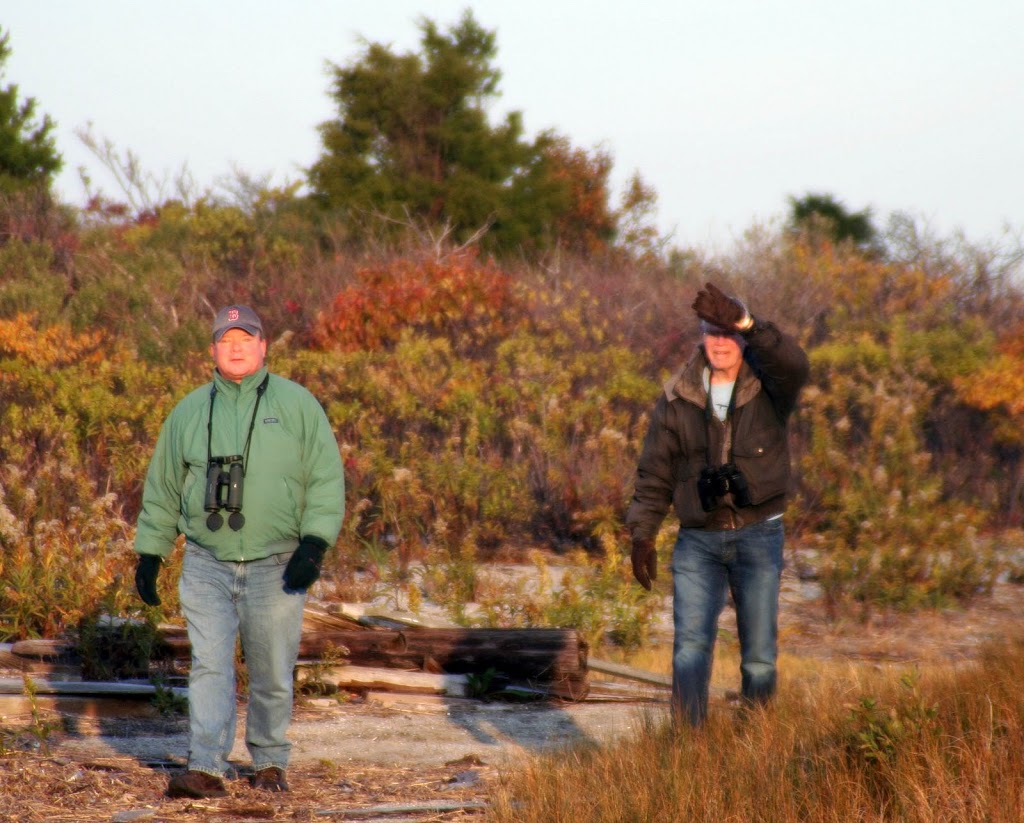
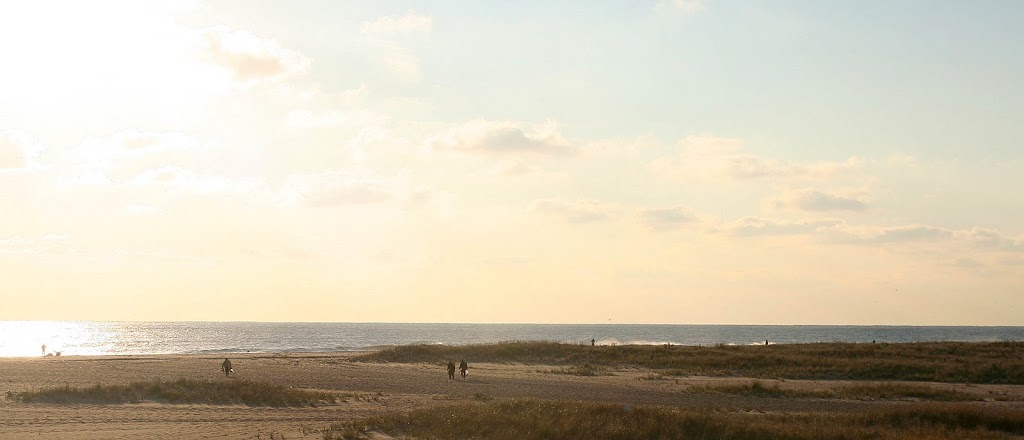
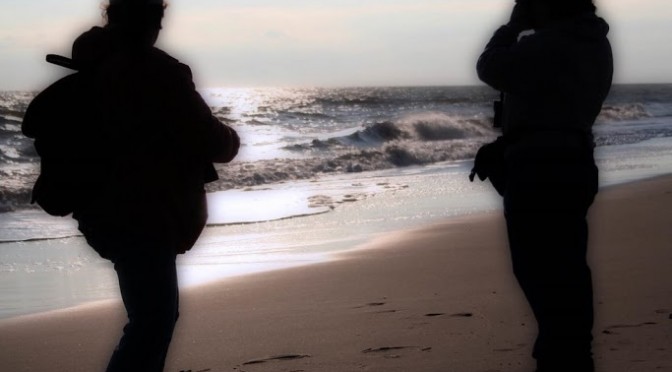
Yes, my friends were surprised to see me at 7 on a Sunday morning. I’ve birded with these two for years, but lately have been very lazy about getting up early enough to do it. Of course I got to Sandy Hook late and missed seeing the day’s kestral at Plum Island, but the nice color the early sun brought to the marsh and their faces was enough.
It still looks like summer on the beach side of the Hook; the only giveaway to the morning chill was the fishermen in their wet suits. We pulled a few gannets from the ocean, but no loons yet.
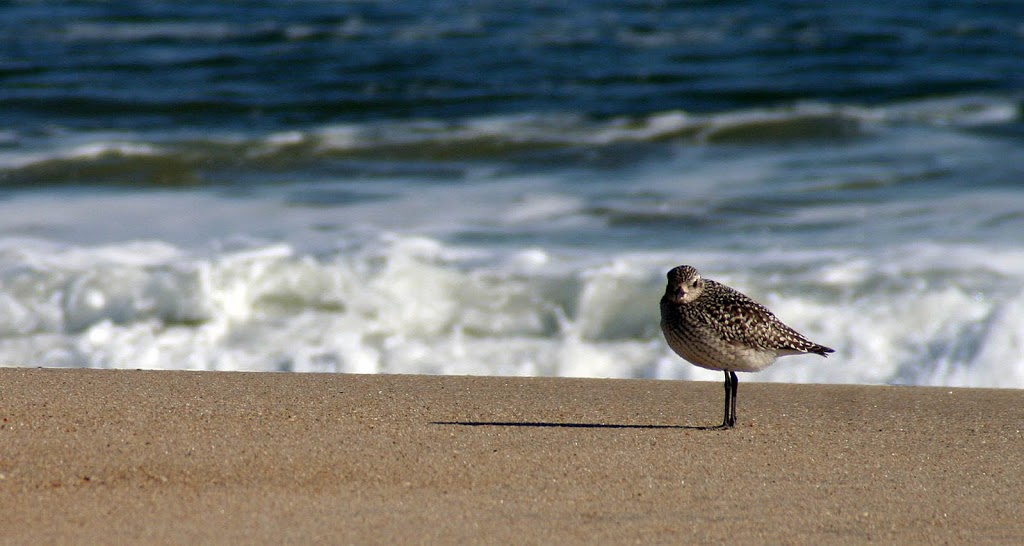
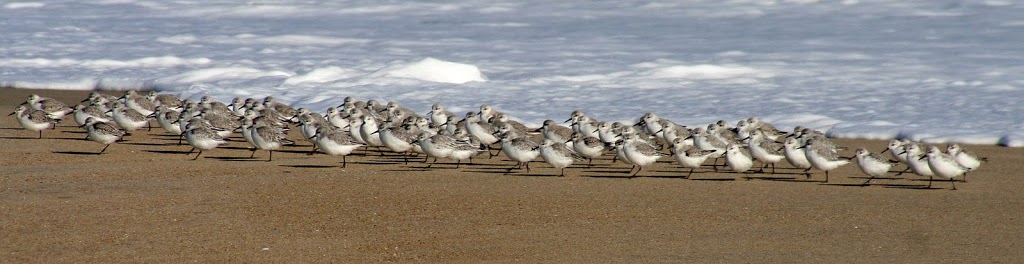
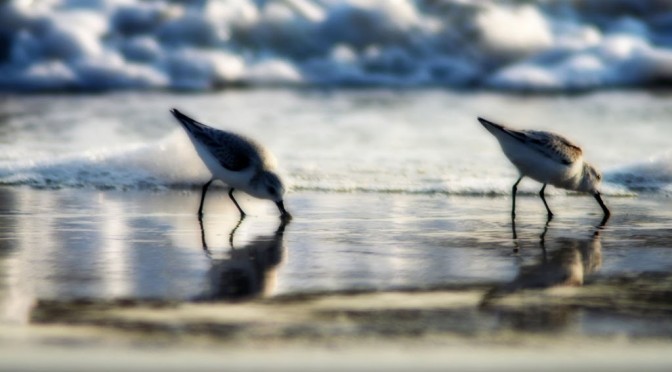
We walked all morning, to North Pond and South Pond, Horseshoe Cove and the Fishing Beach. Off Gunnison (the nude beach,in case Susan is paying attention) we found a nice flock of sanderling and two black-bellied plovers. I should have known them by their size, but it was their fluting toor-a-lee, like a melancholy sea bluebird, that gave them away.
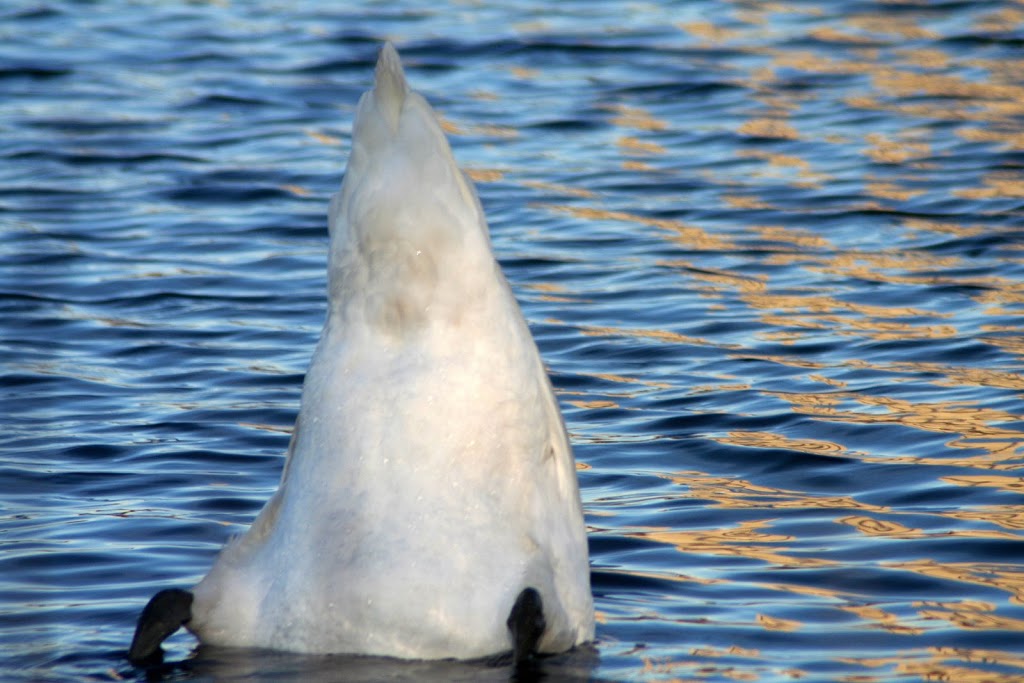
I don’t think I could ever tire of watching sanderlings and was glad to see such a large group huddled together against the wind. Have you ever seen sanderlings hop on one foot before the surf, rather than running like they normally do? Funny – that sight was my delight this morning!

I apologize for the odd shaped pics, but I had lens issues and had to do some serious cropping. Please do click on the pics for a (somewhat) better view.

Are we there yet?

The others may be done talking about our weekend in Cape May, but I’m only just getting around to sorting through my photos from the trip. Most are dreary and awful because, well, the weather was, but maybe I can salvage enough to offer up something that you haven’t already read about on their blogs.

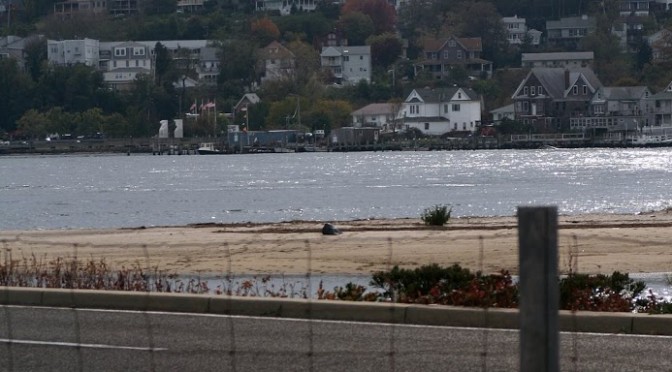
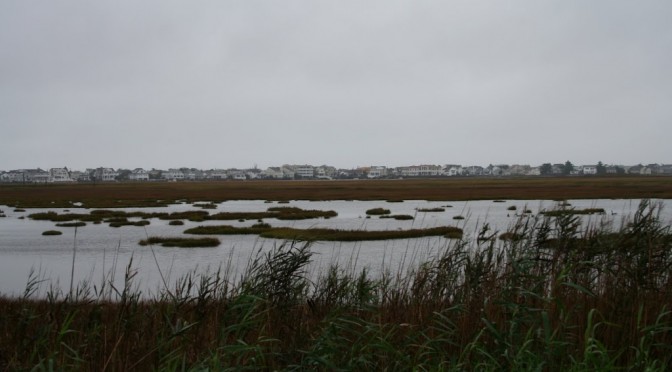
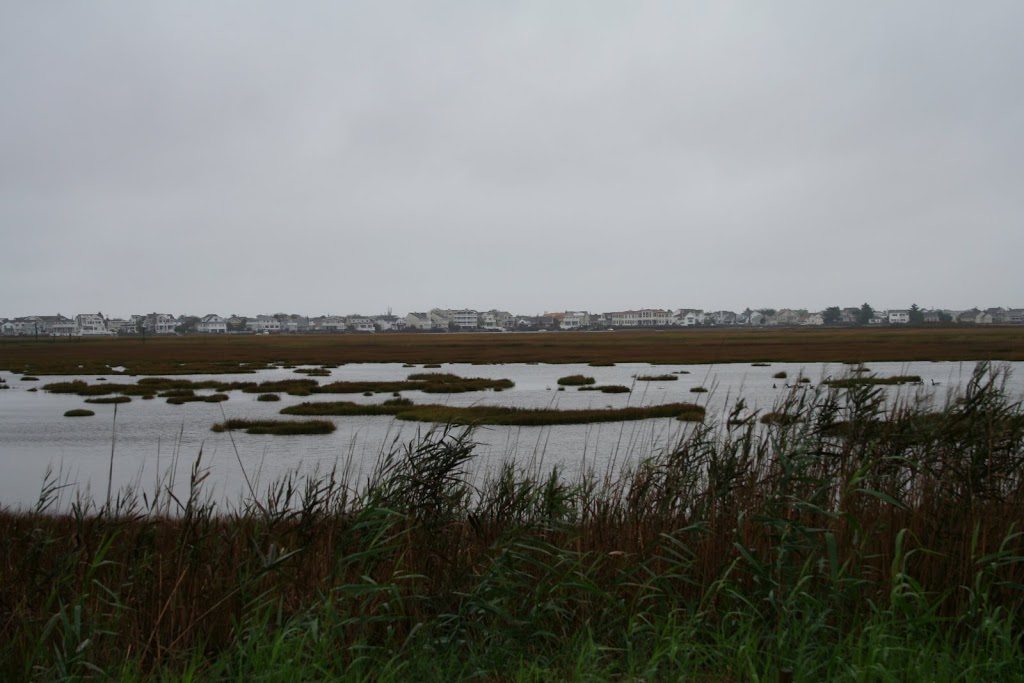
I’d intended to get down to Cape May early in the morning on Friday, but decided instead to take my time and stop at a few places on the way south that might make the best of the stormy weather. I visited The Wetlands Institute in Stone Harbor to dry out some around lunchtime, but mostly because I knew there’d be nice congregations of great and snowy egrets feeding in the salt marshes along the causeway. I took this pic from their parking lot; you can see through the gloom the type of development that is typical on the barrier islands of the Jersey Shore. The habitat loss has destroyed nesting sites for birds and other critters. The Wetlands Institute does a lot of work to restore habitat for diamondback terrapins and it was this that interested me. Just out of sight in the foreground of the photo is an artificial nesting site created for them as an alternative to nesting on the embankments along the causeway.

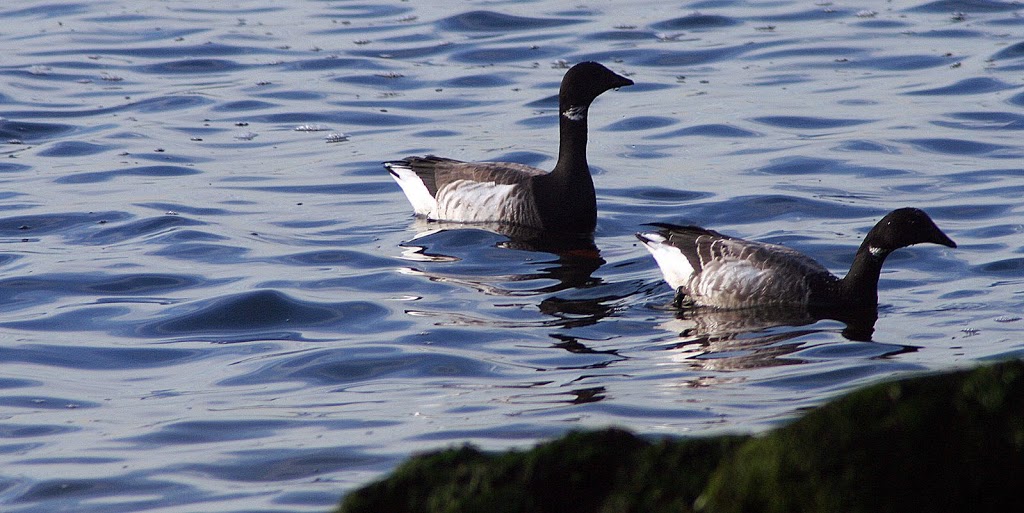
About the time that Susan was making a wrong turn on the Atlantic City Expressway and heading for Camden of all places, I was at the Sea Watch in Avalon. Seawatching isn’t for everyone, especially in the pouring rain, but the scoter show was phenomenal on Friday – 158,000 birds passed the counter, most of them scoters! Of course I couldn’t really see them through the rain and the foggy windows of my car, but wave after wave of migrating seabirds is spectacular, no matter the weather, really. I also spotted some newly arrived brant; they’ve been here at Sandy Hook for two weeks or so, but I’m not ready to hear their wintry calls just yet.

An angry blue darter

Susan pretty much stole my thunder, but I’ll go ahead anyway and torture you with more about the Cape May Banding Project. Part of the fun in watching hawks is learning to identify them in the field. Most often we get only a fleeting glance that offers little more than a general impression of the bird’s size and shape, with little or no detail visible as it disappears into the distance.

The banding demonstrations at Cape May Point State Park offer those of us who are drawn to birds of prey the chance to see some of those details up close. Birds of prey have become a popular study among birders and there are plenty of books to help with identifying them, but can’t compare to the thrill of seeing one up close. The point of the banding demonstrations is to engage the public and generate support for the project; the purpose of the banding itself is a bit more far-reaching and long-term.

Last fall when I wrote a bit about the monarch tagging project, a commenter here questioned the ethics of tagging butterflies. I think the same criticism might be made for banding hawks if we fail to consider the importance of the science behind it. The capture of migrant hawks is routine at many hotspots throughout the world; Cape May isn’t unique in that respect, and the numbers banded through the years are quite large. The data gained can help to answer important questions about population dynamics and provide insight to understand why some species are in decline.

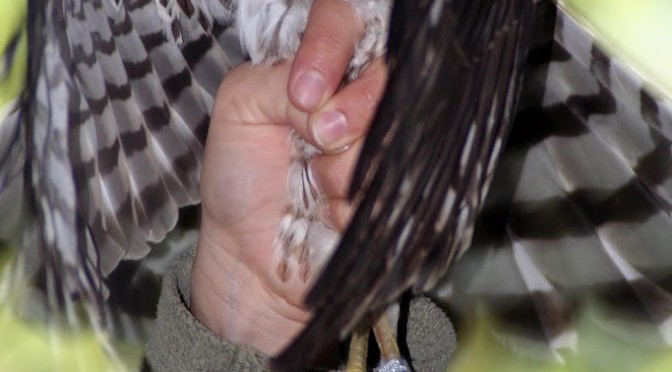
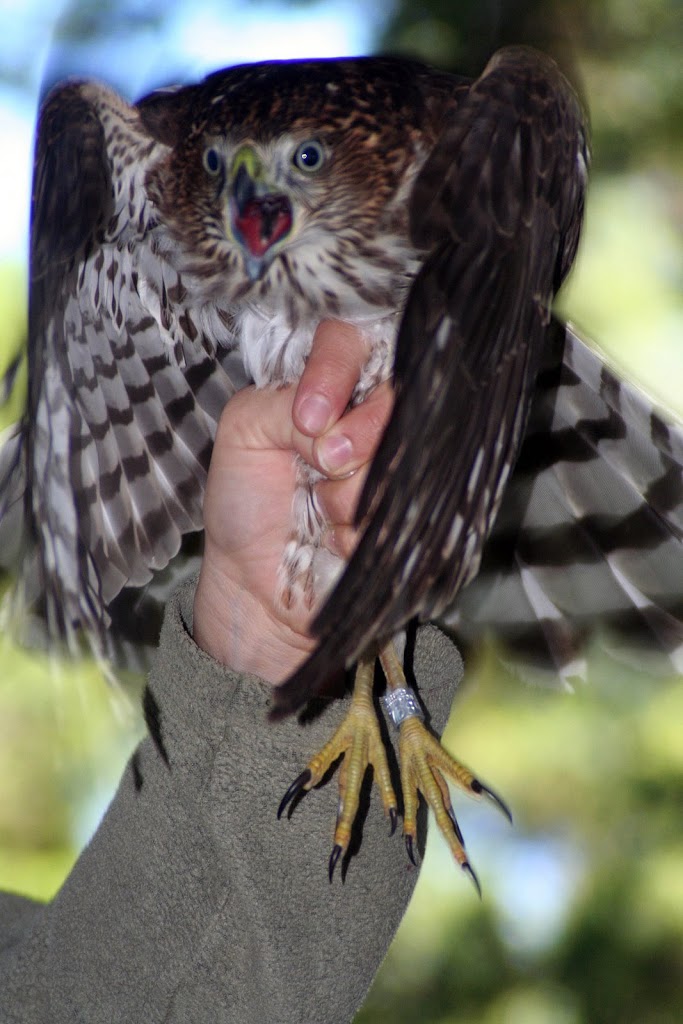
The name Blue Darter is an old nickname for the Cooper’s Hawk and refers to the bluish-gray on an adult hawk’s back. This cranky one is a juvenille showing the typical brownish-streaked breast and belly.

I felt about how this bird looks going back to work today until I found out that I had won $50 in the baseball pool for the World Series!

Two hours and a world away

It isn’t easy explaining the *Cape May Experience* to someone who hasn’t been here. If you’ve gone to other birding festivals, you might have an inkling, but I doubt it’s comparable. The first time I came for an Autumn Weekend and then had to leave and go home, I was almost in tears for most of the long drive up the Parkway. Granted, I don’t get out much and was new to birding, but really, there’s something special about Cape May.

I hope that Susan, Susan and Delia got an idea of that special something and can maybe convey it better than I with their posts about the weekend. It’s not just about the spectacle of bird migration that’s so obvious here. Part of it is that there are so many familiar faces and a sense of connection, even among strangers, and the easy way we find common ground to share a laugh, a story and the simple comfort of a warm car at dusk beside the hawkwatch.