Category Archives: Uncategorized

Books for plant geeks

When I was a newly-minted master gardener I went out and bought two great reference books so that I would sound smart when answering questions on the helpline or during community events where we volunteer. My dear friend Debbie likes to tease me that I am never able to answer any of her gardening questions. She says that my answer is always the same, “but I don’t grow that.” Which is true; she and I have very different tastes in plant material.

I guess she thinks that I ought to know everything there is to know about plants. The fact is, most master gardeners are just people who have an interest in gardening and are willing to volunteer their time. We’re trained in certain aspects of horticulture, but we’re not expected to know everything. Most of us have a particular interest or area of expertise, but the rest of the time our answers come from books. Knowing where to find answers is important.

Two books I use often are “Dirr’s Hardy Trees and Shrubs” and its companion “Manual of Woody Landscape Plants”. Michael Dirr has many excellent horticulture titles, but these are the most popular. The first contains lovely glossy photos and minimal information on care; the second volume is much more detailed (and intimidating) and includes info on propagation, culture, pests and diseases, and landscape value. It also includes Dirr’s personal comments and growing experiences with each species covered. His comments and growing tips are the most enjoyable part, in my opinion.
End of April

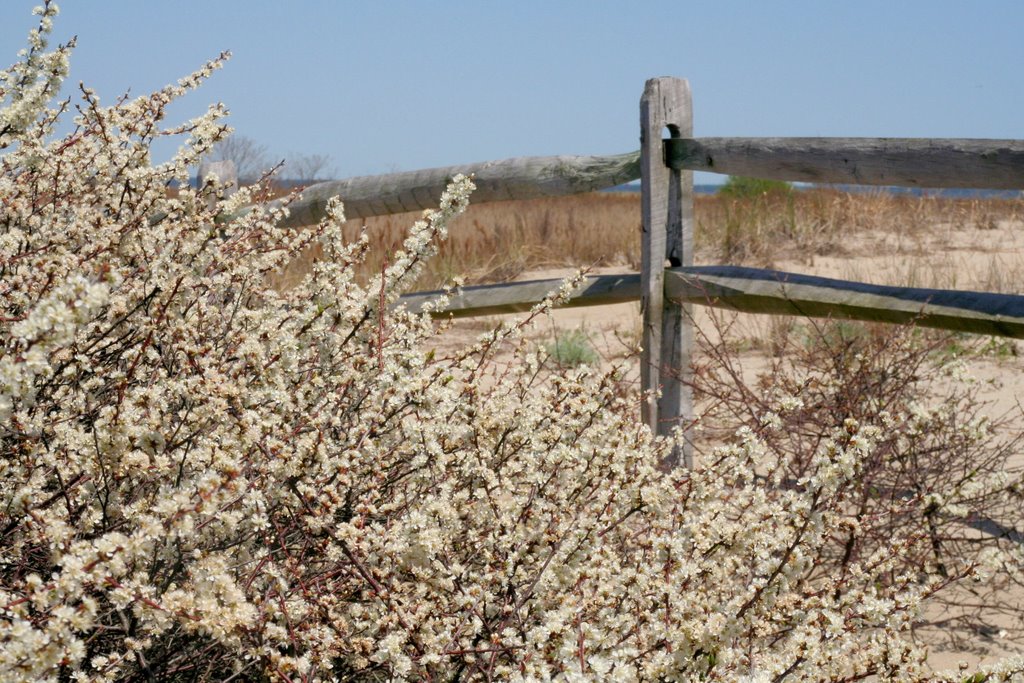
Beach Plum (Prunus maritima) at North Pond, Sandy Hook


“By the end of April the commitment is complete. Late Spring or early, we are on our way into the fullness of mid-May, and June will come billowing across the meadows before we know it. Meanwhile there are a lot of things to be done. All the buds have to open, all the acres of chlorophyll have to be spread in the sunlight, all the early blossoms have to unfurl. The earth has to get on with its vernal business.

It is perhaps significant that April, back at the root of the word, meant “the open air,” the air out-of-doors. So it is only reasonable that we should expect much of April after Winter and March, when the open air was somewhat less than hospitable. April is an opening up, not only of the bud but of the heart, for of all the seasons this is the one in which we have the most urgent need to participate. We must have a part in the new awareness, the partnership with time and sunshine. Man is more than a shrub or a vegetabe, but he, too, needs Spring.

So, we come to the end of April, even a chilly April, with birdsong around us and some of Spring’s color; and we feel the strengthening sun, we sense the opening buds, we know again that no Winter lasts forever, no Spring skips its turn. April is a promise that May is bound to keep, and we know it.” Hal Borland, Sundial of the Seasons, 1964.

Ag Field Day

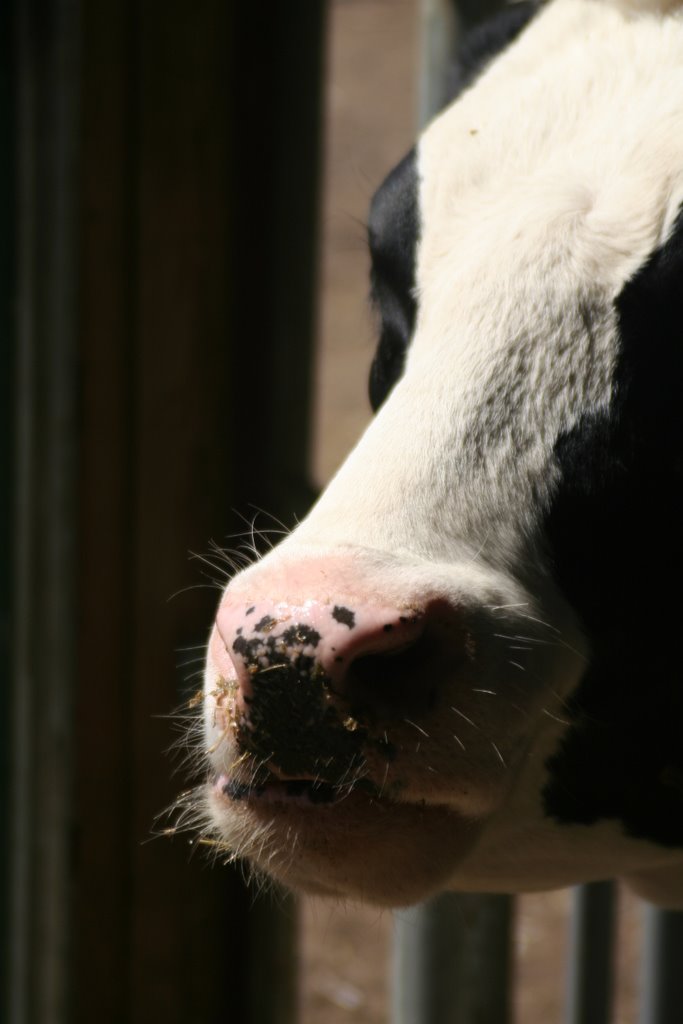
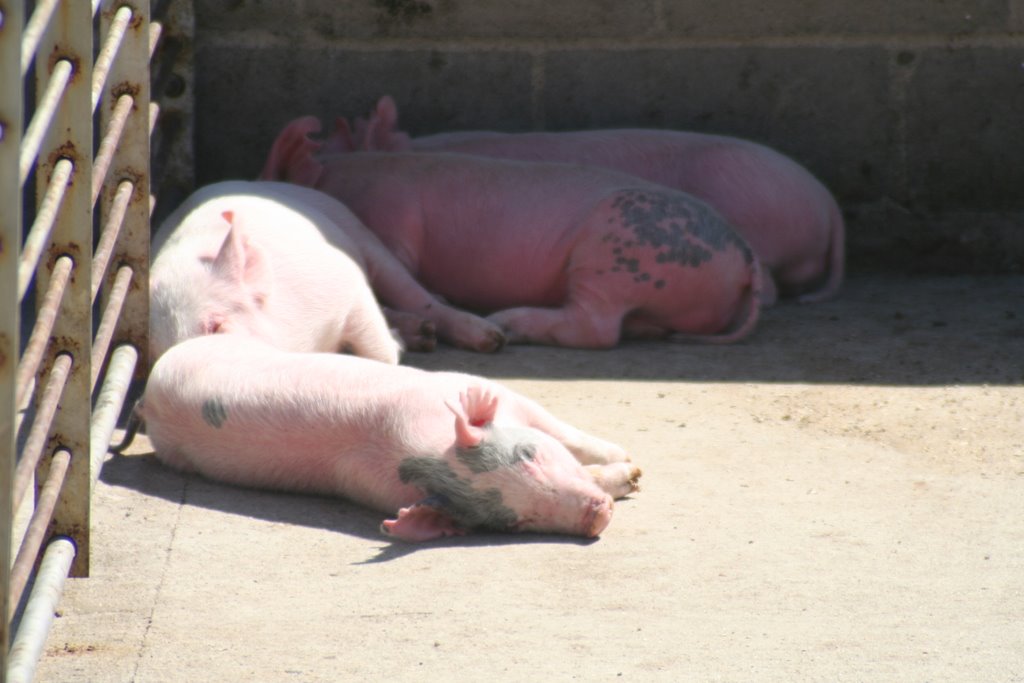
Cook College at Rutgers University has an Agriculture Field Day each year “to celebrate the unique connection between the land grant system of colleges and the communities they serve”. For me it was an excuse to take photos of cute farm animals and buy plants. I really liked the cows until one decided he wanted a taste of me and licked my arm. That was a surprise! My husband is a bit bored by my fascination with animals (honestly, I’m like a little kid and have to pet each one) – I guess because he grew up caring for horses, goats, and ducks with his parents. He was a good guy today and put up with my silliness.

It was a beautiful day and we both really should have been at home working in the garden. There’s tilling to be done and fencing to fix, but I’ve wanted to see what Ag Field Day is all about for a while. All of the animals are raised and cared for by students and today was a chance for them to show off the work they do.

The Cooperative Extension and Master Gardeners also had a display and plant sale. We got there late so most of the heirloom tomatoes were already sold out, but I did find a few Brandywine plants and some of the Rutger’s variety that are so popular. My husband was happy to buy a few of the Angel’s Trumpets that he loves so much, but are difficult to find. We grow these in large tubs most years and try to over-winter them in the basement, but have very little luck with it. Someday we’ll find a friend with a greenhouse and some spare room for my husband’s tropical plants!

Dust off your cameras!

Photo by Nick J. Dunlop


The National Wildlife Federation recently announced the winners of its 2005 photography contest and is now accepting entries for the 2006 competition. This photo of a belted kingfisher is my personal favorite, but the grand-prize winning photo, of a great gray owl, is breathtaking. Click on the photo above to see the other winning photographs. Pros, amateurs, and beginners (like me) are encouraged to enter in 8 categories ranging from birds to plants to underwater life. The talent for photography that I see daily on the blogs I frequent makes me believe that many of you should enter this contest. Go for it!

Confusion in the early-spring garden

When I first started growing things I was organized. I drew plans on graph paper and kept those annoying little plastic labels next to the plants when they went into the ground. Not anymore. So many plants have died and been replaced or have simply vanished without my noticing that I’m never really sure what anything is until it blooms.

I used to be on the mailing list for a catalog that specialized in native prairie wildflowers. A useful feature of that catalog was a little picture of what each seedling would look like after it had been growing for a while, so that the gardener wouldn’t mistakenly pull out a good plant thinking it was a weed.

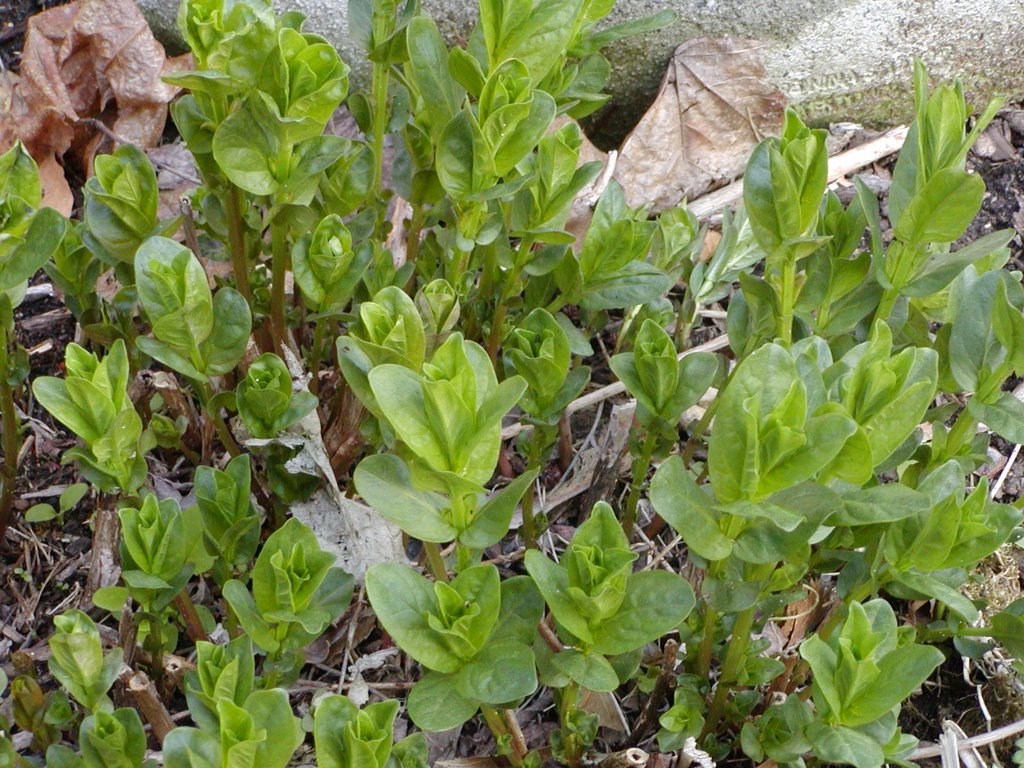
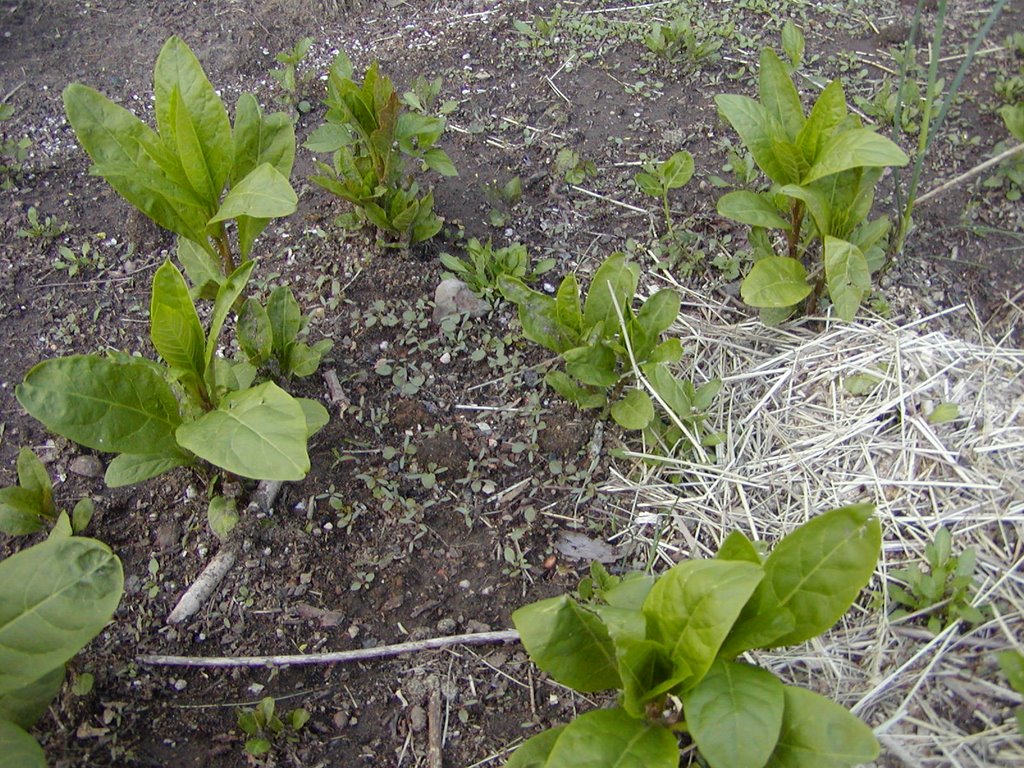
For the most part, I can recognize the obvious weeds, like onion grass and pigweed, but sometimes I’m not so sure. These are growing in the vegetable garden and I would like for them to be arugula (does anyone know if that is perennial?) because they almost seem to be growing in rows, but I’m afraid it’s actually pokeberry. We have a lot of that, but I don’t recognize it until it’s big and really hard to pull out.

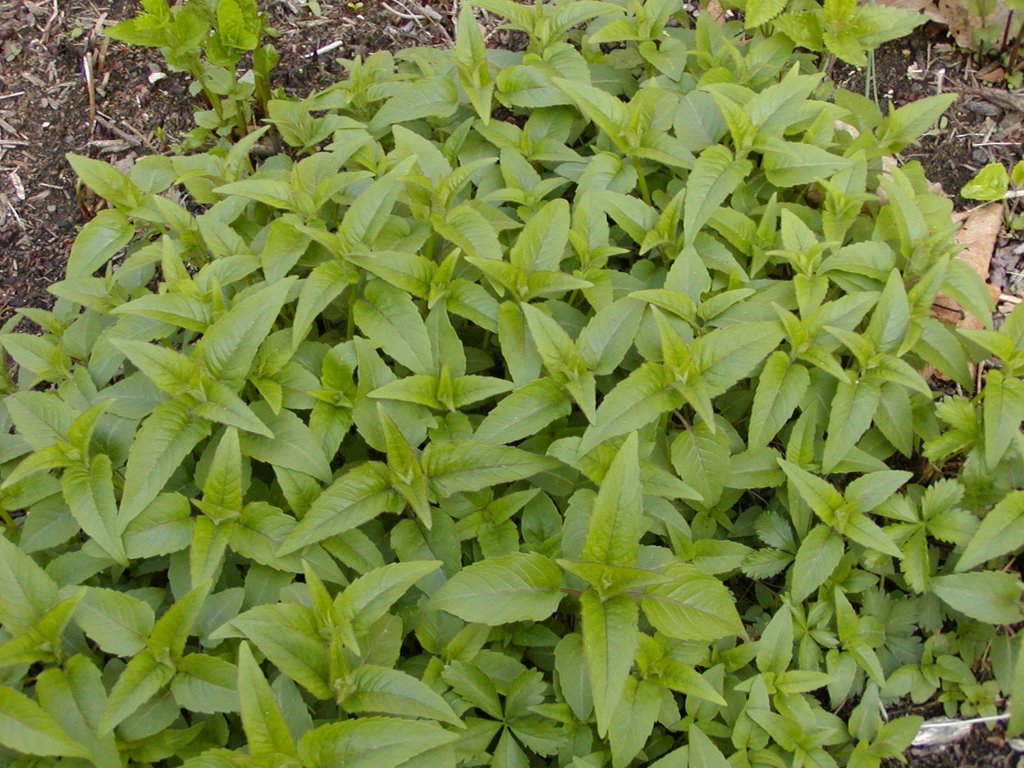
Some plants are easy to recognize by the shape of their leaves or stems. This is an expanding patch of bee balm which is easy to know by its square stems. Every year it grows a bit larger and I’m careful not to pull any of it out. Any early-summer hummingbirds I get just love this plant. This one is a red variety, but I would really like to find the pale purple type that grows wild. Local nurseries sell a purple one, but it is very prone to mildew in my garden.

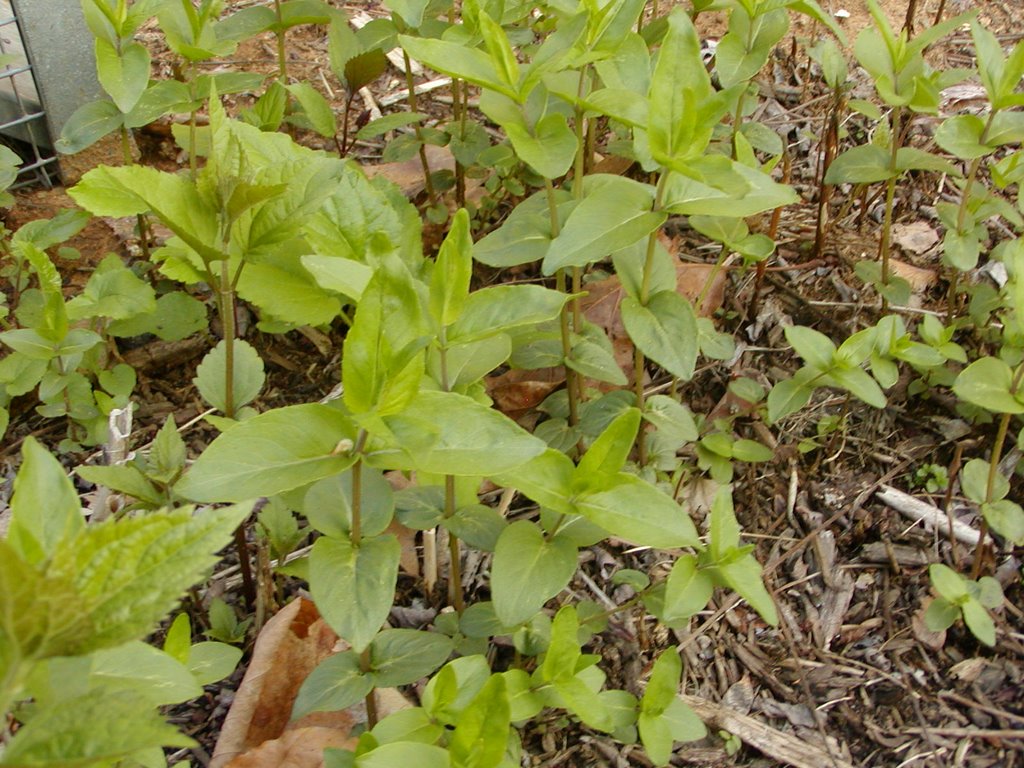
Someday I’d like to get back in the habit of labeling things. Really though, I enjoy the surpise of not knowing. I just wish weeding weren’t so difficult this way. Not knowing whether a plant is *good* or a weed is a handy way to procrastinate, isn’t it? I think this is Swamp Milkweed in the photo at right, but I see some little weed seedlings in the middle there trying to hide. If anyone knows if the plant on the right above is pokeberry, please do let me know!

Jenny Wren

Of all the birds that rove and sing,
Near dwellings made for men,
None is so nimble, feat, and trim,
As Jenny Wren.
With pin-point bill, and tail-a-cock,
So wildly shrill she cries,
The echoes on his roof-tree knock
And fill the skies.
Never was sweeter seraph hid
Within so small a house –
A tiny, inch-long, eager, ardent,
Feathered mouse.
WALTER DE LA MARE
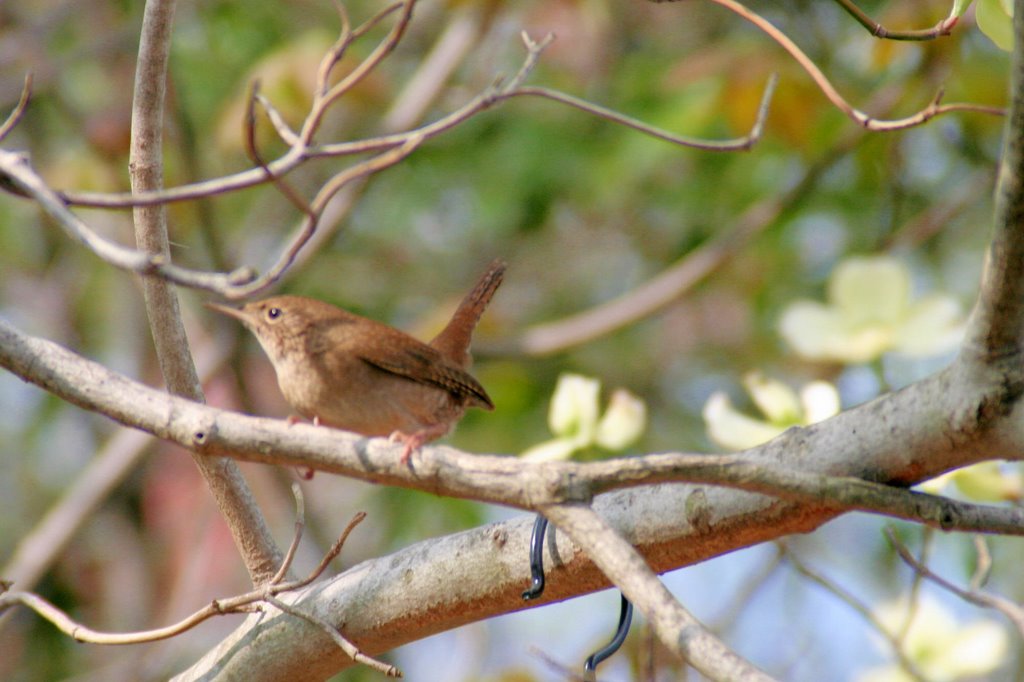
The house wrens have returned in the last few days and one is already filling a nesting box with sticks. I’ve put out plenty of boxes hoping to divert him from the box that I think a pair of chickadees may be using. This one was not happy with me as I took his photo – his scolding attracted a few chickadees to come and see what I was up to, and then a nearby squirrel also scolded me with its raspy voice. I love to hear their bubbling song when I’m working out in the garden. They sing incessantly; their song by midsummer becomes little more than background noise. Then suddenly they are gone in late August and the garden is quiet without them.

Serviceberry, Shadbush, Juneberry

Everything is blooming most recklessly; if it were voices instead of colors, there would be an unbelievable shrieking into the heart of the night. – Rainer Maria Rilke, Letters of Rainer Maria Rilke


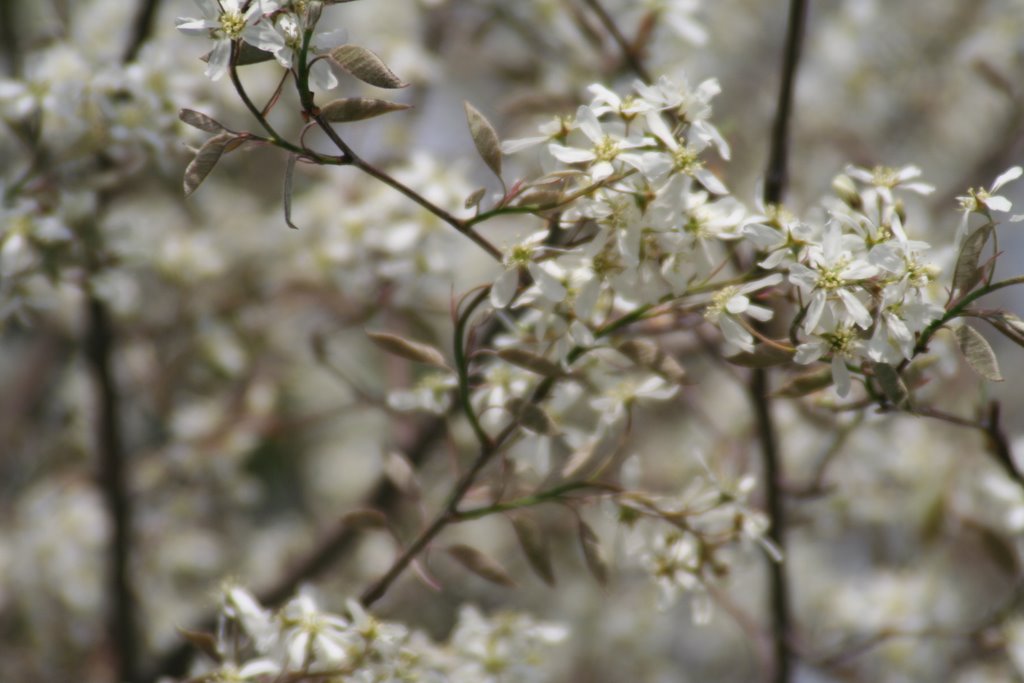
The Serviceberry (Amelanchier spp.) is a beautiful native ornamental tree that is well-loved by birds for its sweet fruit. It blooms in my yard in mid-April usually; at the same time as the apple trees, after the ornamental pears, but before the dogwoods come to bloom. Early settlers knew it as Shadbush because it blooms when the shad run. My husband gave me this tree a few years ago – its fruit ripens in my birth month, hence its other common name, Juneberry. He wants badly to prune and shape it, but so far I’ve convinced him to leave it growing as a multi-stemmed shrub, rather than a tree. Its natural shape is gracefully arched and its blossoms look like shimmering lace against the woodland border.

Bleeding Hearts


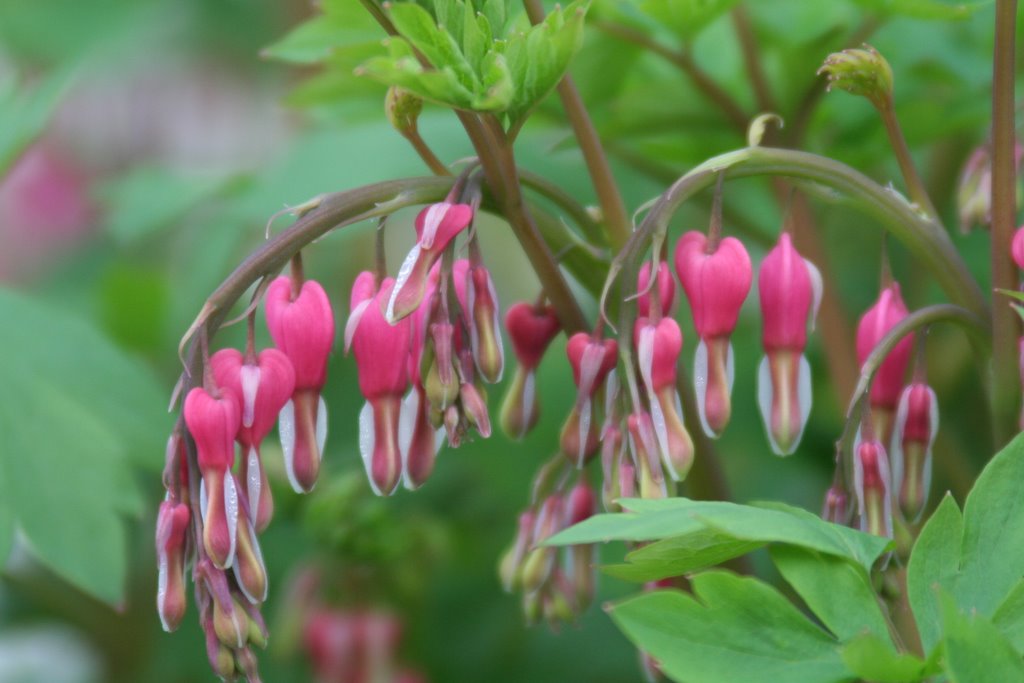
The Bleeding Heart (Dicentra spectabilis) is my favorite old-fashioned garden flower. This plant is near 3 feet across and has been blooming in a shady corner beside my screen porch for at least 20 years. Each year it seems to grow wider and bloom more heavily. Bleeding Hearts like shade and moisture – mine gets morning sun and plenty of rain water from the downspout beside the porch. In cooler climates, the foliage will stay nice through the summer, but here in NJ the heat and humidity yellows it by the beginning of July when I’ll cut it back. I’ve read that the flowers are favored by hummingbirds, but I don’t see them here reliably until July when my plant is past its prime. The plant’s wild relatives, also Dicentras, are called Dutchman’s Breeches and have a less showy, but similarly heart-shaped flower.

The Martha Show

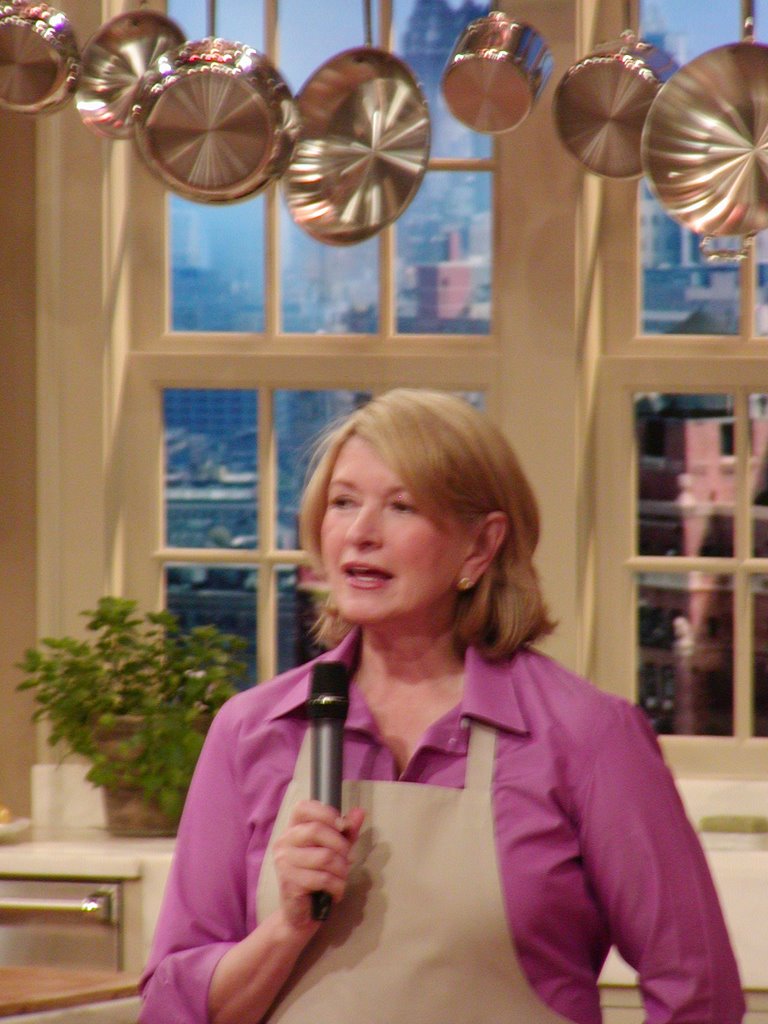
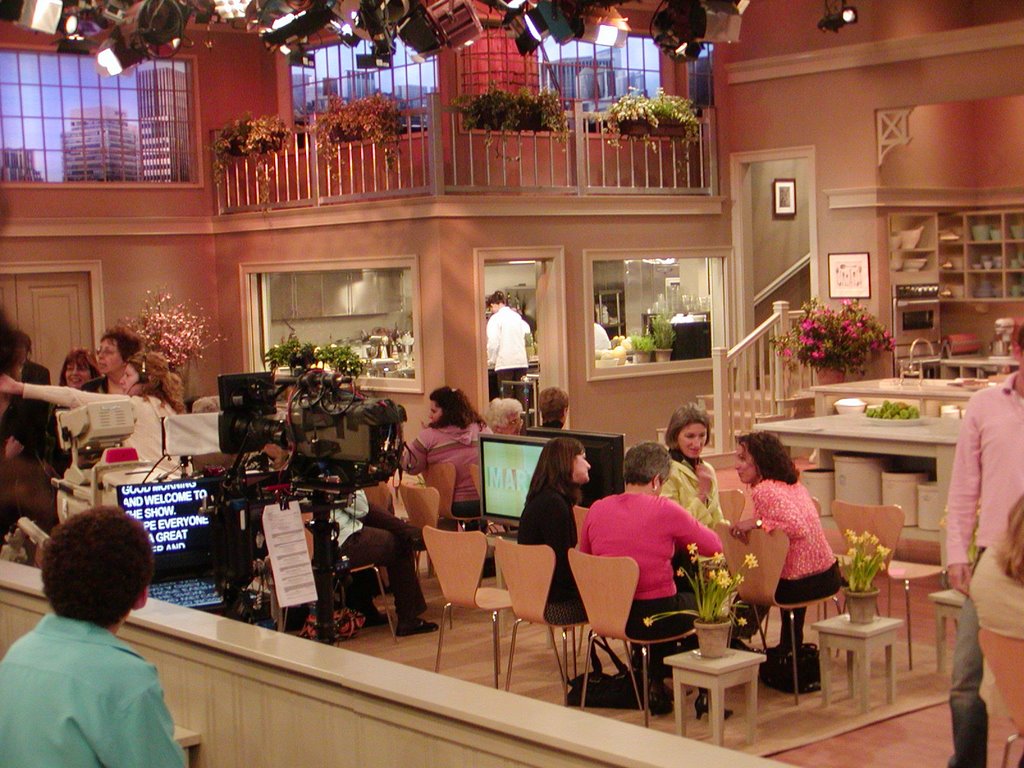
I went into NYC today to see the Martha Stewart Show. I’ve never been in the audience of a TV show, so when my friend Anna had a spare ticket I jumped at the chance. I’m not a big Martha fan, but it was fun to get a behind-the-scenes look at how a live TV show is produced.

I got up before dawn and caught a 6:30 train with all the groggy commuters – boy am I glad that I don’t have to do that every day. It really made me appreciate my scenic drive to work. There is entirely too much hustle-bustle and general crankiness happening in the city for me. Never mind that I felt like a lost little duckling following Anna and her mom around – Penn Station and the city streets are like a maze to me.

The show taped lived today and as an audience member my job was to clap a lot and be energetic – not easy on 4 hours sleep. The show set had a kitchen and a craft area and a small greenhouse. There is a small army of staff people that attends to Martha during the commercial breaks and cleans up any spills or crumbs and has everything ready and *just so* for when the show goes on the air. On today’s show, there was some soap opera actor who I never heard of (Ricky Paull Goldin)and Wolfgang Puck, the chef.

Martha made coconut macaroons and a veggie pizza with the chef. We were looking forward to the audience giveaways – we’d heard that Martha gives really good gifts – but there were only gifts for a few people. Everyone in the audience got a macaroon (sans the chocolate coating she recommended in the recipe) – so I guess that made it worth the trip. 😉 We roamed the city for a bit afterwards and had chinese dumplings for lunch before catching the train back home. Here’s Anna and her mom, Flor, looking dazzled in the audience. The taped show re-runs at 6 pm here in the East on TLC – I’m off to go see if I can find myself clapping my fool head off in the audience.