Category Archives: Birds

Sprung!

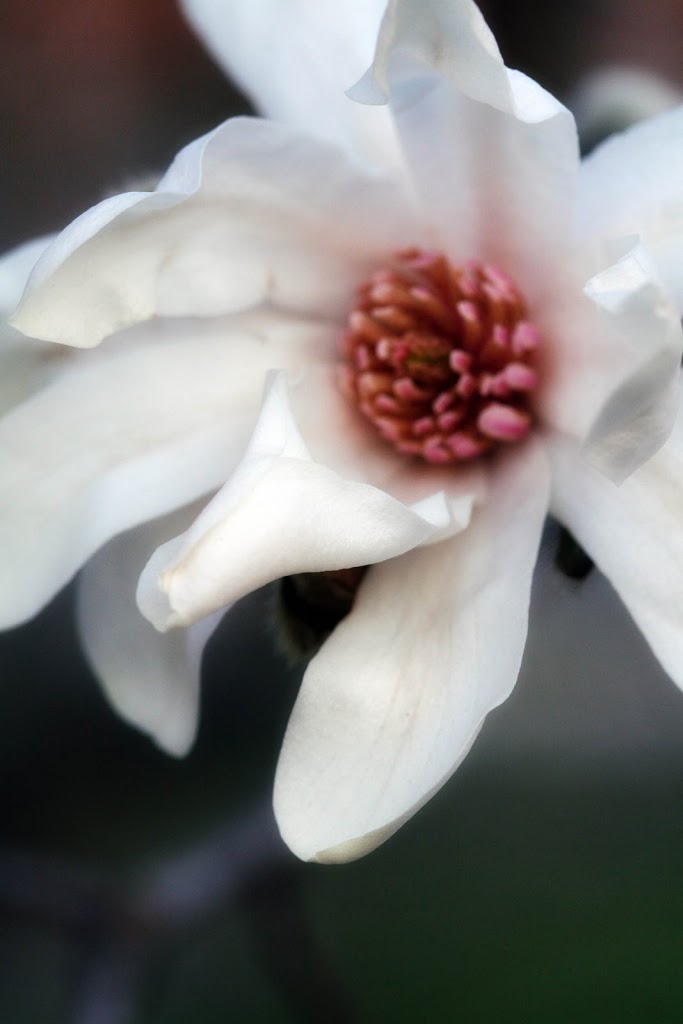
I watch the Star Magnolia in the front garden for a sign that it’s ready to burst and become magical. It’s pretty enough in the winter; the bare gray branches make some interesting shadows across the sunporch when the light is right.

For most of the year it’s just a big green bush; overshadowed and outprettied by the American Holly beside it. In early spring, with everything else shouting yellow, is when I fall in love with it. There’s something breathtaking about rounding the corner to home and seeing first this haze of white flowers. The show doesn’t last for long and the flowers often are marred by rain or freezing temps, but it’s beautiful however short-lived.

Spring is slowly ambling its way through the garden here; forsythia and daffs are blooming, the quince is in bud and just Wednesday I found the purplish tips of Virginia Bluebells and Bleeding Hearts forcing their way out of the dark in Cricket’s Garden.
Peepers are peeping and Phoebes are back, as is one of the local pair of Osprey, spotted just today on its cell tower nest by the train station. It’s curious to me the way spring signs seem so long in coming, yet when they do come, the progression is so predictable and welcome and right. The world is opening up again.

Dead stuff on display

I had occasion to visit the American Museum of Natural History in NYC today. I almost never go to the city, certainly not without kicking and screaming about it, but I’ve always wanted to see the museum so happily took the opportunity today.

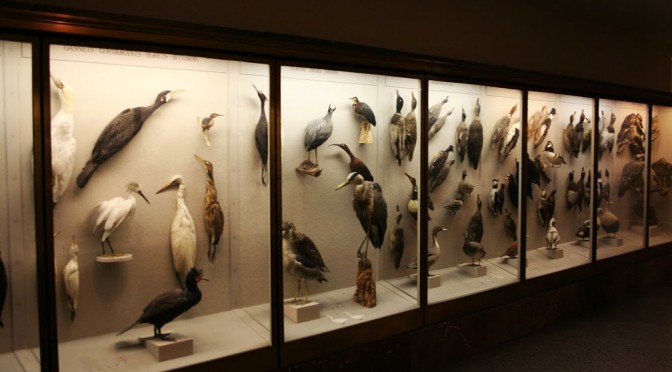
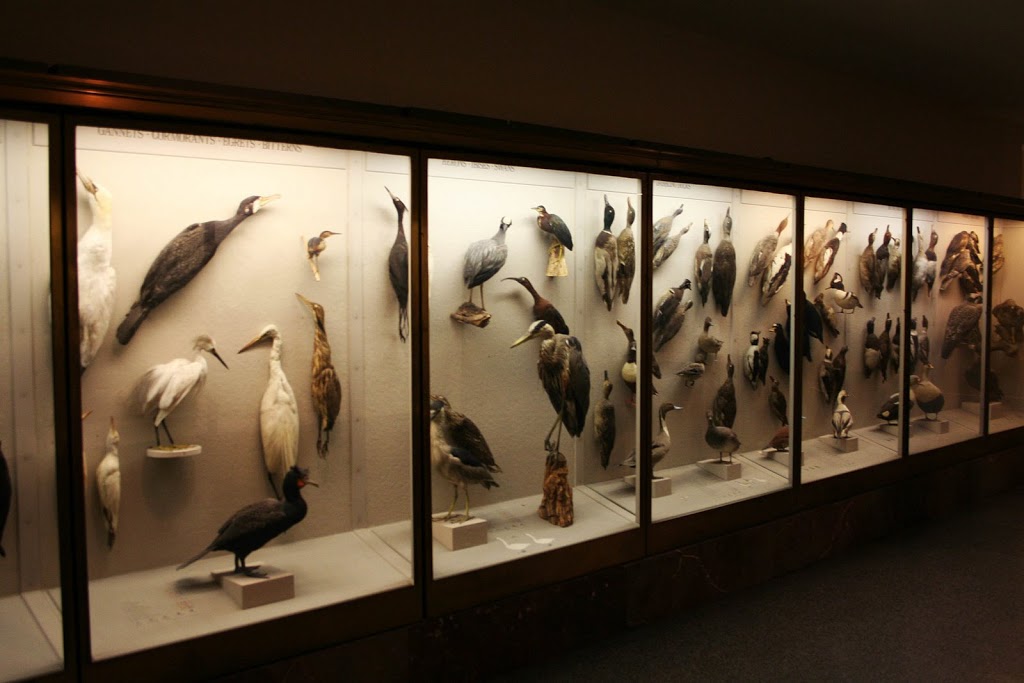
The place was packed solid with visitors, it being a holiday weekend, so with limited time and limited patience for crowds I focused my wanderings in the birdy parts of the museum. I don’t have any other natural history museum experience to compare it with, but my overall impression was sort of lackluster. There are several halls dedicated to birds, be it local to NYC, North American Birds (which holds 99% of all known species), or Birds of the World. The exhibits were very dark and the bird specimens in poor condition and really very creepy-looking! I don’t think this hall of dead birds will be winning us any converts to birdwatching anytime soon. Yuck.

Equally icky was the hall of dead rodents and rabbits; it was vaguely interesting to be able to make size comparisons among the different species of hares and rabbits, but still… yuck!

What did impress me were the habitat dioramas; these also included mounted specimens, but they were presented in somewhat more life-like scenes. Each was backed by beautiful and colorful paintings and included model plants and flowers to mimic the natural habitat of each species. I’ll share just a few pics of my favorites… and do click on these!

Desert birds of SE Arizona

😉

I thought this one was particularly pretty… marsh birds

Birds of the shore… feels like home on a summer day.

Peckin’

The saddest thing I ever did see
Was a woodpecker peckin’ at a plastic tree.
He looks at me, and “Friend,” says he,
“Things ain’t as sweet as they used to be.”
–Shel Silverstein

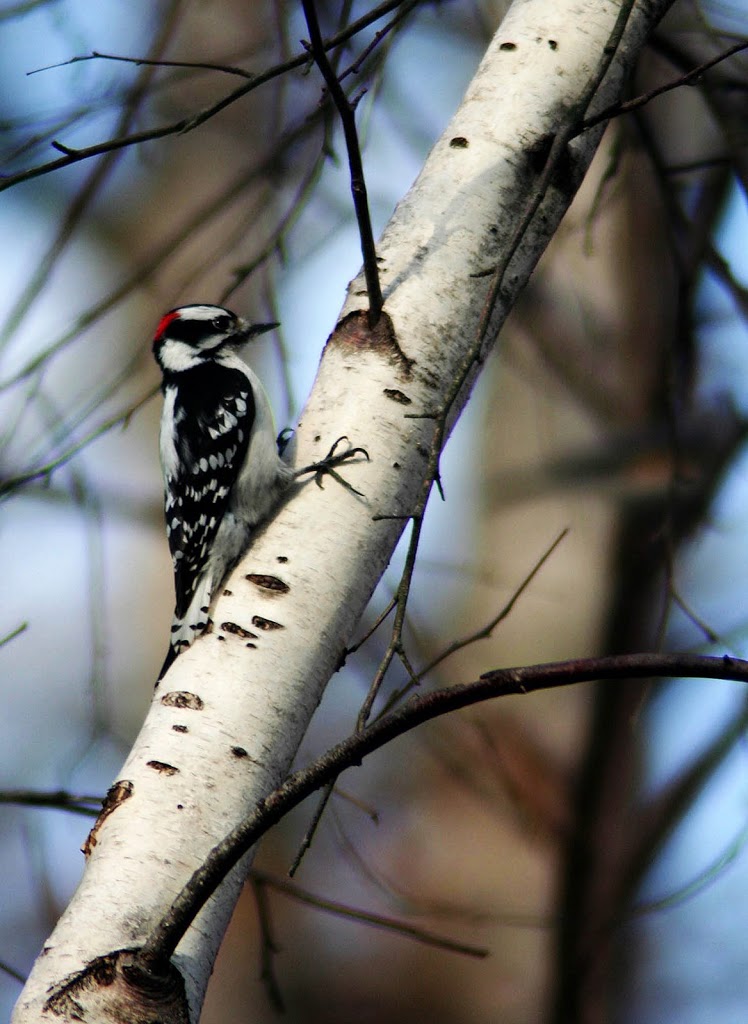
Have you noticed the woodpeckers lately? All at once they seem to have decided to stop being so shy and are swooping from tree to tree in their woodpeckery way, testing out the hollow limbs to find the most resonant. The downies love peanuts and always seem to be at the feeder or waiting nearby in the little dogwood tree for the chance to sneak in and steal away a nut. Sweet little birds!

The warriors return

They left in the autumn of the year, a great army of legend. Flags flashed rusty red and steel grey, barred and banded. Old veterans did heed the call once again, their ranks, as with all armies, swollen with so many young. By battalions they paraded across the countryside and coastline, leaving summer behind to seek their fortunes elsewhere.

Their passage was witnessed by countless numbers at Cape May or Hawk Mountain. The thrill of the parade tempered only by thoughts of how many might never return. Then they were gone. Yes… some stayed behind; a rear guard to watch the homefront. Others, Northern Warriors, on their own epic passage, filled the void left by the other’s passing. Even with these, the world seemed barren, without magic or myth.

Through the long winter how often our thoughts have drifted to how the warriors are fairing. Have they found solace in lands more plentiful? Were their enemies too strong? How many will return well or battle-scarred or not at all?

Now the first breaths of spring stir the air. Though the land still sleeps, the promise is heard in whispers… changes so subtle as to go unnoticed. The distant regiments hear those whispers. It is time once again to reclaim their birthright, their territory, their home.

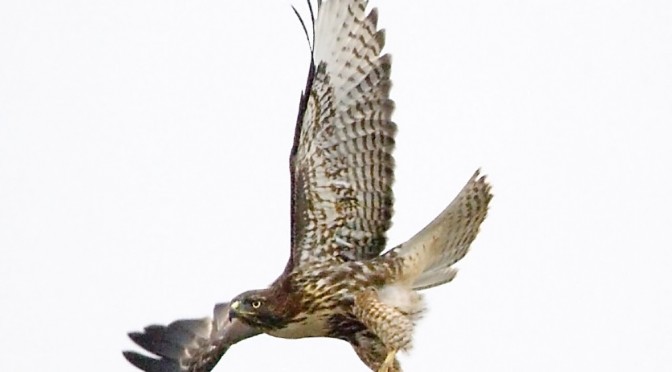
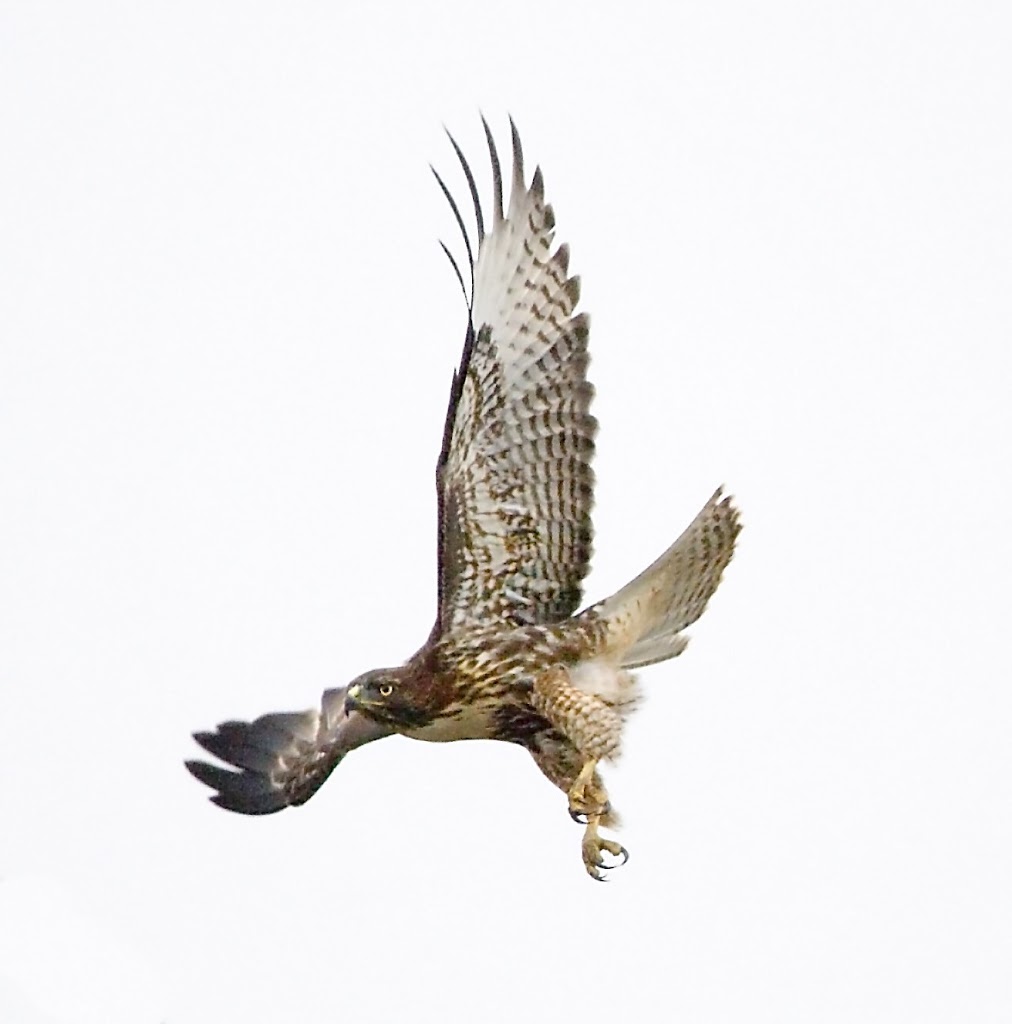
Those who would witness their return climb to the mountaintops (or find a local spot close to home!) and wonder at the adventures they have known. Look to the skies and cheer the battalions on their return. Look to the skies… the hawks are returning!

The Sandy Hook Migration Watch started March 15th! Red-shoulders are moving – I’ve even seen a few! There’ll be Broad-wings! Come! Bring cookies for the counter!

(Or me.)

😉

Posted: Invisible birds afoot

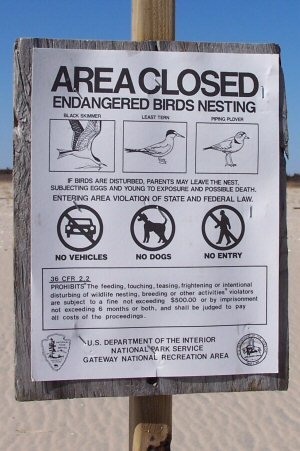
The perfect cure for cabin fever yesterday morning was the chance to be out in the sunshine while doing some manual labor to help protect nesting habitat for endangered Piping Plovers and Least Terns at Sandy Hook. A small group of volunteers showed up early in the cold to install symbolic fencing around critical nesting areas in the dunes at Gunnison and North Beach.

Sandy Hook hosts one third of New Jersey’s nesting population of Piping Plovers, but nest success has been quite variable in the last few years; the main challenges having been nest predation by red foxes, flooding and human disturbance.

It’s human disturbance that the fencing seeks to control. We installed flagged string line and signage every 50 feet along the dunes – hundreds of feet of string tied with little orange flags. My job was to count out the 50 ft. distance between signs, while those with more nimble fingers tied the string and the flags. We were a pretty small group, but got lots done thanks to the use of an auger to dig the holes for the posts; in years past every hole was done with a post-hole digger. What a recipe for sore shoulders! I think Sandy Hook has 8 protected nesting areas for plovers and terns; we completed only 3 of the 8, but other groups and the park rangers are responsible for the others.

The fencing is an attempt to keep people out of the high dunes where the plovers build their nests – people with coolers on their way to the water, people with dogs, people flying kites – any of those things could cause a nest to be abandoned or crushed underfoot.

Later in the season, around Memorial Day when the chicks are hatching, volunteers will *guard* the intertidal zone which will also then be closed to the public. The plovers and their newly hatched chicks use the intertidal zone to feed and if there’s too much activity by beachgoers the plovers can be stepped on or starve. I’ve volunteered this year to be a warden on weekends and to monitor the edge of the closed area from a beach chair – to keep people out of the intertidal zone during that critical time – and to try and educate beachgoers about why the area is closed off and why the plovers and terns are worth their losing access to the beach. You might not think it, but people get pretty pissed off about losing access to the beach. A friend of mine who’s been a warden for a number of years has often been given a hard time by people and even had her tires slashed. Can you imagine being that angry at someone who’s just trying to do a good thing for birds?

I didn’t spot any plovers yesterday, but they are back. Ospreys are due in this week. Spring at the shore and its birds are coming! I’m not sure when it’ll hit me, but one day soon I’ll have to sneak away from the office to greet it at Sandy Hook. Have a look here at last year’s spring fever post – also there is a link to one of my favorite pics of piping plover chicks – aren’t they adorable? Who wouldn’t want to spend weekends getting a tan to protect them?

And please, take a minute to read Julie Zickefoose’s essay
Offseasons which she mentioned in the comments on last year’s post. It’s a beautifully-written and touching essay and part of what made me decide to actually do something this year for these birds that I treasure so much, rather than just sitting back and complaining that not enough is being done, as I did last year. Thanks for the kick in the butt… I mean… the inspiration, Julie!

I’m including this last pic mostly for Susan, but also to mention that the nude beach at Gunnison is one of the larger areas where plovers choose to nest. Not sure that I’d want to be assigned to be a warden there, but at the very least I’d have plenty of reasons (old wrinkled ones) to get some long overdue reading done this summer!

😉

One world

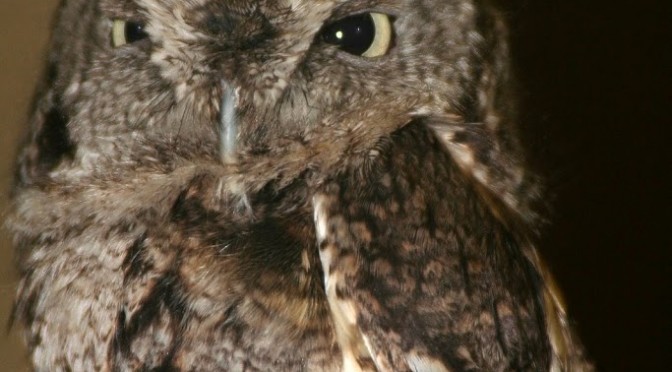
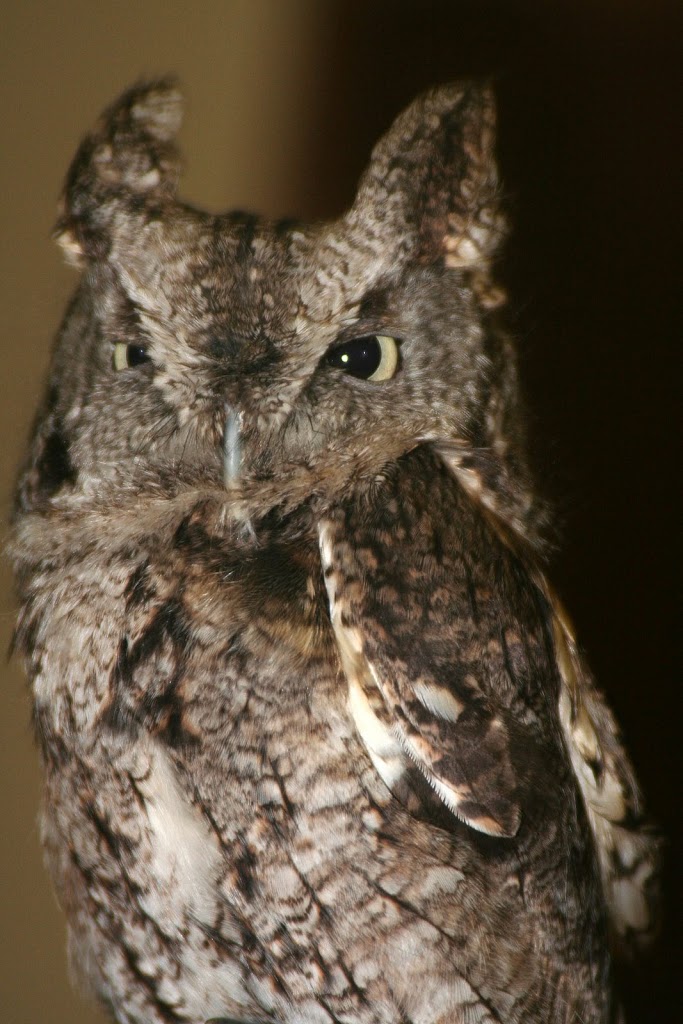
My habit of staying up late keeps me in touch with the neighborhood owls. I hear the great-horneds calling often, from the cemetary across the street or the black locust tree in our back yard, a favored perch, perhaps, because it’s the largest overlooking the farm fields and baseball green that borders our property. I’d imagine there to be lots of critters that fall within earshot of any owl perched in that tree. The screech owl, like this little one here, visits only occasionally and I’ve never been able to pinpont exactly where the whinny call originates from. Screech owls are tiny and delicate and disappear into the darkness much easier than the great-horneds whose silhouette is hard to mistake, even in the pitch black.

Of the great-horned owl Mary Oliver writes: “I know this bird. If it could, it would eat the whole world. In the night, when the owl is less than exquisitely swift and perfect, the scream of the rabbit is terrible. But the scream of the owl, which is not of pain and hopelessness and the fear of being plucked out of the world, but of the sheer rollicking glory of the death-bringer, is more terrible still. When I hear it resounding through the woods… I know I am standing at the very edge of the mystery, in which terror is naturally and abundantly part of life, part even of the most becalmed, intelligent, sunny life… The world where the owl is endlessly hungry and endlessly on the hunt is the world in which I live too. There is only one world.”

I had an experience at work today that made me feel guilty for my happy and peaceful life and for delighting in simple things. Most days in the field visiting clients are that way, to some extent but, my God, some people just have so much awfulness heaped upon them. I walk in and out of their lives and their homes, have them fill out a bunch of silly papers, and then go back to my life of plenty. Yet, I’m collecting their stories in some part of me, so many sad stories that I can almost begin to imagine the same terrible circumstances on the periphery of my own life, just waiting for the chance to descend like an owl in the darkness. The recognition of that possibility, acknowledging the unmistakable shape in the pitch dark or the ability to see the little hunter hidden among the pine boughs… I’m not sure what that means. I wonder if it serves any purpose in my life or if it makes me any better at the work I do with clients. Maybe I’m just thinking too much or paying too much attention to stories and screams in the dark.

Owl pics are education birds from the Avian Wildlife Center who gave a children’s program tonight at our monthly Audubon meeting.

On the rocks

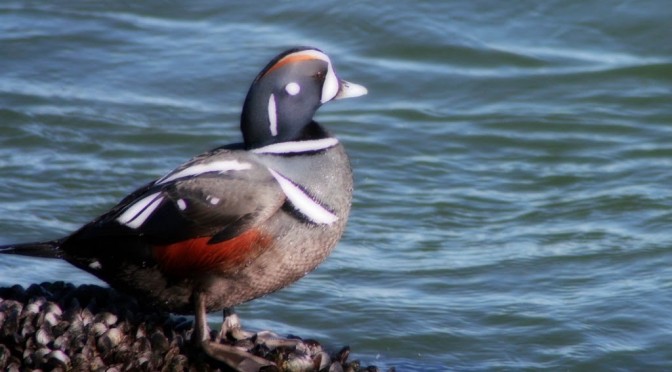
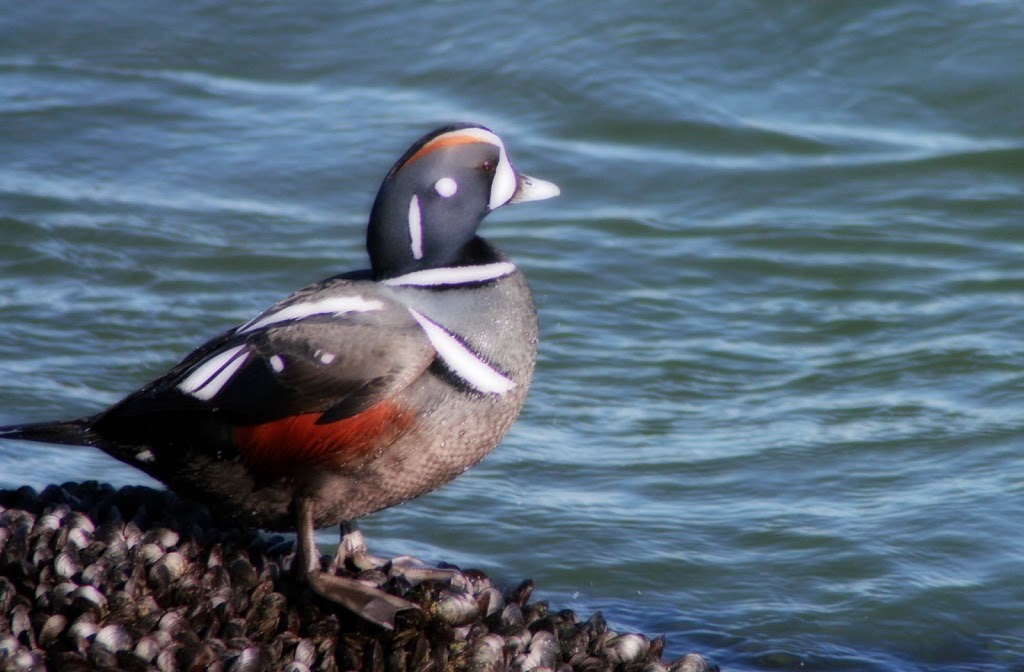
It dawned on me today that I hadn’t shared even one crappy bird photo from my duck-hunting escapade from a few weeks ago. So here it is – click on it for a somewhat less crappy, more artsy, bigger view. Harlequin Duck: extremely cute, probably the most handsome, in my opinion, after Oldsquaw. They’re reliable here on the Jersey shore, but seeing them is something like a pilgrimage, for me at least, and it’s a journey fraught with danger.

I’m being overly dramatic, of course… well, almost.

In winter, Harlequins favor rocky coasts… think Maine. Not much of anything like that here in NJ, right? Well, we have ocean jetties and the most reliable for a small group of Harlequins is the jetty that sits in the shadow of Old Barney on Long Beach Island and juts out into the inlet. Walking the jetty is treacherous. John at A DC Birding Blog has a great trip report from his visit last year in this post. Also there is a more realistic view of the jetty from the top of the lighthouse.

Barnegat Light has to be the coldest place on earth on whatever day it is you happen to be out looking for the Harlequins. And windy as hell. And there’s those treacherous rocks to navigate, carrying your camera gear and the damn scope that picks that day to not work! Susan thinks she has problems with her camera that won’t focus – how about a Leica scope that since its very first winter has a focus wheel that ‘freezes’ on the coldest of days? Thankfully, the scope isn’t really needed to see these handsome ducks, as they stick very close to the treacherous rocks to feed. Problem is you can’t stay on the nice level concrete walkway beneath the lighthouse to see them; you have to walk out on the jetty proper with your eyes playing tricks with every step, insisting that you’re about to fall into the spaces between every single rock where the cold water is waiting to drown you once you’ve cracked your head open on said rocks.

Treacherous.

There were also sweet little Purple Sandpipers and Ruddy Turnstones and all the rest of the sea ducks one might expect. The Harlequins stole the show, though I think the group we saw was very small.. maybe just 4 birds. In years past there’s been a couple dozen… I imagine they were there, just further out than I was willing to venture.

😉

Clever as a …

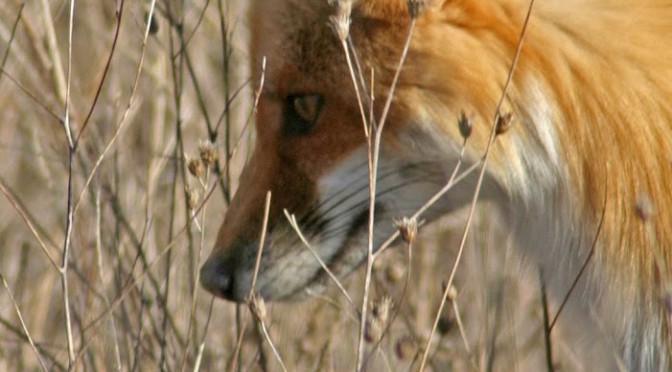
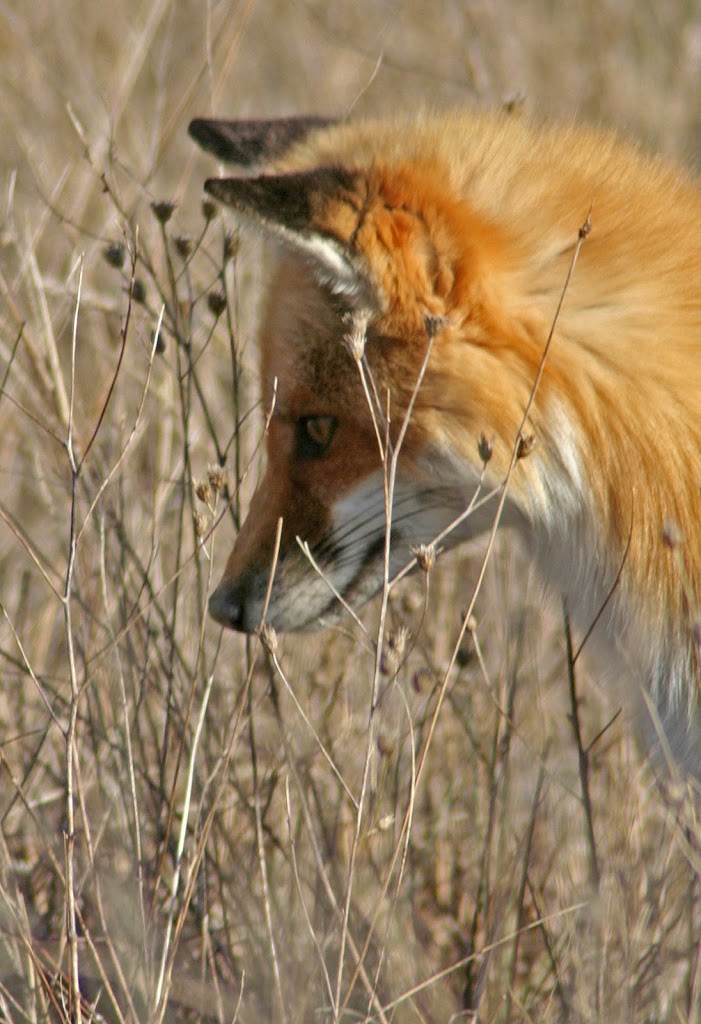
I went looking for snow buntings this afternoon and instead found this handsome red fox, leaping and pouncing at something unseen among the winter brown grasses at the base of the gun battery at North Beach on Sandy Hook.

Red foxes are easily seen there and even in my own neighborhood – I once ushered a family with youngish kits out of the way of oncoming traffic just up the road from my house, but to see one actively hunting, rather than skulking along the edges of a field or scavenging for leftovers near a garbage bin, was a rare treat. I’m always impressed with just how slight they are; at first from a distance I mistook it for an overfed tabby. (Yes… I do need to wear my glasses more often!)

As handsome as they may be, foxes are bird killers; more specifically at Sandy Hook, endangered nesting shorebird killers. Because Sandy Hook lacks any larger predators to keep them in check, red foxes have a serious impact on the survival rates for piping plovers. While (some) humans may be dissuaded by the fences erected each March to protect the plovers, the sly fox will learn to dig under even the caged exclosures meant to protect the birds and their eggs.

Due to Sandy Hook’s geography, it’s not exactly clear how red foxes have found their way onto the pennisula. I found an article in the NY Times from 1880 that mentioned the possibility that they walked across the ice on the Shrewsbury River at some point or across a frozen Sandy Hook Bay. I don’t guess that much matters anyway, but the idea was on my mind because of a conversation earlier in the day with a couple fishermen who stopped in to the bird observatory.

Birders and fishermen, at the Hook at least, have a relationship based, for one thing, on our acknowledgement of the other’s nuttiness. We’re often the only ones out there in the worst weather or at the most ungodly hour or at the farthest distance from anyplace comfortable. Oftentimes, I think, we read some of the same clues to find our quarry.

I mentioned this to the one guy today, who, incidentally, was shopping for a scope to ‘spot’ fish (?) and he agreed that both groups do indeed have a screw loose, albeit a different screw. He’d asked me if I’d even seen a coyote at Sandy Hook or thought it possible that they might be there without anyone knowing it (or admitting to it). I said no, of course, and mentioned that there were no deer there, even, to which he corrected me with a glut of ‘deer swimming across the bay’ stories which sounded suspiciously like ‘fish stories’ to me. At any rate I was glad for the chance to chat with these two and have a peek at some of what they notice about Sandy Hook besides the good fishing there.

Fire-fire, where-where, here-here…

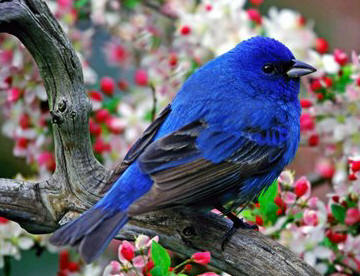
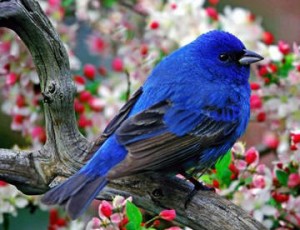
I’m thinking today about the first time I saw an indigo bunting – on my first *real* bird walk – and the naturalist who was responsible for my seeing it and many other firsts that day. During the ten years or so since, I’ve thought back to how fortunate I was to have met Don and the rest of that little group of old folks that day when I was feeling so new to birds and, quite honestly, clueless.

I had this new pair of cheap binoculars that I hardly knew how to use and all the enthusiasm in the world. But I didn’t know anyone to teach me about birds, so I signed myself up for a walk around the nature center where I had also just recently agreed to volunteer once a month. I recall being embarassed with myself for knowing nothing and not seeing a familiar face amongst the group. But Don was leading and there were other friendly faces that I soon learned belonged to more volunteers at the nature center. We saw all the birds that were common to the neighborhood around the center (set in the middle of a cornfield, basically) and they were all wonderful and new to me then. The indigo bunting was the first bird I saw, and I mean really saw, and wow – I was just bewildered with its beauty and the seeming magic of the gentle man who pulled it out of the treeline, by its song alone, for me to see.

I remember his patience with me, the new kid, repeating the words to the song over and over, patience with me while I struggled to find that little blue bird singing from the treetops; “Fire-fire, where-where, here-here, see it-see it, put it out-put it out…”

As it turned out, Don was a neighbor, and I’d run into him on my walks in the woods near home, or in the grocery store, or in Cape May, or at the local Audubon meetings and we’d talk birds and share our latest good finds from the neighborhood. He often suggested that I call his wife and invite her along when I went looking for birds because he didn’t have the time to do as much birding as either of them might have liked.

The last time I saw Don was a few months back at the memorial service for another local birding buddy. Don wasn’t himself then; he’d been sick for a while, with something the doctors hadn’t been able to figure out. I read today that Don died this week from ALS that had only recently been diagnosed. What a terrible shock.

Do me a kindness and take a minute to read his obit and think a kind thought or say a prayer for his family. I’ll think of him and remember the bunting’s song and be glad to have known this quiet man who shared his love of nature so willingly with others.