Category Archives: Uncategorized

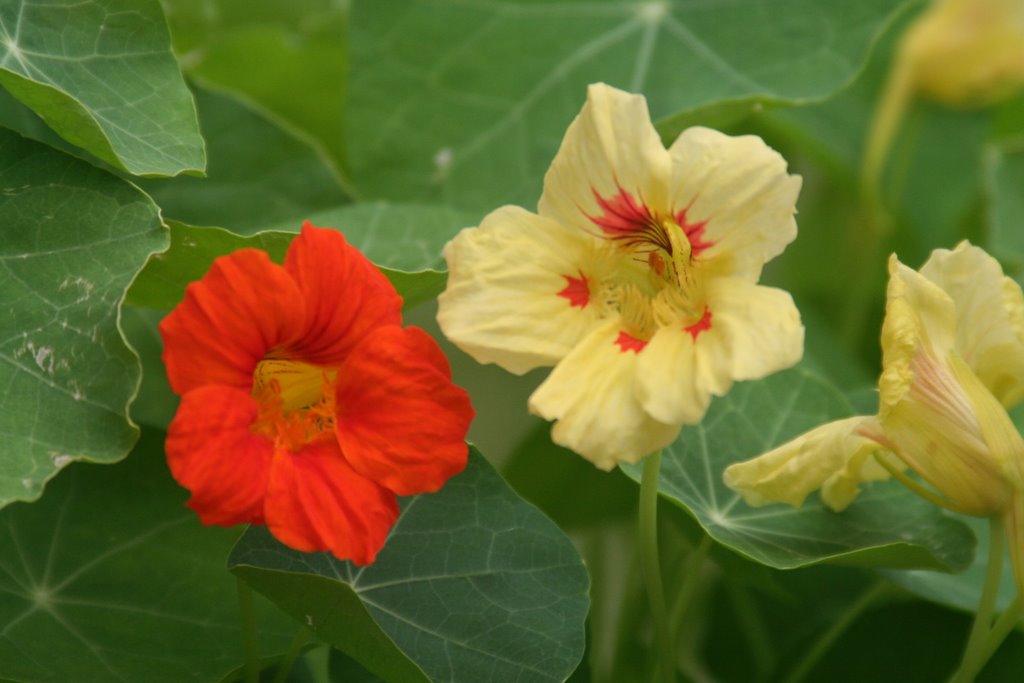
Nasturtiums

While sitting here waiting to see if Blogger would take my pics tonight I was deciding what to do if it wouldn’t. The wait was forever and I actually started composing bad cinquain poetry in my head while the minutes ticked by. Be glad the pics loaded! I’ll have to file away my awkward ode to Blogger for the next time it goes wonky on me. I tried adding these pics to last night’s post earlier this evening and they still wouldn’t take. Yet I can add them here. Very mysterious.

Plenty of folks blog without pictures and those that do a good job of it are able to write well. I hope somehow that my mediocre pics and mediocre writing somehow make up for each other or cancel each other out or whatever.
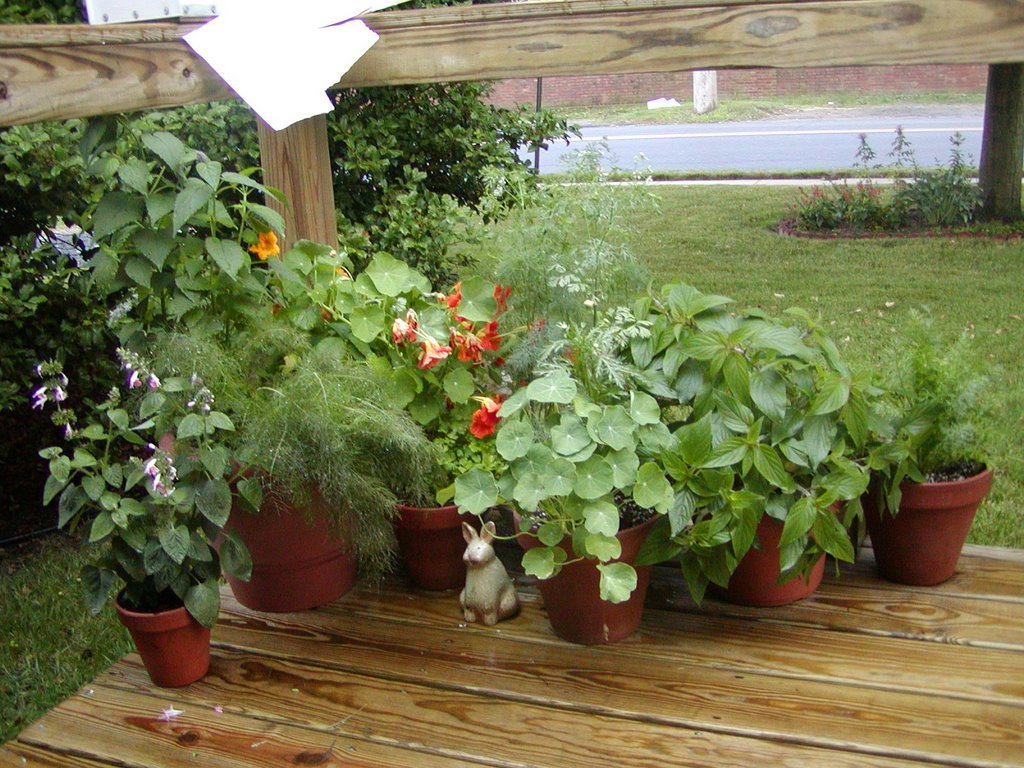
Anyway, back to the subject at hand – Nasturtiums. Both the leaves and flowers are edible; at one time even the flower buds were pickled like capers. I’ve read that they are sometimes planted beneath fruit trees or tomato or squash vines to trap insects that would like to munch on the more valuable property above them. I plant mine in pots on the front steps with some other herbs like dill and pineapple sage. They have a peppery taste that I like in salads mixed with sweeter greens and the flowers make a pretty garnish.

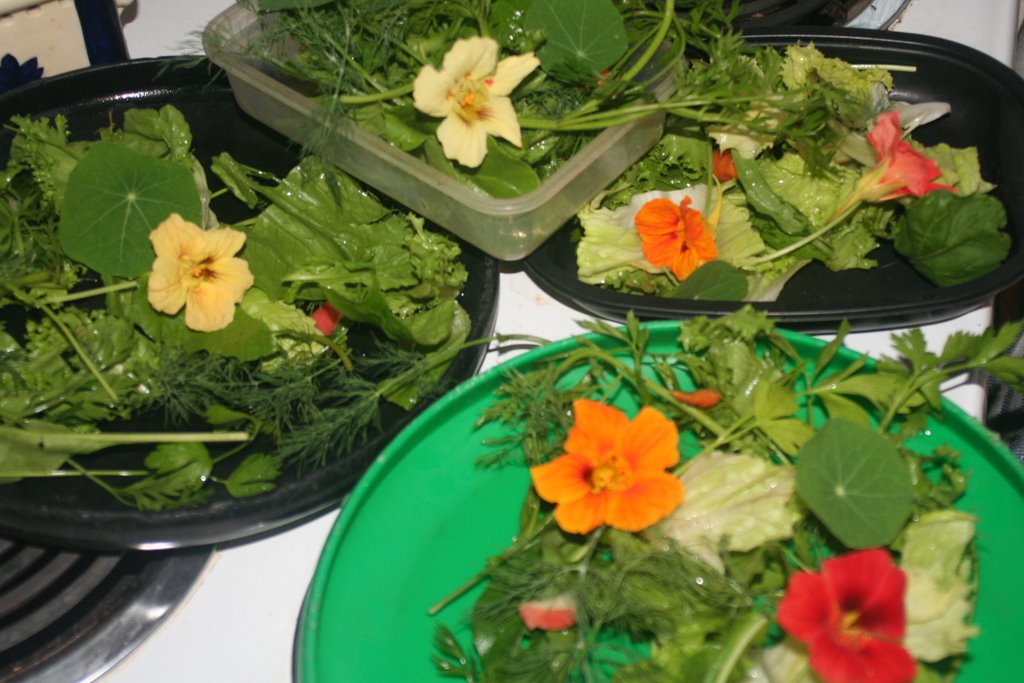
They are easy to grow from seed and like sun and moisture, but not a rich planting medium as too much fertilizer will keep them from blooming well. Aphids seem to love them and the older leaves develop a strange mottled appearance, so I pick the young leaves for eating. Snails and slugs like them, too. Books say that they’re also favored by hummingbirds as each flowers holds a small well of sweet nectar inside it. Last night I added some fresh-picked flowers and leaves to the salads for the bunnies – these and dandelion flowers are a favorite treat.
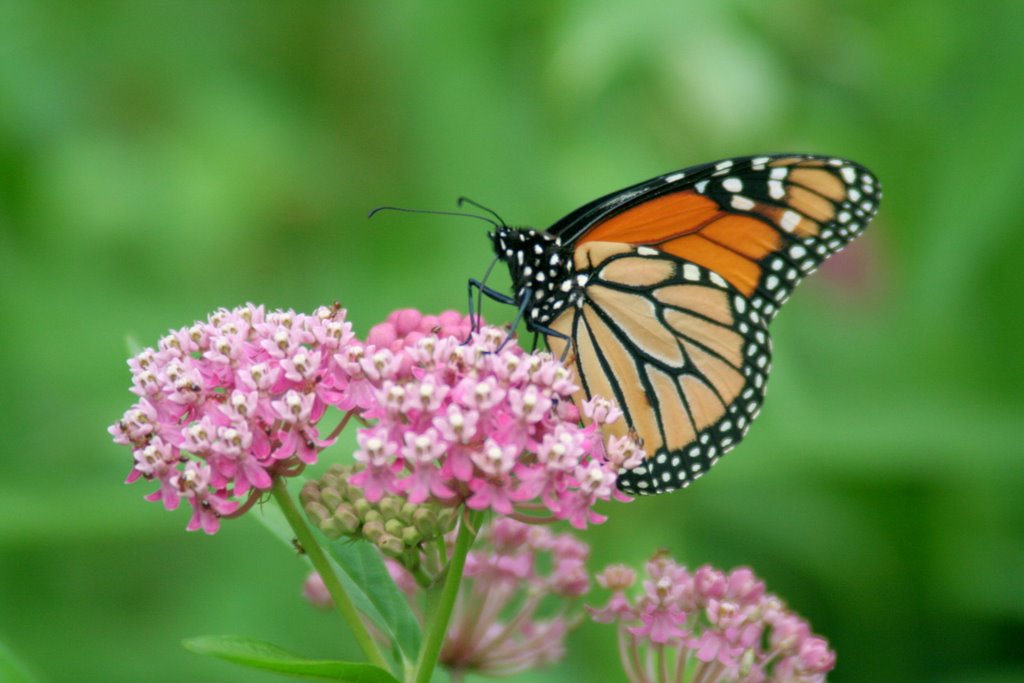
Monarch on swamp milkweed

“Just living is not enough,” said the butterfly. “One must have sunshine, freedom, and a little flower.”
– Hans Christian Andersen

An excellent list of key plants for the butterfly and hummingbird garden is available in PDF format from NJ Audubon at this link. I’ve found this list to be very helpful when planning my own garden and can attest to the popularity of the *Chocolate Cake* plants that are listed there as most attractive to butterflies and hummers. What is especially nice about this list is that it annotates those species which are native.

Summer boredom

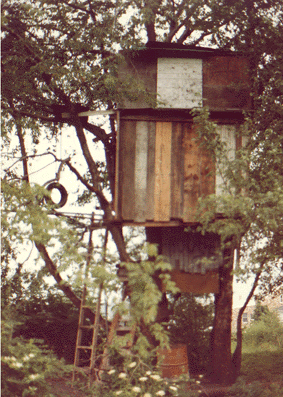
When I was a kid the last day of school and the start of summer vacation meant freedom. Being out of school didn’t matter so much to me, but all of that free time laid out before me and its lack of resitrictions meant the world. There were days at the beach and camping trips in Maine and Florida, Girl Scout camp and afternoons at the pool club. But most of the time there was nothing but my friends from the neighborhood and our imaginations stretched to fill a summer’s day.

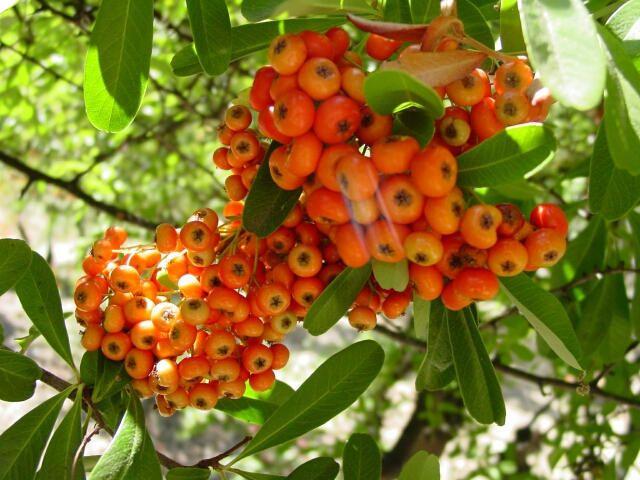
Complaining of boredom or not knowing “what to do” was not encouraged by my mother. She sent me “out to play” and wouldn’t expect me home until the streetlights came on. It was that way with all of us kids. We played in the creek, built forts in the empty field down the street, rode our bicycles and roller-skated, and ran through everyone’s backyard playing *army* and hide-and-seek. I can remember mixing up *potions* from the orange berries of the firethorn bush and the red yew berries that grew beside our house – thank heavens none of us were brave enough to eat any of it. If we ran out of things to do, we’d play cards in the *cave* beneath the spirea bushes.

I understand that we live in different times, but has the world changed so much in twenty years or is it just parent’s perceptions that have changed? My co-workers all send their kids to camp. The sad reality is that most moms work and aren’t home to supervise. But even among the families in my neighboorhood, where all the moms stay at home, kids still go to camp for most of the summer. When they are at home, very seldom do I see them running and playing and getting into mischief. Why is that? Do kids not know how to play anymore without an adult directing them?

In “Last Child in the Woods: Saving Our Children from Nature-Deficit Disorder” (linked in sidebar) the author makes the assertion that time spent outdoors builds confidence in children and nurtures imagination and creativity. The greatest barrier that prevents parents from allowing their children the freedom to explore and play outdoors is fear. The author cites a study which found that between 1970 and 1990 the area around home that children were allowed to play in without direct parental supervision has shrunk to a ninth of what it had been in 1970. Only 36% percent of kids are permitted to walk or bike to school on their own. Are our neighborhoods so unsafe that we can’t allow kids that one small freedom? If we schedule every moment of a child’s day with play dates, and dance practice, and homework can we be surprised that they don’t know what to do with themselves otherwise?

I treasure the memories of those summer days and feel sorry for kids growing up surrounded by so much fear of strangers and crime. I have to believe that my early experiences in the *great outdoors* just outside my backyard must have done something to create the love of nature that I feel now. I wonder if kids still have special secret places that they go to when they need solitude.

Milkweeds

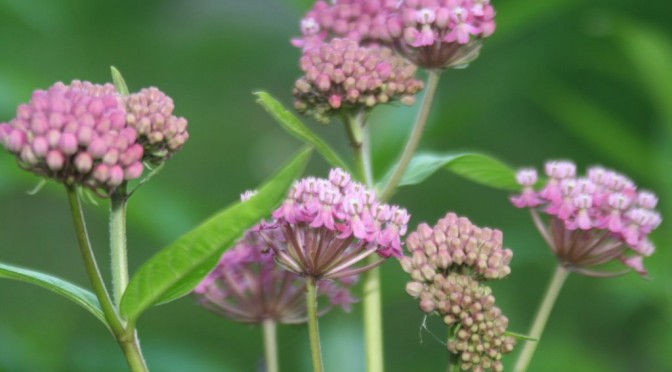
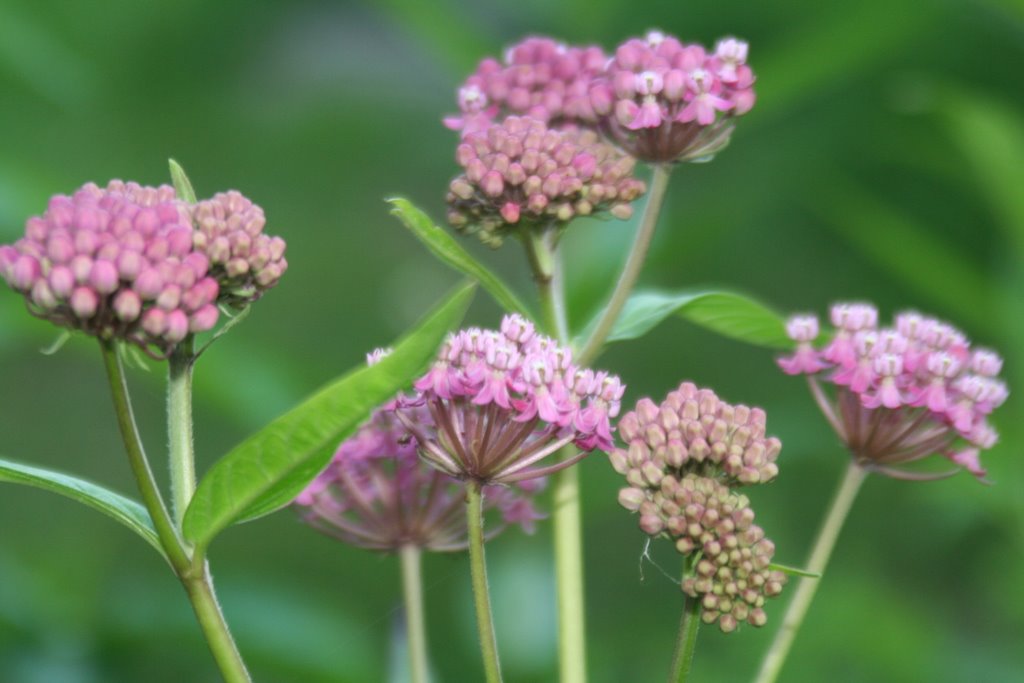
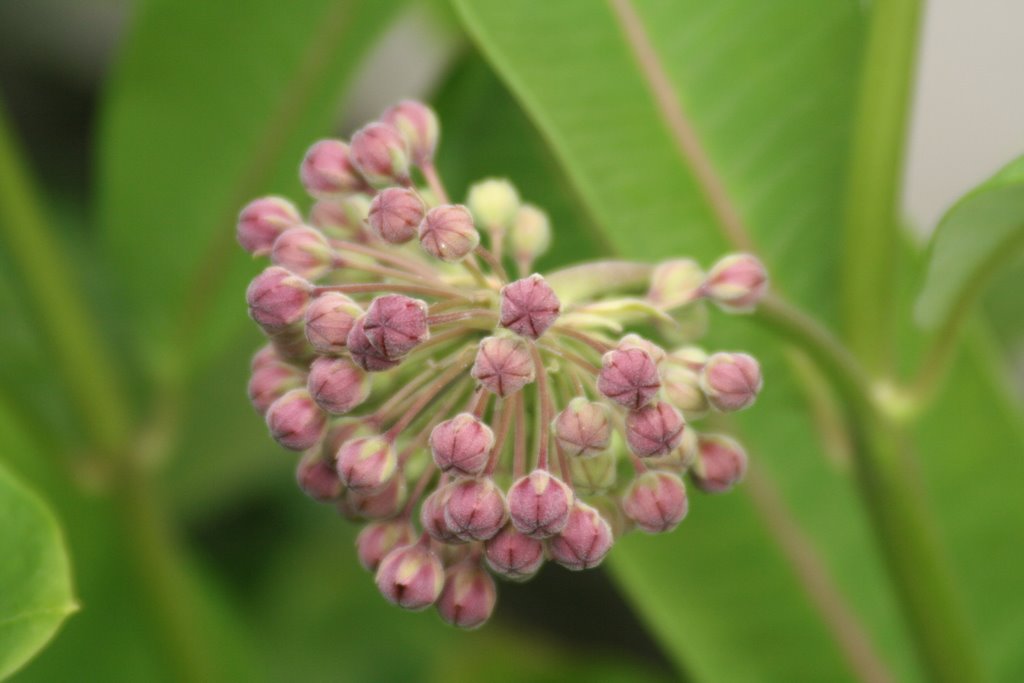
Moisture-loving Swamp Milkweed (Asclepias incarnata) is slowly establishing itself in expanding colonies in the garden and bog. The individual flowers, shaped like an hourglass, are a purple-pink color and form umbrel-like clusters at the top of the stalk. The plants can grow to about 4 feet tall and are an important nectar source for many pollinators, like native bees and wasps, flies, and butterflies.

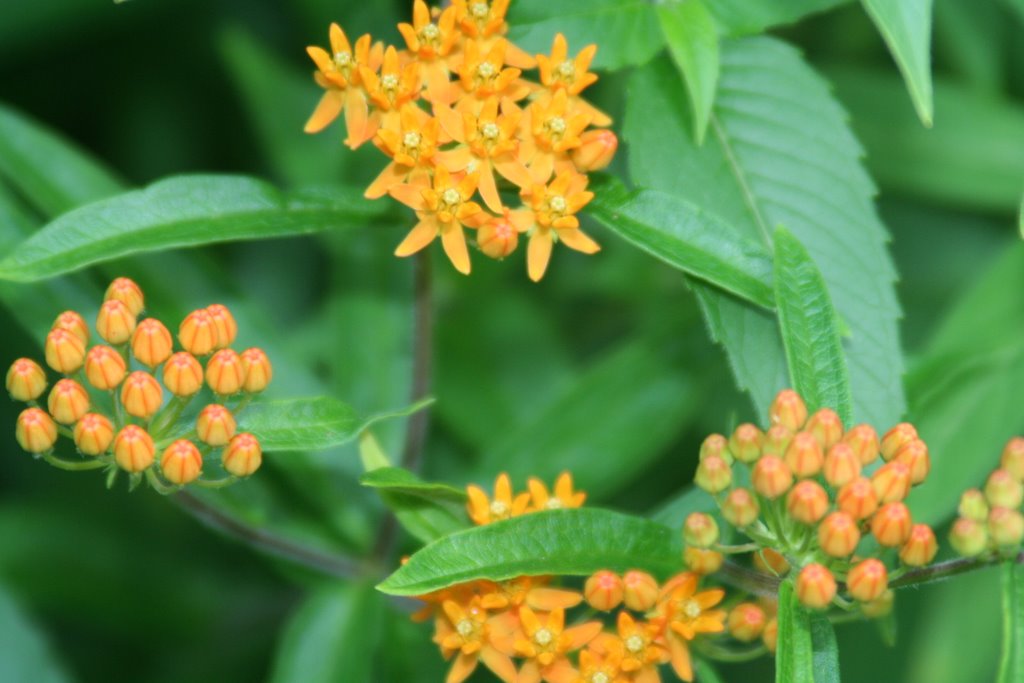
The butterly most often associated with Milkweeds is the Monarch, which lays its eggs on this species alone. I’ve read that Swamp Milkweed is not often used in this way by Monarchs; they are said to prefer Butterfly Weed (pictured at left) or Common Milkweed (pictured below). I always inspect the underside of the lower leaves for eggs, and one summer had three or four catepillars happily munching away.

The most fragrant of the milkweeds is likely Common Milkweed, which is less showy, but abundant and often grows in waste places and along roadsides as a *weed*. Including milkweeds in the butterfly garden is an easy way to help Monarch butterflies and other pollinators. My bee-keeping friend says that the pollen is especially loved by honeybees, but many die trapped in the blossoms. I didn’t find any insects visiting the flowers late this afternoon, but did find quite a few milkweed bugs on the foliage, as well as some aphids and ants. Milkweed bugs feed on the leaves and seeds and taste as bad as monarchs to predators that try to eat them.

The reluctant fisherman and other fathers in my life

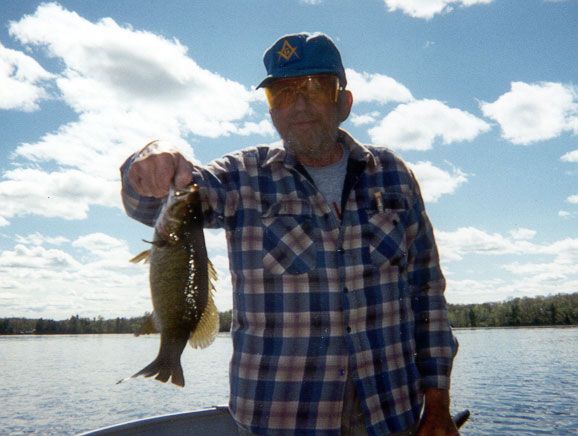
I just love this pic of my dad – his goofy grin and the big blue sky behind him while he holds this little fish pulled from some Canadian lake. I didn’t think of my dad as the *outdoorsy* type – heck he wouldn’t even eat most fish, but the chance to go away on a fishing trip with my brother and his buddies, well. I think this pic was taken on *the* trip when my dad talked non-stop for the whole car ride there – that’s my brother Kevin’s story to tell.

My father-in-law, at least 20 years before I met him, and smoking a cigarette no less! I miss him – talk about a man who had stories to tell.

My brother Kevin on his daughter’s Christening Day

My brother Brian with his Julia – both all legs!

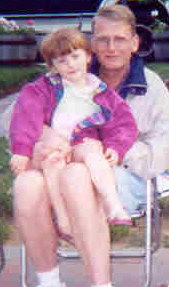
Fathers, especially fathers of daughters: know that you are loved and that your impact will live beyond you. And know that we see the light you hold in your eyes, just for us, your daughters.

Have you read it?

Here are the current top 50 books from whatshouldireadnext.com.

Bold the books you have read. Add comments if you like. Italicize the books you want to read. Pass it on if you feel like it:

The DaVinci Code – Dan Brown
The Catcher in the Rye – J.D. Salinger
The Hitchiker’s Guide to the Galaxy – Douglas Adams
The Great Gatsby – F. Scott Fitzgerald
To Kill a Mockingbird – Harper Lee
The Time Traveler’s Wife – Audrey Niffenegger
His Dark Materials (series) – Philip Pullman
Harry Potter and the Half-Blood Prince (Harry Potter 6) – J.K. Rowling
Life of Pi — Yann Martel
Animal Farm – George Orwell
Catch-22 – Joseph Heller
The Hobbit – J. R. R. Tolkien
The Curious Incident of the Dog in the Night-Time – Mark Haddon
Lord of the Flies – William Golding
Pride and Prejudice – Jane Austen
1984 – George Orwell
Harry Potter and the Prisoner of Azkaban (Harry Potter 3) – J.K. Rowling
One Hundred Years of Solitude – Gabriel Garcia Marquez
Memoirs of a Geisha – Arthur Golden
Harry Potter and the Goblet of Fire (Harry Potter 4) – J.K. Rowling
The Kite Runner – Khaled Hossieni
The Lovely Bones – Alice Sebold
Harry Potter and the Order of the Phoenix (Harry Potter 5) – J.K. Rowling
Slaughterhouse 5 – Kurt Vonnegut
Angels and Demons – Dan Brown
Fight Club — Chuck Palaniuk
Harry Potter and the Philosopher’s Stone (Harry Potter 1) – J.K. Rowling
Neuromancer – William Gibson
Cryptonomicon – Neal Stephenson
The Secret History – Donna Tartt
A Clockwork Orange – Anthony Burgess
Harry Potter and the Chamber of Secrets (Harry Potter 2) – J.K. Rowling
Wuthering Heights – Emily Bronte
Brave New World – Aldous Huxley
American Gods – Neil Gaiman
Ender’s Game (The Ender Saga) – Orson Scott Card
Snow Crash – Neal Stephenson
A Prayer for Owen Meany – John Irving
The Lion, The Witch, and the Wardrobe – C.S. Lewis
Middlesex – Jeffrey Eugenides
Cloud Atlas – David Mitchell

The Lord of the Rings – J.R.R. Tolkien
Jane Eyre – Charlotte Bronte
Good Omens – Terry Pratchett, Neil Gaiman
Atonement – Ian McEwan
The Shadow of the Wind – Carlos Ruiz Zafon
The Old Man and the Sea – Ernest Hemingway
The Handmaid’s Tale – Margaret Atwood
The Bell Jar – Sylvia Plath
Dune – Frank Herbert

Most hated book on the list: Animal Farm. Freshman English class, need I say more?
Most loved book on the list: Shadow of the Wind or The Time-Traveler’s Wife.

I’d love to hear your comments on these books or if you make a list of your own.

Four hundred tongues

The neighborhood mockingbird (the many-tongued mimic, known to Native Americans as “Cencontlatolly” or “four hundred tongues” has taken to beginning his evening serenade around 11 pm of late, just about the time the people down the street put their young dog out for the night. The dog whines and yaps incessantly and this seems to be the mocker’s cue to begin his recital for those of us awake and with the windows open.

MOCKINGBIRD MONTH
A pupa of pain, I sat and lay one July,
companioned by the bird the Indians called “four hundred tongues.”
Through the dark in the back yard by my bed,
through the long day near my front couch,
the bird sang without pause an amplified song
“two-thirds his own,” books told me,
“and one-third mimicry.”


Gray charmer, “the lark and nightingale in one,”
unremitting maker of music so full of wit
and improvisation, I strained by night and light

to hear the scientists’ record: “In ten minutes
he mimicked thirty-two species.” I counted eight
(even I) variations on cardinal’s song alone.

Cock of the neighborhood, his white flashes of wing
and long distinguished tail ruled the bushes and boughs,
and once, enchanted, I saw him walk past my house,
herding, from three feet behind, the neighbor’s nice, cowardly cat.
He controlled without any fuss
but took little time off. Most of our month he sang.

The sticky wings of my mind began to open
No mere plagiarist, a Harold Bloom singer,
he leaned on, but played with, robin, or jay or
starling or whippoorwhill. I began to prefer
him and house and hurting to the world outdoors.
Both art and art-lover attend to what may happen.

The weeks went by. At two a.m. he’d begin
my steadier, stronger, surer flight through his airs,
and the sun sent us into heights of his lyric together.
Virtuoso though he was, I was learning his repertoire.
Who would have thought the moth of me would tire?
Toward the end of a month in concert I began to complain.

Constant cadence, I told him, gives one no rest.
Is it my fault you must be lonesome for a mate?
There must be no nestlings to feed (when do you eat?).
What master of complexity won’t duplicate with incessant singing?
Delete, delete, delete,
shut up for a while my bird-brained, brilliant stylist!

I left him for the North and less prolific birds
(but not before reading a chatty chapter on him
by a man who threw a shoe treeward at four a.m.
to stop “that endless torrent”),
my movement a handsome tribute to his voice.
Leaving my pencils at home,
I resolved to husband my own apprentice words.

MONA VAN DUYN

Sometime past midnight I heard a neighbor yelling, “shut up! stop it”; whether to the mocker or the yelping dog I’m not sure. I enjoy listening to him sing as I fall asleep and do try to name the bird he’s mocking as I drift off. A pair nested for a number of years in a spirea bush in our yard, but since getting cable tv and doing away with our old-fashioned tv antenna they don’t seem to find our yard as attractive and have moved across the street to the cemetery. I used to love to watch the mockingbirds *dance* up there on the antenna – jumping into the air with wings extended, only to flutter down in the same place face-down, before turning around with wings out to repeat the dance, singing all the while.

Mystery garden raider

Do birds eat broccoli?

Do squirrels like brussels sprouts?

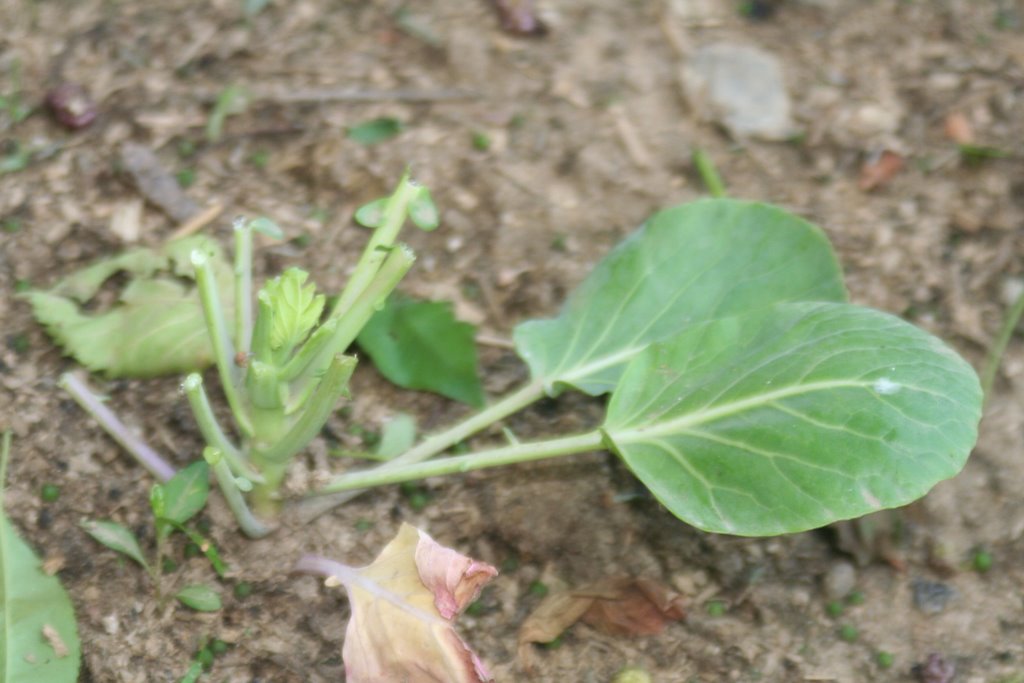
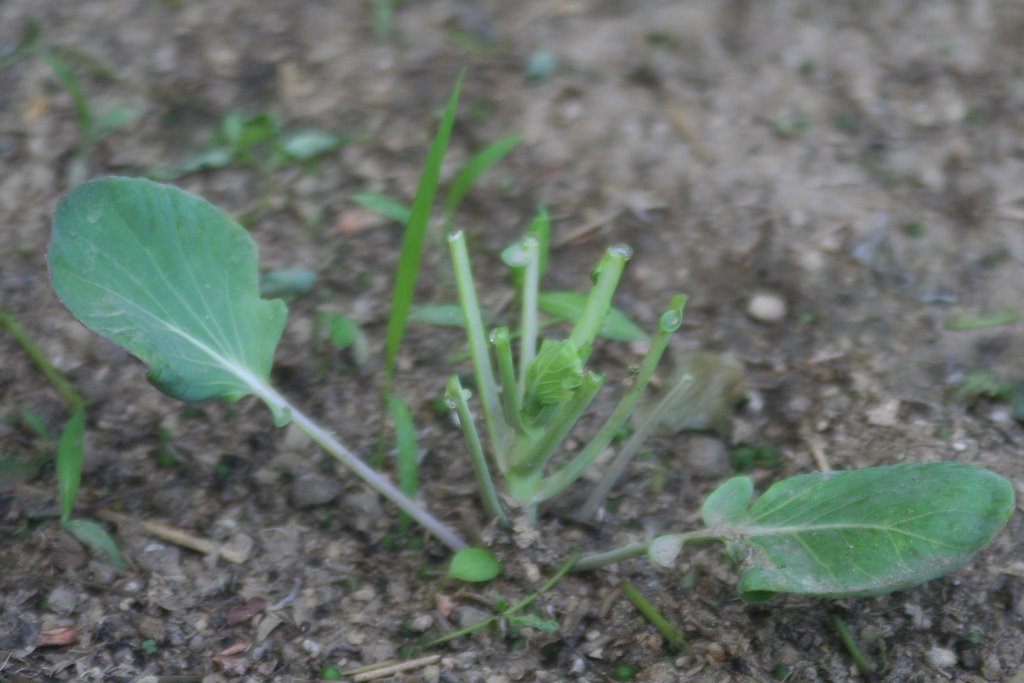
Well, we’ve discovered that the fortress my husband built around the veggie garden is not impenetrable. Nothing has chewed through the chicken wire and lattice and nothing has dug under the fence. There are no footprints. So either a bird or an herbivore with a parachute raided our garden or a squirrel or a very lightweight woodchuck climbed over the fence to snack on the broccoli and brussels sprouts. But only those two delicacies. It must be saving the kale, cabbage, and assorted lettuces for tonight. Darn.