Category Archives: Birds

MCAS field trip

Monmouth County Audubon’s first Fall field trip is this Saturday at 9 am at the Rocky Point section of Hartshorne Woods.

I’m not sure that we can expect to see very many birds, but I think this is the best time of the year to be out looking for them! The nights are getting chilly, beach plums are ripening, dog-day cicadas are in full chorus and goldenrods, boneset, and asters are in bloom.

If you’re in the neighborhood, why not join us!

Know bones?

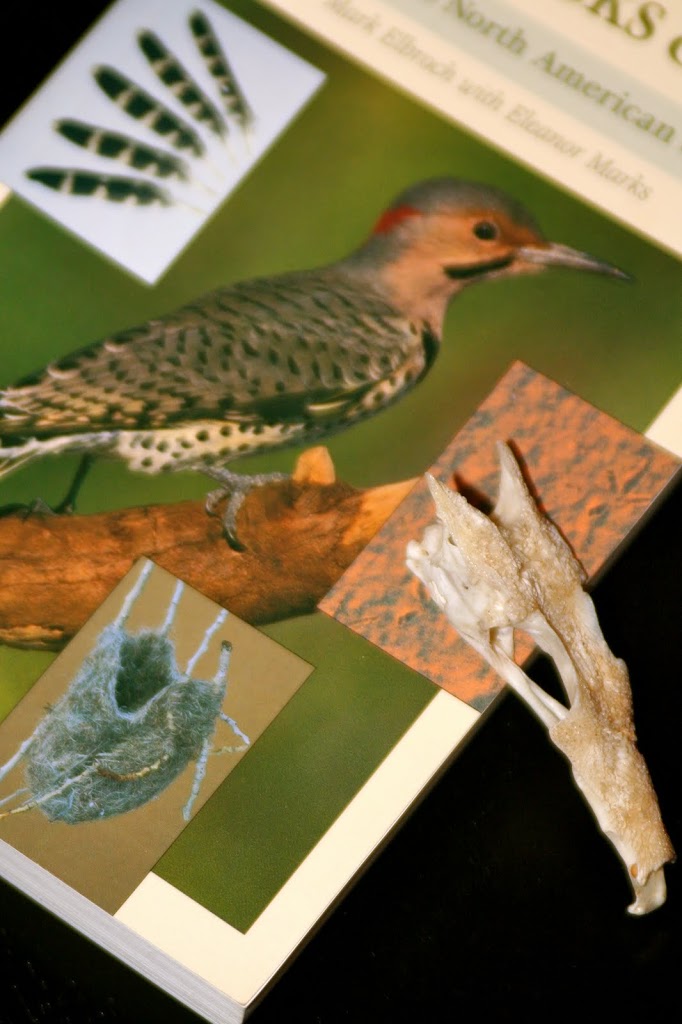
Out at Sandy Hook the other day, among the clamshells and bits of drift washed ashore, we found this part of a skull that I imagine belonged to a bird. It’s a duck’s bill, I think.

I’m not really even sure which way is up, but the bottom (pictured, I think) has an interesting texture, almost coral-like, that I imagine has happened since the bill was attached to anything living.

I checked in my Bird Tracks and Sign book, which has a section on skulls, but didn’t find anything to help me beyond the guess that it’s a duck’s bill.

Anyone know of a good online reference?

Shorebird reflections

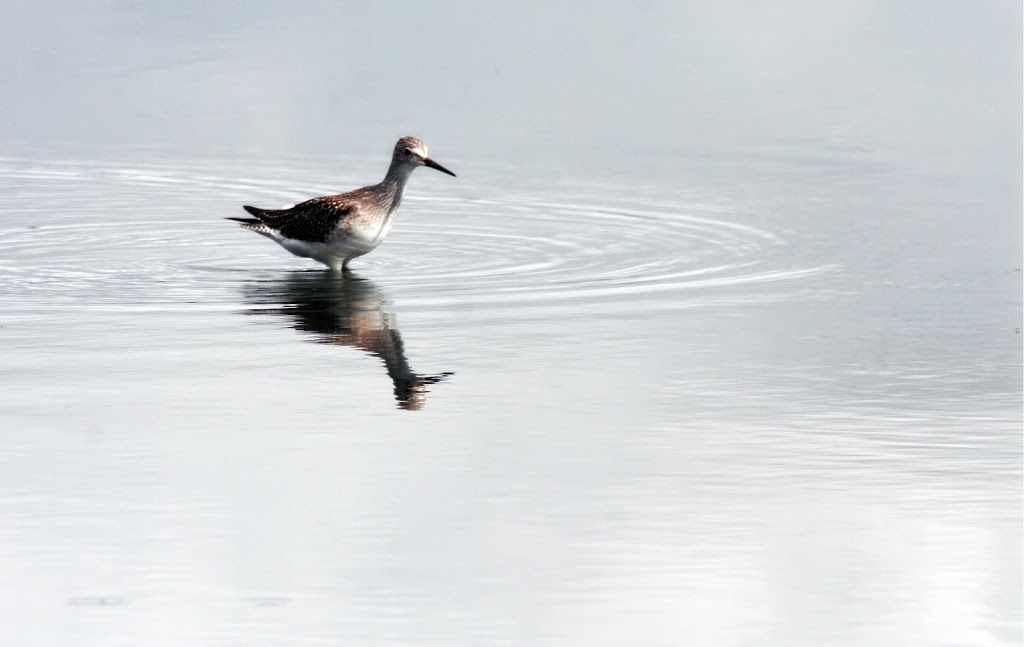
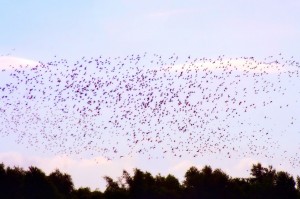
In a world of distant horizons, the lone shorebird is little more than a windblown fragment, too easily lost under sun and sky.

It must be that they find comfort in the relative anonymity a flock provides: the sense of direction, a defense against predators, the company of other wanderers; a solidarity of purpose.

I find that I enjoy a mixed-species flock of shorebirds in a way that isn’t possible when confronted with a lone bird… the solitary shorebird practically implores that it be identified by name, but the magic of them, for me, lies in the wheeling mystery of the flock.

The delight in shorebirds comes not from any individual bird (unless its an Avocet or a silly-spinning Phalarope) but in a mudflat alive with thousands of birds and the subtle mosaic of tones it presents; black streaks of folded wing feathers, drab sandy grays and stony browns… all of them more striking in pattern than in color… cloud shadow, grass and earth, the glint of late-day sun on salty water.
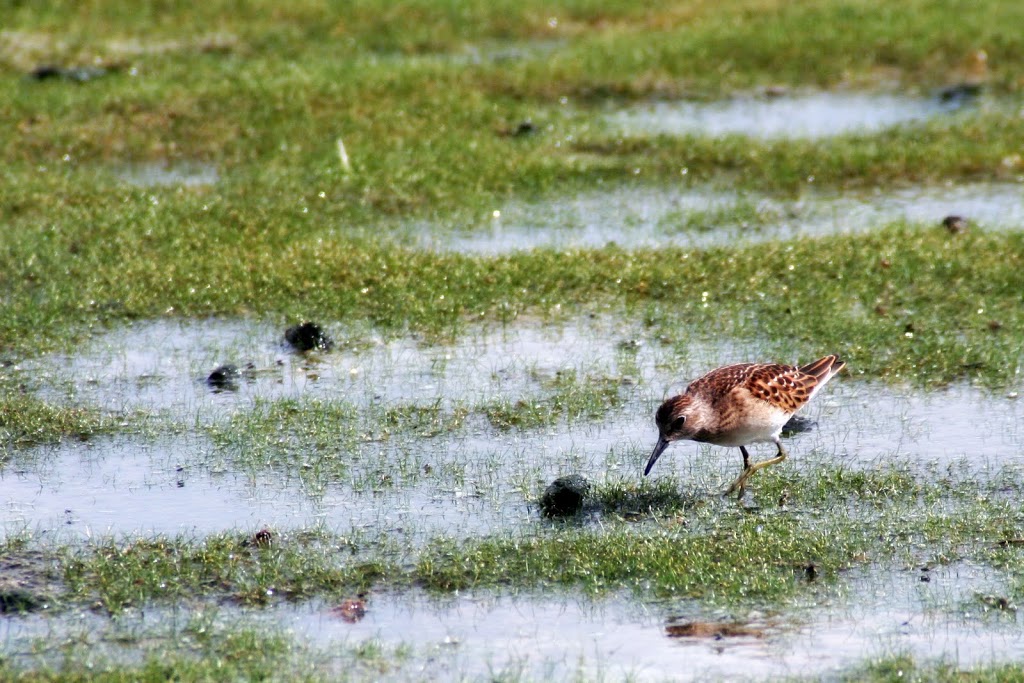
When suddenly they snap together like a magnet in the air or scatter to the blue of four directions, I’m mesmerized.

Their movements… bent airbrushed wings skimming overhead, wheeling and turning on some imperceptible cue, any one member’s slight adjustments in direction only serving to highlight the unity of the whole. They appear like a dark cloud detached from the sky showing the gray of their backs, then vanish into the glitter and glare as they wheel to display the white of their underbellies, then reappear at some distance away, as if by magic.

Let others ponder over their ID; I’m happy to know it of course, but it does little to affect their magic in me.

Skywatch Friday: Jamaica Bay Birders

The Jamaica Bay Wildlife Refuge is one of the most important urban wildlife refuges in the US and is renowned as a prime birding spot where thousands of water, land and shorebirds stop during migration, with more than 325 species having been recorded in the past 25 years.

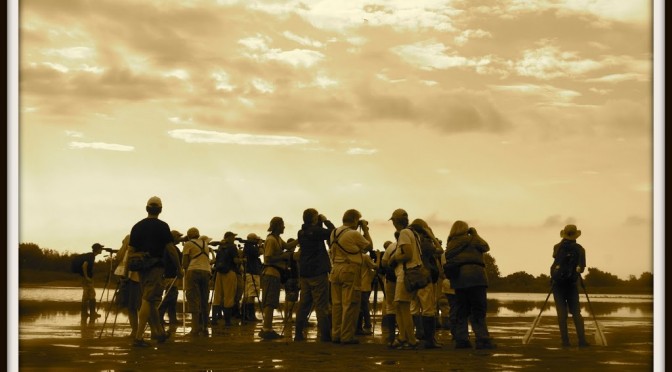
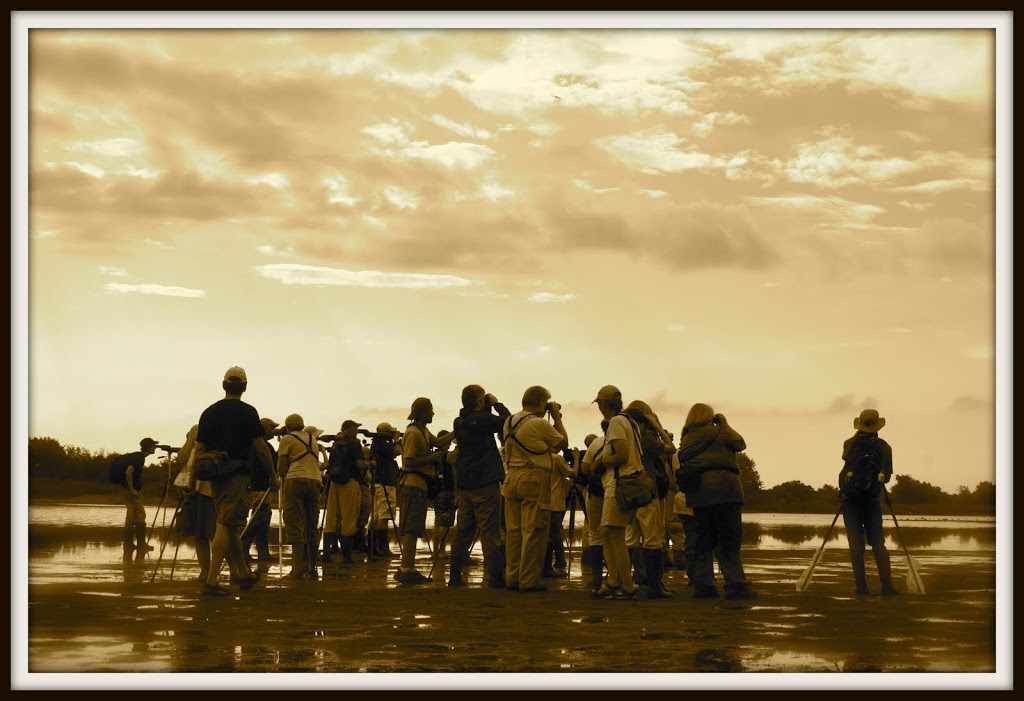
Our group of ten or so, minus those couple who were afraid of a little rain (Hi Patrick! Hi John!), grew and mingled and shrank throughout the day. This pic was taken early, before we were very muddied and before the storm clouds had passed us by.


Visit here for more skywatch posts.

Telltale

Their cries echoing a melancholy end to the carefree days of summer, shorebirds concentrate at a few scattered places along their migration routes to fatten themselves up and bewilder those birders foolish enough to attempt separating one species of nondescript shorebird from another species of nondescript shorebird.

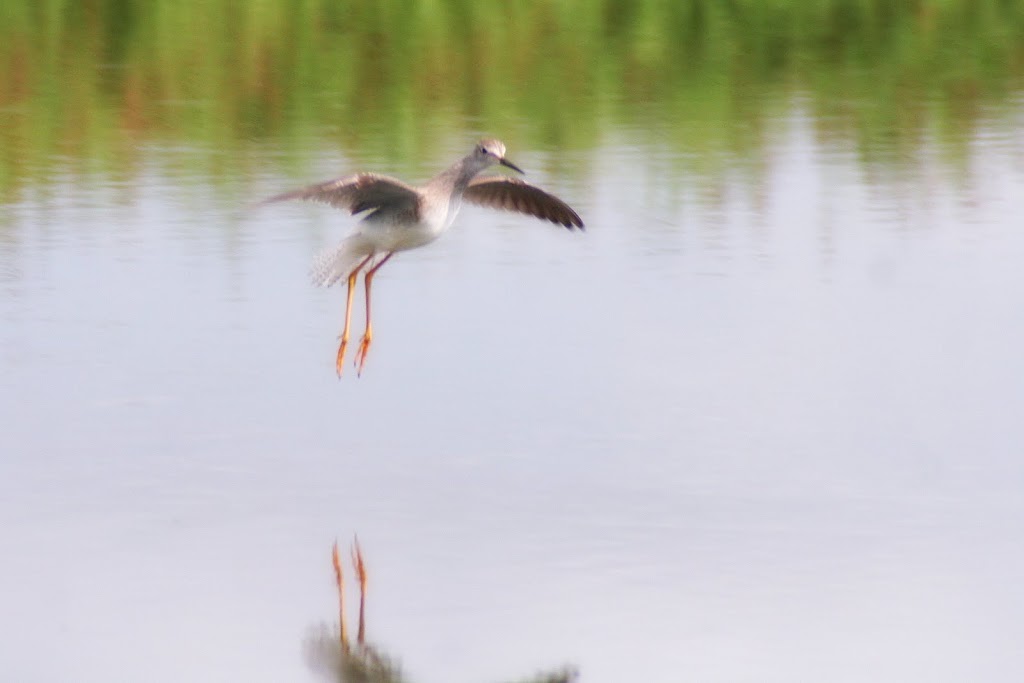
Yellowlegs, thank goodness, have those telltale yellow legs.

😉

In addition to the wealth of shorebirds, Jamaica Bay offers up-close looks at birds that are so often viewed at a great distance across the haze and shimmer of a mudflat. The difference at Jamaica Bay is that you’re standing in the midst of the birds, on the mudflat yourself… fighting for purchase among the muck as it threatens to swallow you whole or maybe just steal a shoe should you misstep…

I saw that happen to a couple people the other day… and have pics to share!

😉

I’ve avoided ever going to Jamaica Bay, mostly because it involves driving through Staten Island**, but it was a great day and I couldn’t resist the chance to meet some other bird bloggers who were there as well. I almost think I’ve learned to ID a couple sandpipers, too. Plus there was an Avocet which makes any trip worthwhile, even one through Staten Island.

More another day.

**The Staten Island thing is a family joke, but most anyone from NJ can imagine what I mean.

Birds at the beach

I wish there were something prettier to follow up that last post with, but…

I spent an hour or two at the beach after work yesterday and as much as I love it, I’m kinda scared to swim in the ocean and so mostly I just wade in a ways and try not to drown. The lifeguards here are so militant anyway, I guess because of the riptides, that they hardly let you go into the water deep enough to actually swim.

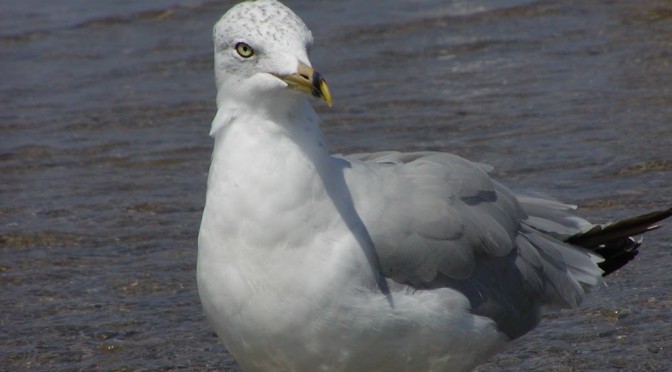
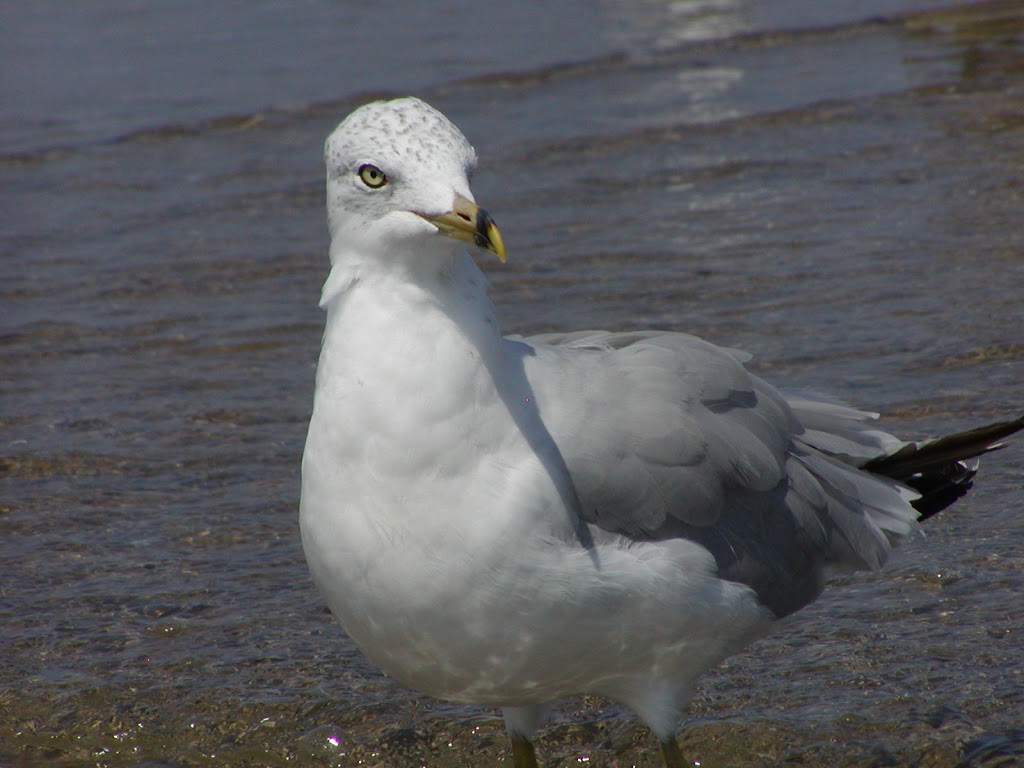
So I sat in the shallows with the gulls, letting the ocean fill my bikini bottom up with sand, just like a little kid. Fun! Gulls are pretty tolerant of people in the summertime, especially if they think you have food. They’re interesting to watch; the way they eye you over as you approach, how they watch each other and give chase if another finds an interesting morsel in the surf. They especially like pizza flavored Combos and will swallow them whole. Something really cool I saw yesterday was a bunch of those little fish the terns catch started jumping up out of the water… I guess to escape some predator down below (maybe a bluefish?)… and the gulls all got up at once and were grabbing those tormented fish right out of the air! I’ve even watched the burly gulls try to sneak up on a lone sanderling… explains why sanderlings are so flighty, I guess.

Terns are my favorites; probably I could watch them all day. I guess their young have recently fledged and the parents are still feeding them while they learn to fish for themselves. It seemed they were fishing in pairs and the adult would return to the sand with a fish in its bill, young one following behind, and land to feed the baby… sweet! Anyone else ever see that? I would think terns are acrobatic enough to be able to do a fish exchange in mid-air and wonder why they bother to land at all.

The laughing gulls are starting to look all disheveled… the summer’s drawing to a close, I guess.

Anything interesting happening with the birds in your neighborhood?

Three reasons I got nothing done today

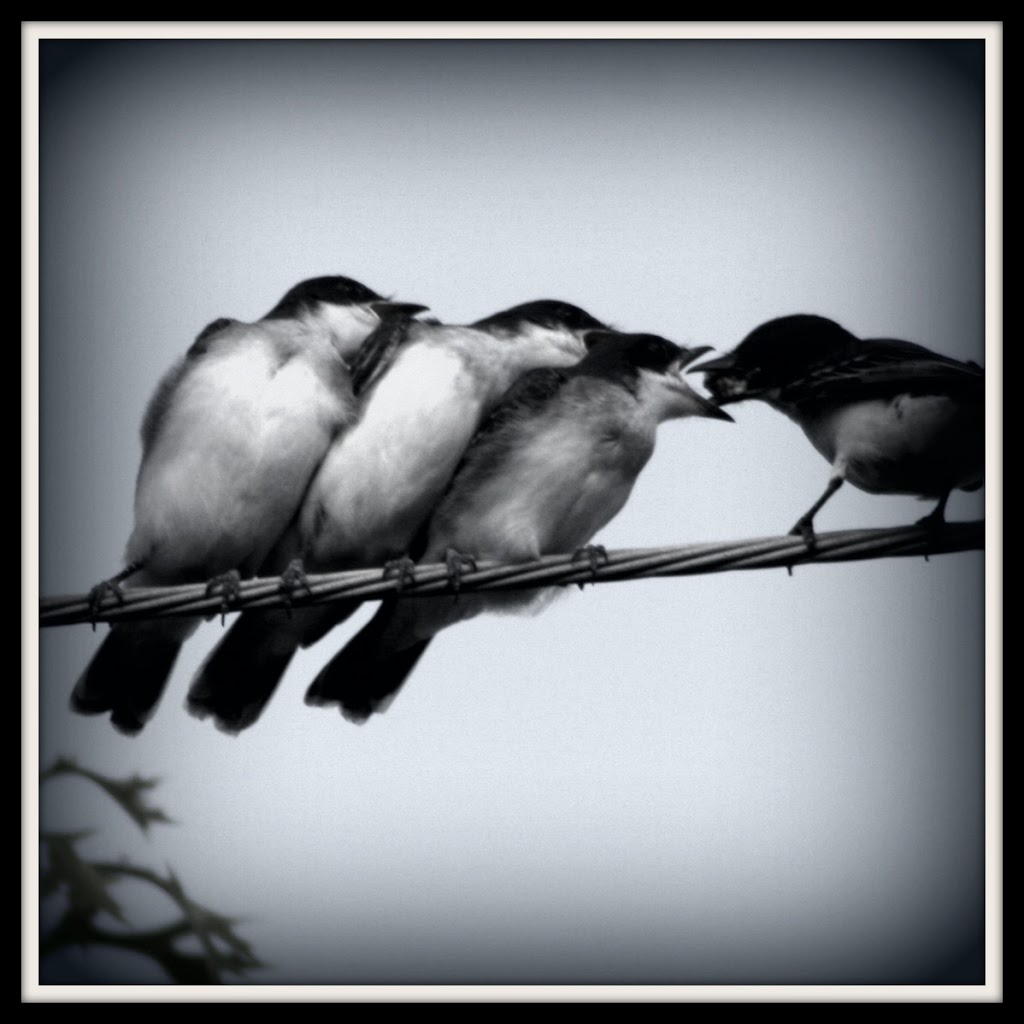
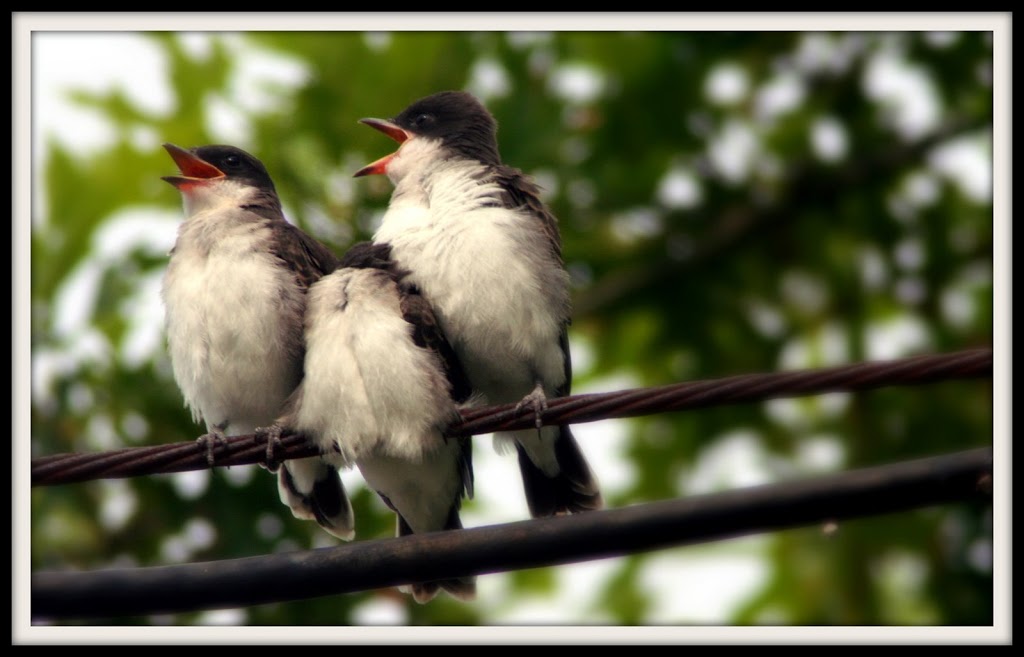
Is there any sweeter distraction than that of baby birds?

Oh and don’t worry about the one in the middle… it does have a head. I think it might just have been mid-nap when I snapped this pic.

THE pic I missed was when a spotty-breast baby robin perched itself as the fourth beggar in the row and was rebuffed by the parent kingbird… made me giggle for a half-hour at least.

😉

Two uses for a lily

Hmm… which is prettier?

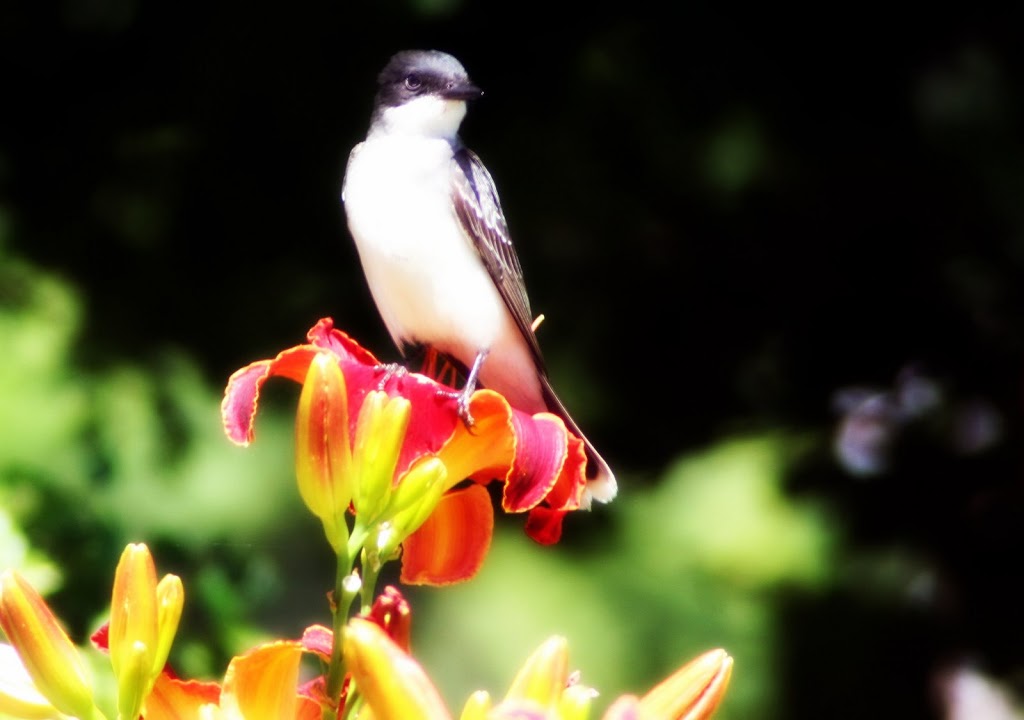
This Eastern Kingbird considers himself the watchman of the neighborhood and since they’ve bloomed, has been landing amid the small patch of daylilies beside the courtyard here.

Whether he’s just appropriating a convenient hunting perch or instead has some aesthetic sense of his own handsomeness, I’m not sure.

What do you think?

😉

The bird no one knows

Our nation’s list of imperiled species includes some celebrities… sexy ones like the Whooping Crane and the Florida Panther.

Most, however, are virtually unknown.

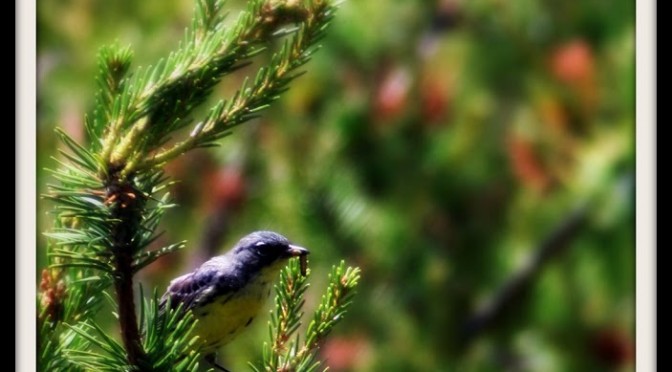
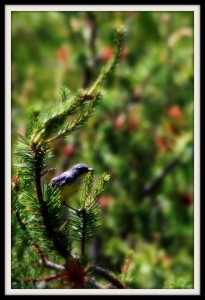
The Kirtland’s Warbler, one of the rarest of songbirds, is a specialist and nests only within a very particular habitat.

The habitat itself, even, is imperiled.

The scrubby, non-descript trees that emerge from sandy and fire-scorched terrain in isolated parts of Michigan are the bird’s touchstone. Jack Pines, like the Pitch Pines more familiar to me, require fire for regrowth.

Fire isn’t very popular in residential or commercial or agricultural areas, but the Kirtland’s depend on the mosaic of changes inherent in the destruction and subsequent renewal caused by fire.

They nest only in those areas where fire has created the conditions that select for early successional plants… plants that typify a pine barrens community. Without proper management, gradually the Jack Pines grow too tall, the canopy closes in and the grassy understory where they build their nests disappears because of low light levels.

The birds move elsewhere… or try to. Aggressive management has allowed for the hope of recovery and populations are increasing.

None of this has anything to do with what it felt like to wander in those pine plains searching for a Kirtland’s.

This is not a bird that I’d hoped ever to know.

The Kirtland’s is near mythic among birders and the makings of a pilgrimage for many.

I was just along for the ride.

Please click on the pic! It’s one of only a dear dozen or so and is especially sweet because he’s carrying food in his beak.