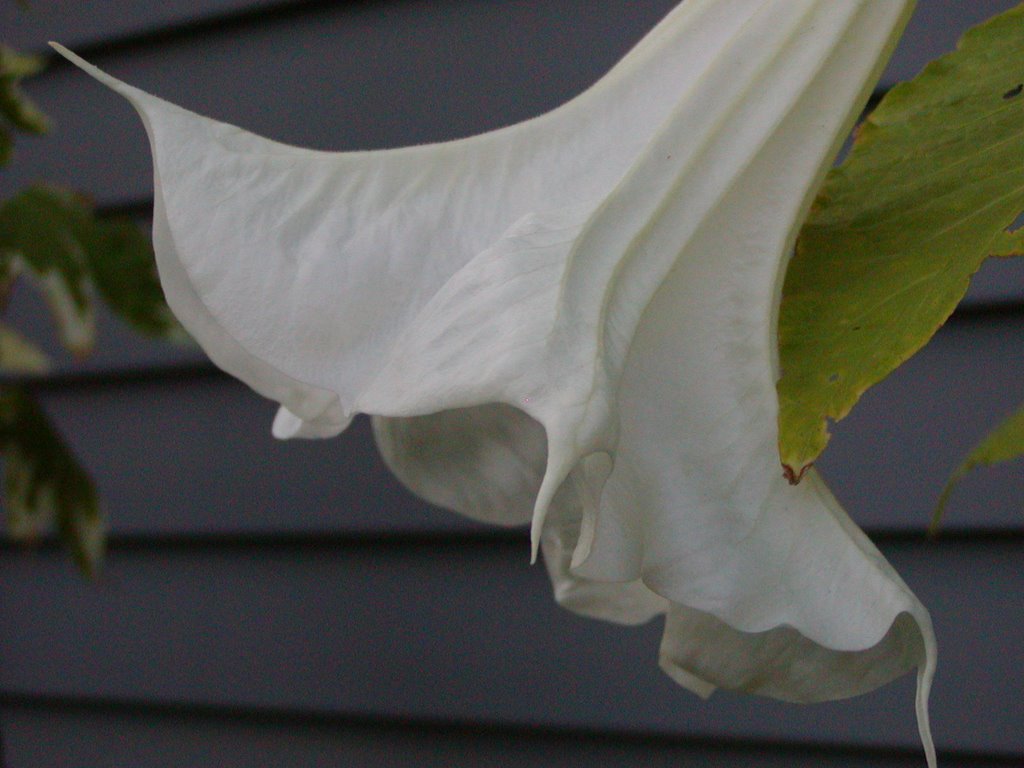
This is not the greatest of pics, but our Angel Trumpets aren’t much to look at this year. The trees are spindly and the leaves are a sickly shade of unhappy green. Now, at the end of the season, we have our first three flowers. I was hoping to show you how the flower shape of the Angel Trumpet is the same as the moonflower, only these trumpets hang downward and unfurl in the same pretty way. The flowers last a bit longer than the moonflowers, as well.
There is a bit of confusion among the common names of these plants with trumpet-shaped flowers. I’m as confused as anyone. We call White Daturas *moonflowers*, but the link I provided in my first post about them was to another plant commonly called a moonflower which is in the morning glory family. Pam, who lives in the desert, mentioned in her comment to yesterday’s post that Daturas grow there, but not moonflowers. So, I’m guessing she’s refering to Purple Daturas, of Jimson Weed fame. I guess it’s the same plant, but with a different colored flower. Both have the spiney, thorn-covered seed balls that give them their other common name, Thorn Apples. The purples do not make a nice garden plant, in my opinion, and are very weedy looking.
Angel Trumpets are Brugmansias, I think. I’m afraid to be too certain. Is everyone confused yet? The rule my DH and I follow is that if the flowers point up to the moon we call it a *moonflower* and if they point downward it’s an Angel Trumpet. Works for us!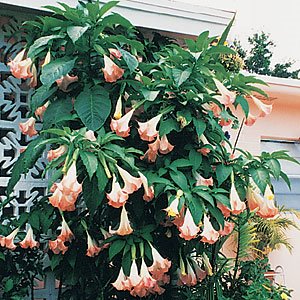
In good years, we have a few plants in large tubs that look like this one, courtesy of Birds and Blooms. Isn’t it fantastic! My father-in-law grew the most spectacular Angel Trumpets and his yard was filled with them. Quite a sight! Somewhere in the attic I have a copy of an article the local paper did about him and his flowers. The local ABC news affiliate picked up the story and interviewed him – that was something to see my in-laws on television. Wish I could have put my hands on the article to post here tonight.
Category Archives: Uncategorized
Perfuming the night
 Poised on its pistil
Getting the nod from dusk’s dawn
Night’s heady perfume
haiku by C. Gardner
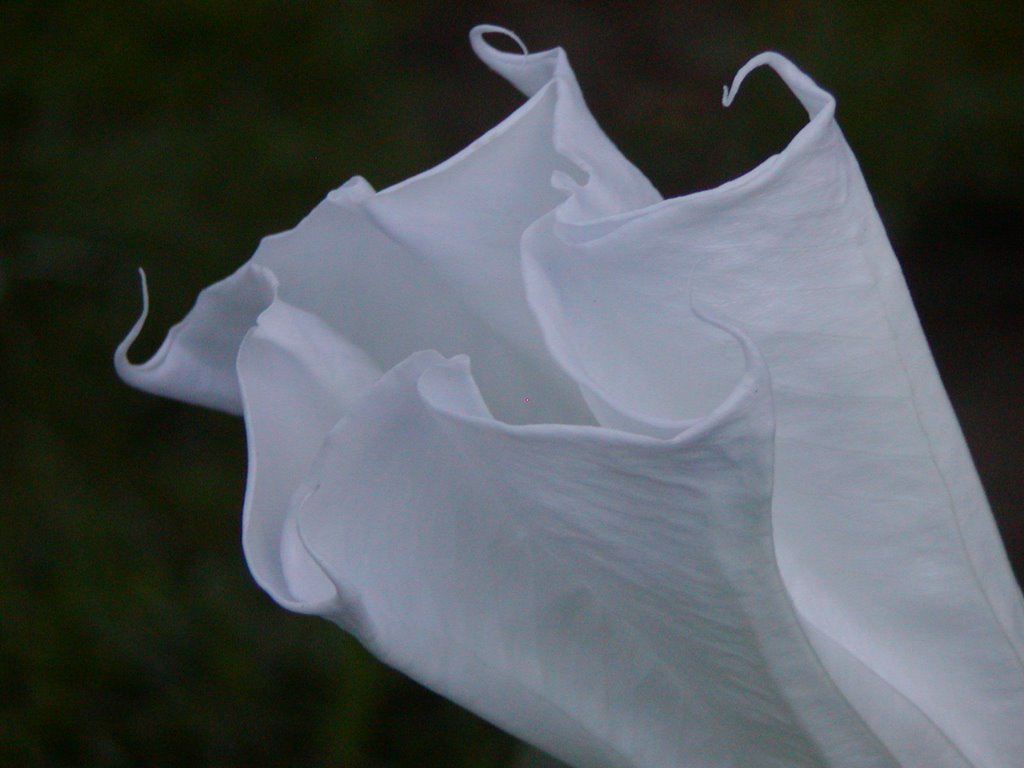
Watching the swallows and swifts this evening while I watered the garden, and waiting for the appearance of the bats overhead as my signal to go inside, I reached down to turn off the well pump and got a whiff of this moonflower – wow! Most of them are planted along the fence surrounding the pond, intermixed with day-blooming morning glories, but a few are in pots up beside the house, where on humid nights their lemony scent drifts in the windows. The smell can be overpowering enough to give me a headache, especially if we also have Angel’s Trumpets blooming. I loved the shape of this flower as it unfurled.
Some cultural info about moonflowers is available in this blog post from 6/8/06.
Riders of the wind
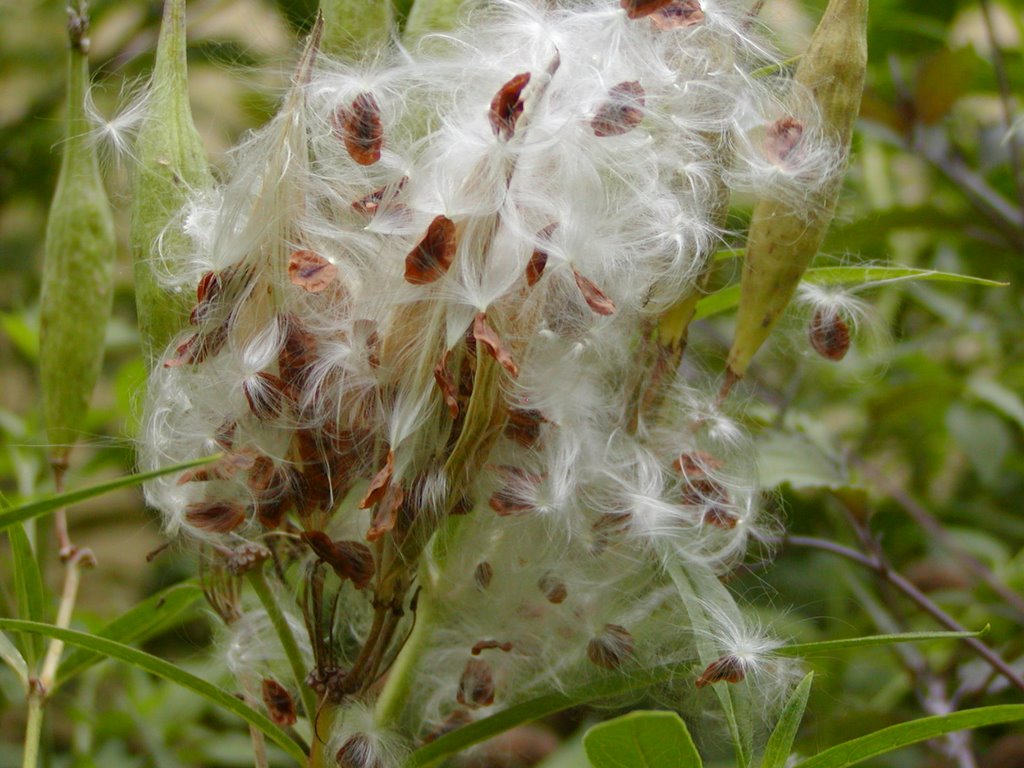 Swamp milkweed pods and seeds
“The far travelers of the plant world, the original sailors of the air in the plant kingdom, prepare their hostages to the wind. The gossamer parachutes, each with its germ of life, approach their time of departure. The winds of Autumn will bring down the leaves, but they will also carry a fragile freight of next year’s green and urgent life. Who can count the fluff-borne seeds that will fill the late September air?” –Hal Borland, Sundial of the Seasons
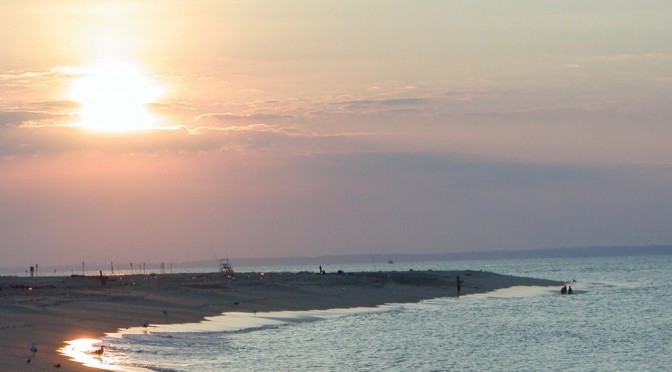
Sunset birding with the girls
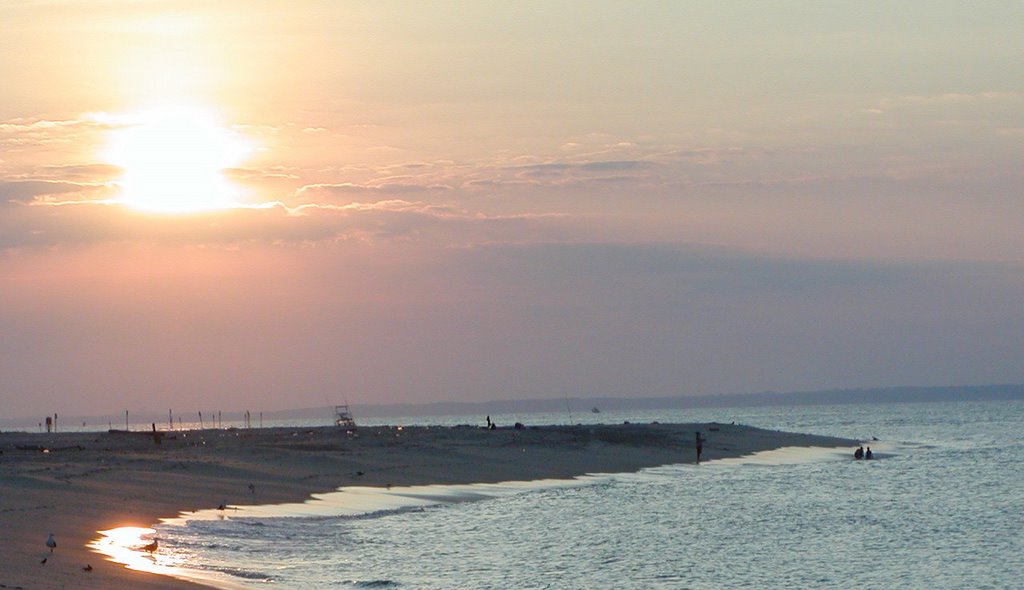 The girls I work with are good sports, for the most part. On a lark I invited them to a bird walk sponsored by Monmouth County Audubon out at Sandy Hook tonight. We’d been looking forward to it for a month or so. We arrived almost an hour late, but just in time for the *death march* out the Fisherman’s Trail to the very tip of the Hook. It’s not a terribly long walk, but the trail through the dunes is all soft sand, lined on both sides with poison ivy, beach plums (almost ripe!) and bayberry. The wind direction was good so that at least there weren’t any bugs biting to make the hike any more miserable.
We didn’t see a great number of birds, but enjoyed instead a beautiful sunset over the water. We did have nice looks at osprey, some southbound plovers, and many far away peeps. I was most impressed with th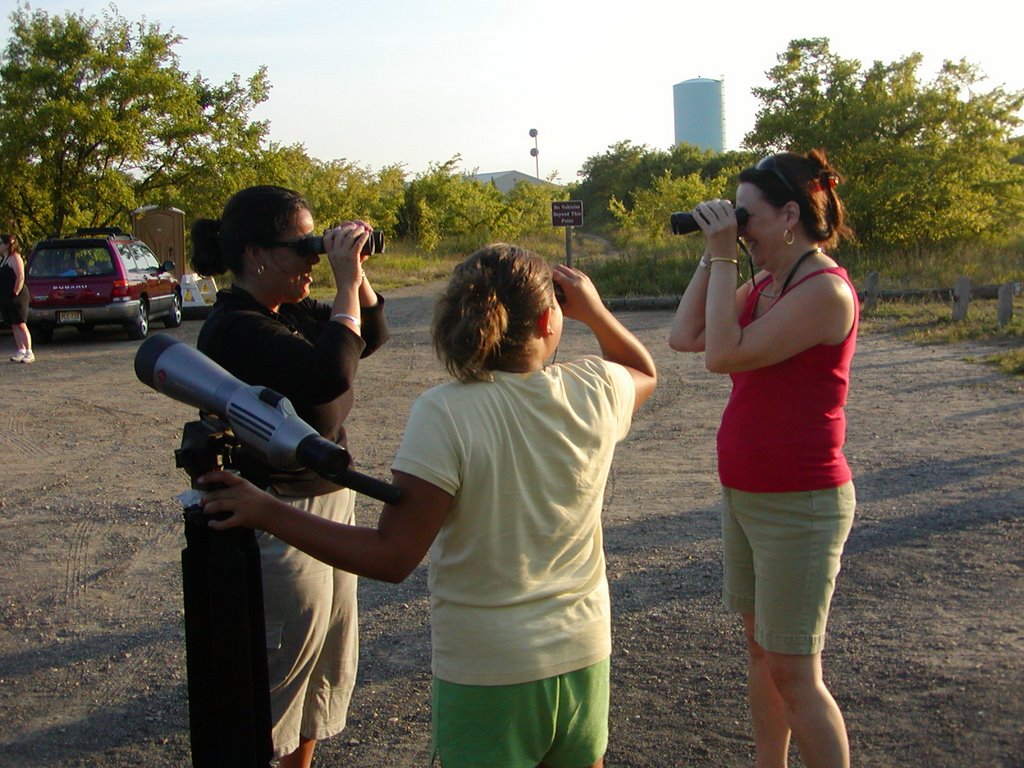 e swarms of swallows going to roost as we made our way back through the dunes to the parking lot. This wasn’t the greatest trip for getting beginners interested in birds; I knew that would be the case, but I think Sandy Hook on a summer evening is one of the prettiest places to be and any birds are just a bonus. We ended our excursion with dinner at the Chinese place around the corner from my house and I think there might have been a stop for ice cream after they dropped me home.
The photo at right above shows the Three Birding Stooges – Debbie, Linda, and Debbie’s daughter (who must be one of the cutest kids ever! – she passed up going to the fireworks tonight to come along on our walk).
Platero
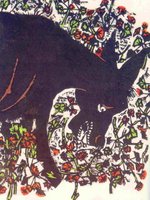 “Platero es pequeño, peludo, suave; tan blando por fuera, que se diría todo de algodón, que no lleva huesos. Sólo los espejos de azabache de sus ojos son duros cual dos escarabajos de cristal negro.
Lo dejo suelto, y se va al prado, y acaricia tibiamente con su hocico, rozándolas apenas, las florecillas rosas, celestes y gualdas… Lo llamo dulcemente: «Platero?», y viene a mí con un trotecillo alegre que parece que se ríe, en no sé qué cascabeleo ideal…
Come cuanto le doy. Le gustan las naranjas, mandarinas, las uvas moscateles, todas de ámbar, los higos morados, con su cristalina gotita de miel…
Es tierno y mimoso igual que un niño, que una niña…; pero fuerte y seco por dentro, como de piedra. Cuando paso sobre él, los domingos, por las últimas callejas del pueblo, los hombres del campo, vestidos de limpio y despaciosos, se quedan mirándolo:
–Tien’ asero…
Tiene acero. Acero y plata de luna, al mismo tiempo.” – Juan Ramón Jiménez
Most of this I typed from memory, some 15 years after having to recite it as part of a college course. One of my final classes as a Spanish major was a course in Spanish phonetics and phonology. Very difficult and scary course. I was one of only a handful of *Anglo* Spanish majors at my college; I always thought this to be a good thing because school was the only place for me to practice Spanish and I was able to practice with and learn from native speakers of the language, rather than other *gringos* like myself.
In addition to learning the phonetic alphabet (which is like a whole other language) a large part of the coursework was recitation of poetry and prose. We used many of the literary works that I had been forced to analize bit by bit in my literature courses. Only now I had to tear them apart bit by bit, re-writing each phonetically and reciting them over and over to get the pronunciation of every sound just right. Each of us had to stand in front of the class and recite. At any slight mispronunciation my professor made us start over at the beginning. Over and over we did this, day after day. Some of it was awful, tricky stuff (akin to Shakespeare), but others, like this piece, were great fun and almost a joy to recite. I dreaded taking my turn in front of the class each day and chuckled quietly to myself at the mistakes made by the native speakers. It might sound mean-spirited, but it gave me a lot of confidence to realize that their pronunciation wasn’t perfect either! This course did wonders for my accent and I’d always wished that I’d been introduced to the techniques sooner. When I was teaching high-school Spanish, I sometimes made my students do recitation, which they *enjoyed* about as much as I did. I’m sure they hated me for it, but it was good for them… and maybe they learned to love the story of Platero the donkey the way that I once loved it.
“Platero is so little, so hairy, smooth, and so soft to the touch that you might say he is made of puffy cotton, all light and boneless. Only do the mirrors of his dark eyes seem to be hard, jet-black, like two beetles, like two scarabs made of brilliant glass.
I turn him loose and he goes off straight to the meadow, fondling, caressing the blossoms, his muzzle barely brushing the tender flowers, sky-blue as the air, golden as the sun, pink and red as the sunrise and sunset… Then softly I call to him, “Platero?” and he comes to me with a happy trot, running with such a merry jingle that it seems to me like a vague tinkling, a laughter he makes…
What I give him he eats. He loves the taste of amber-colored muscatel grapes, mandarin oranges, and the deep purple figs as they burst with their crystalline honey, a sweetness of warm, golden drops…
He is tender and finicky like a young boy, a small girl, a child… but inside he is strong, he is dry like rock, like the land he walks. When I ride him on Sundays through the outskirts of the small village, down the streets, the narrow lanes, field men, the strong men, all dressed in their Sunday clothes, stand and look; slowly they watch and speak of him:
“Steel, he’s got steel…”
Yes, he’s got steel. Steel and the silvery sheen of the moonlight, and all at the same time.” – translation by Myra Cohn Livingston and Joseph F. Dominguez
Violets for remembering
 I don’t do well with house-
plants. I keep trying, though. I bring home a pretty little plant, like this African Violet, to replace the last one I killed and hope to learn from my mistakes.
I’ve always wanted to be able to grow African Violets. I was successful once with a plant given by my sister-in-law at Easter. I was very careful not to kill it and had it re-bloom for me. Then last summer I thought it might like a vacation on the patio and baked it with late afternoon sun. Silly me!
My mother grew African Violets. I remember the windowsill in our dining room lined with them in pretty pastel shades of purple and pink. I came across an old pic the other night of the first Thanksgiving after she passed away. My father, newly responsible for laying out the feast, stands at the head of the table with my mother’s violets neglected and dying on the windowsill in the background.
I must have been thinking of that photo when I brought this happy little violet home from the market this weekend. With the right combination of light, moisture, and luck I’ll line the windowsills here with violets to rival my memory.
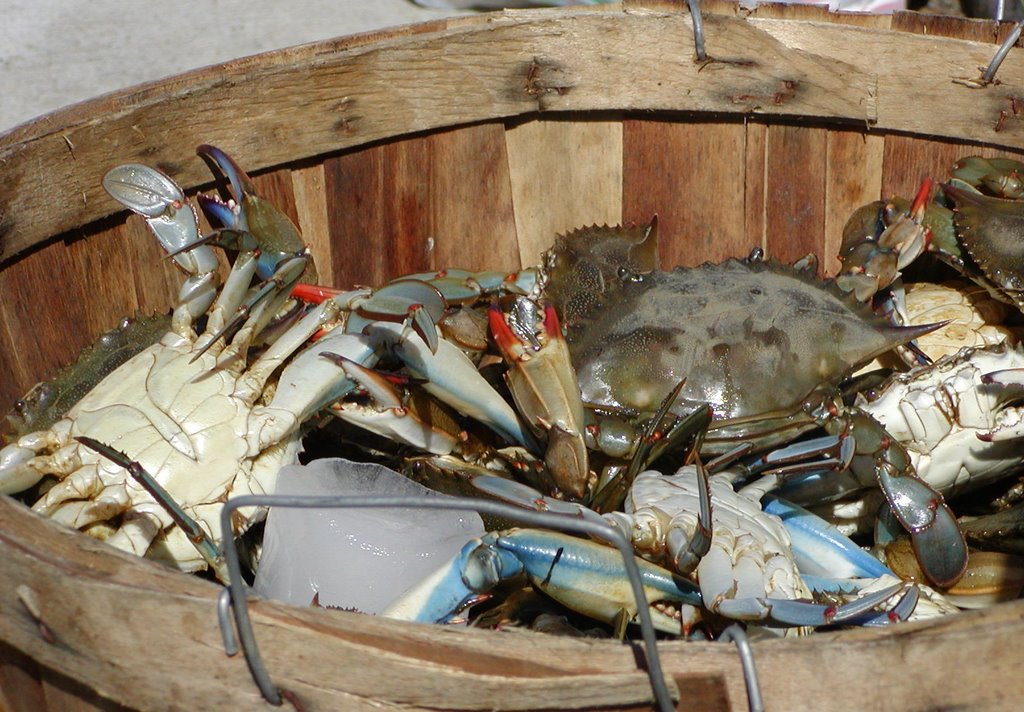
Just crabby
Who do you garden for?
 Yesterday I took a drive to Cape May County to visit two gardens: Leaming’s Run Gardens in Swainton and the Model Backyard Habitat at the Cape May Bird Observatory Center for Research and Education in Goshen. I’ve visited both gardens in the past, but always early in the Spring before things are growing well. I went yesterday hoping to see each in its prime.
Leaming’s Run bills itself as the largest annual garden in the East and a *mecca* for hummingbirds in August. I had high hopes, since my visits in previous years were so early in the season that the gardens didn’t look like much, 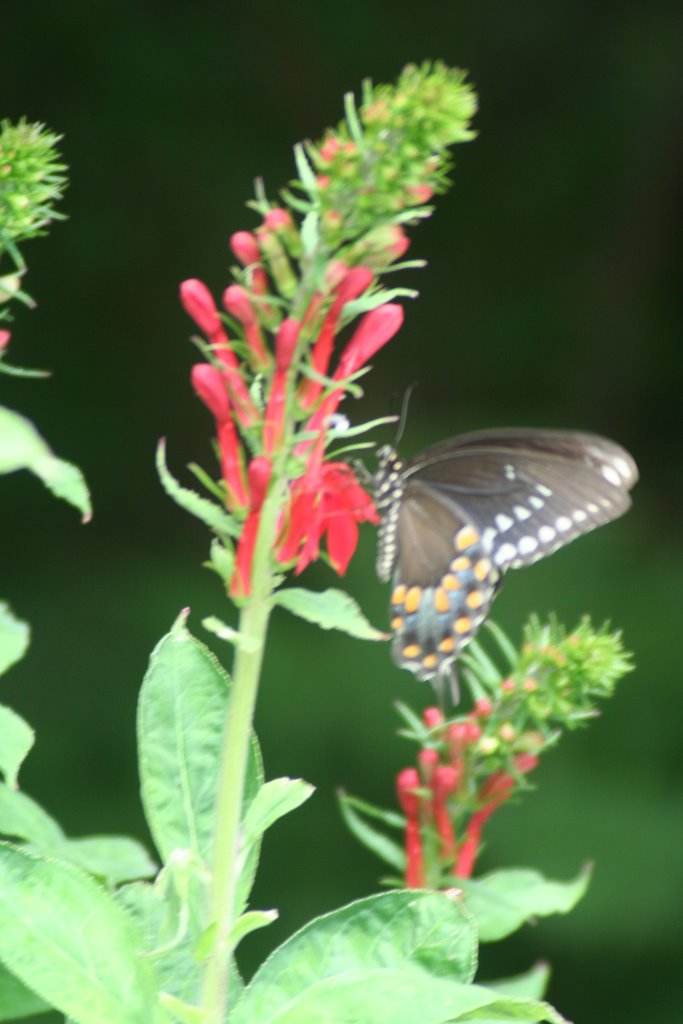 having been only recently planted.
The gardens were pretty enough, but my overall impression was that the plantings were repetitive and sterile. Granted I was less interested in the plants than I was in what was attracted to them, but I think they might include a larger variety of annuals in their 20+ individual gardens. I left having seen one hummingbird and a few swallowtail butterflies; disappointed that I had driven more than 2 hours to see many of the same flowers I have at home and fewer hummingbirds or butterflies.
I was glad to have a *back-up plan* for the day. Less than five miles away is CMBO’s model backyard ha bitat – full of pretty flowers and teaming with life. Maybe not as colorful or as neat, but certainly more interesting to the likes of me! The gardens are maintained by volunteers and are inventoried regularly for birds, butterflies, and dragonflies. Plantings are done with wildlife value as the focus. There is a wildflower meadow, dragonfly pond, Purple Martin colony, and the native trees, shrubs, and flowers are planted to benefit hummingbirds, butterflies, and other pollinators. All of the pics in yesterday’s post were taken in these gardens.
The most popular plantings yesterday were a few very lar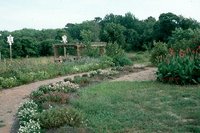 ge patches of mountain mint which were teeming with beneficial wasps and butterflies. There must have been at least a dozen hummingbirds in residence, each staking a claim to a particular feeder or flowering plant. A gentleman was there counting butterflies and told me he had seen at least 32 different species in just a few hours. The garden even caters to the taste of certain butterflies fo
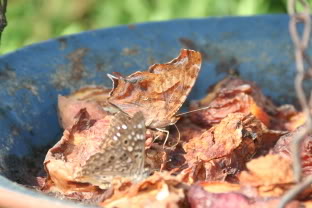 r rotten fruit. The picture at left shows a Hackberry Emperor (front) and a Question Mark *nectaring* on smelly rotting fruit. I’ve never seen either of these butterflies before and found it interesting to see how well camouflaged they are in this pic with soupy apples and peaches as a backdrop.
The visit to these two gardens, each with a particular focus, really brought home to me the value of planting with wildlife in mind. The first, while planted to draw a particular species (I never saw so much cardinal flower and that horrible red salvia in one place!) was so much less pleasing because it held no variety. The second, which represented a variety of habitats in its plantings was much more attractive and interesting – to me and the *wildlife* it provided for.
Note: The pic of the habitat garden (above right) is from CMBO’s website. Click on it for a link to one of many excellent articles on planning a wildlife garden.
Small things
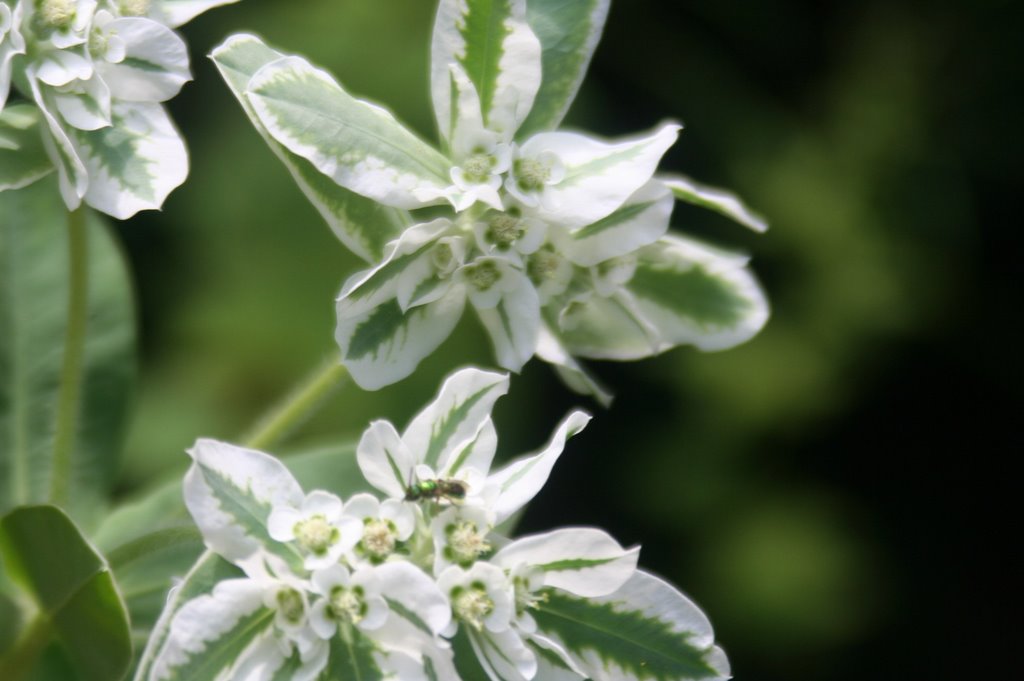 “She sat down in a weed patch, her elbows on her knees,
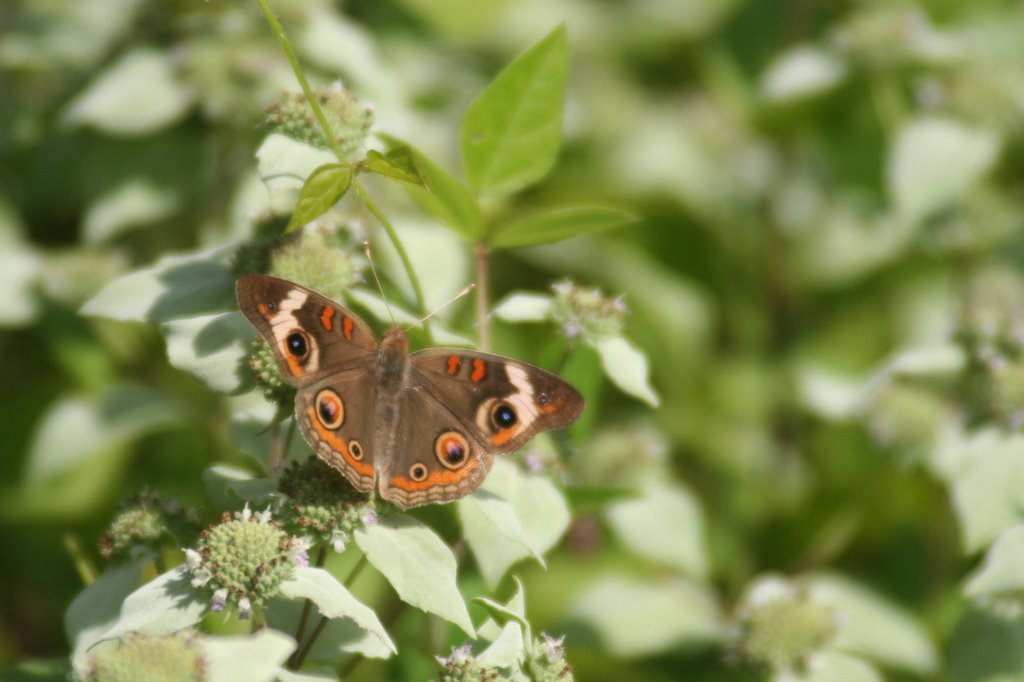 and kept her eyes on the small mysterious world of the ground.
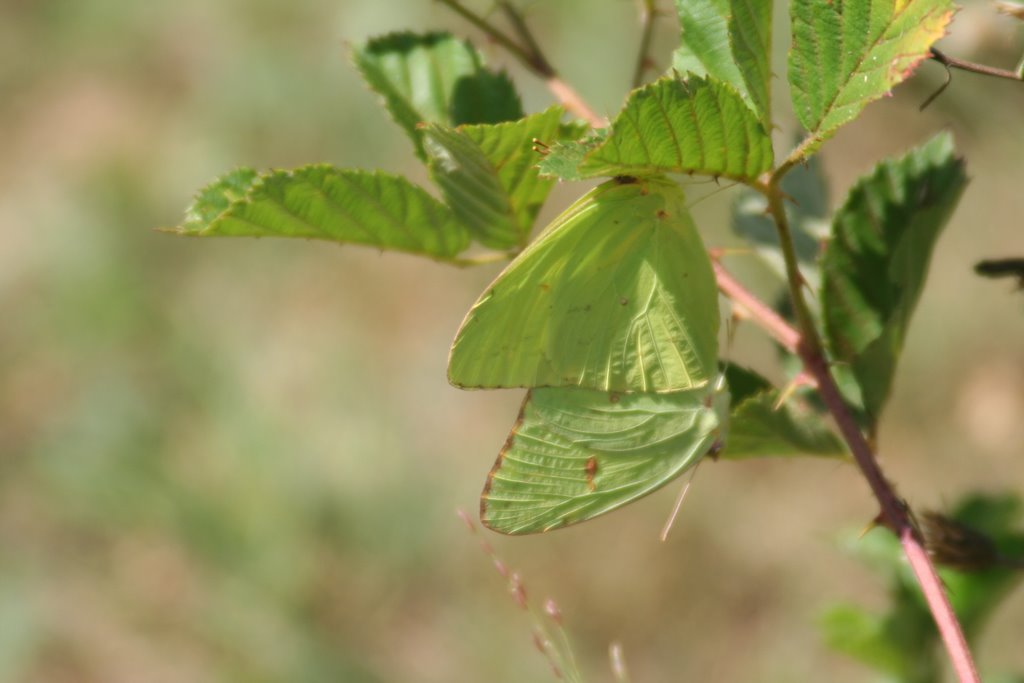 In the shade and sun of grass blade forests,
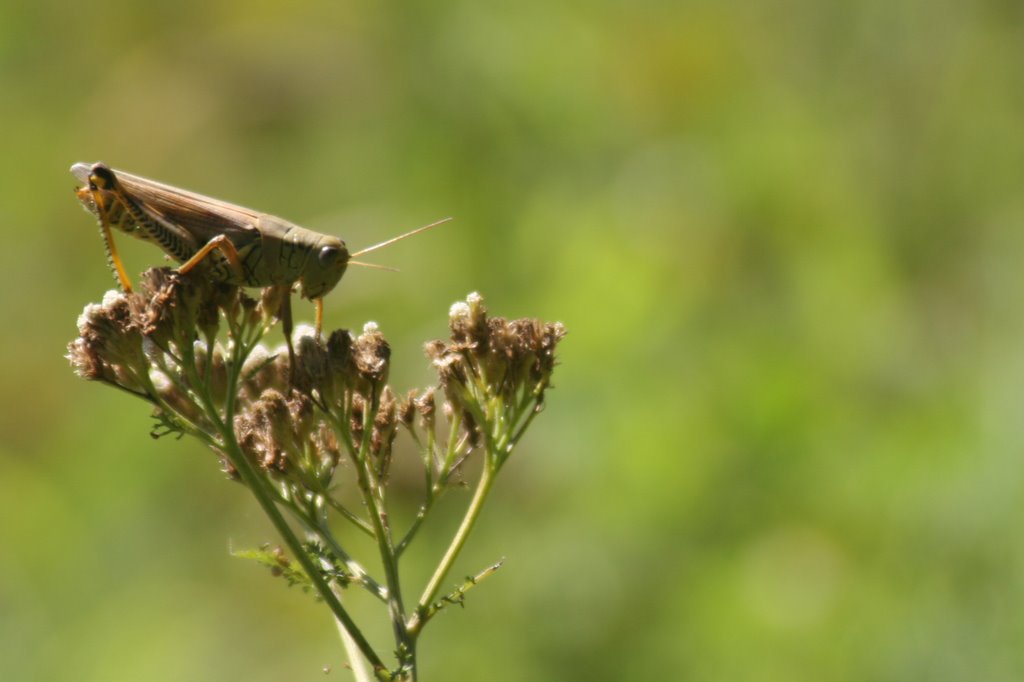 small living things had their metropolis.” – Nancy Price
NY Ironweed and other wild things
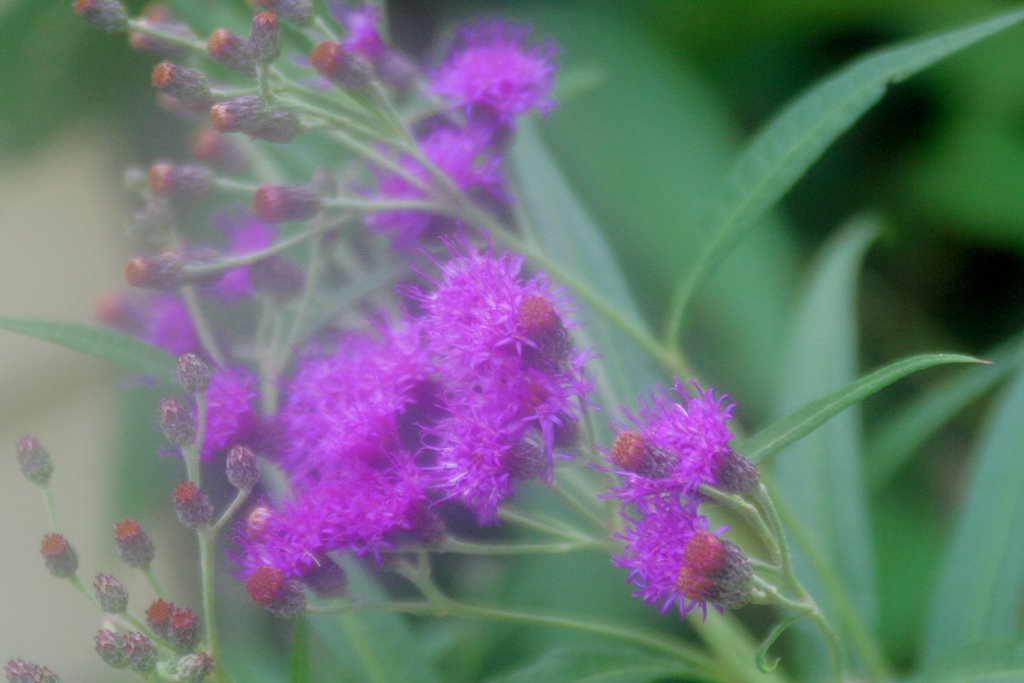 NY Ironweed (Vernonia noveboracensis) is another native that I planted because of its attractiveness to pollinators. It grows quietly in the back of the moist border with joe-pye and swamp milkweed and then blooms in late July or early August. This aster family relative is said to get its common name from the rusty color of the seedheads. The misty look to this pic is not an artistic touch; my camera fogged up last week when I brought it from the air-conditioned house out into the 100 degree heat to take this pic. I didn’t have the wherewithal to stay out long enough in that heat, so decided I liked the effect.
All of the flowers in my garden have bloomed, save the goldenrods. The joe-pye is tattered and the milkweeds are ripening seedpods.
I’ve been watching these milkweed bugs for a few weeks, waiting for them to get big enough to take a pic. When I first noticed them I thought they were aphids, but with each day they are coming to look more like their adult form. These bugs feed on the tissues and seeds of the milkweed plant, and it’s thought that they congregate in numbers like this to increase the benefit of their warning coloration to possible predators.
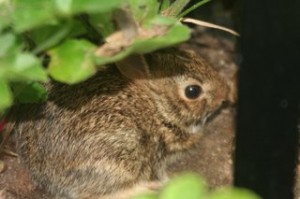 I inadvertantly soaked this little baby a few times before I learned to check beneath the geraniums before watering them. He was convinced that he was so small and so brown that I wouldn’t be able to see him under there. Mother Nature’s camouflage at work!
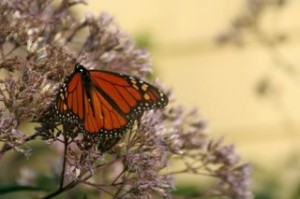 Monarchs are the most numerous butterflies in the garden this year, I’ve only spotted a few swallowtails and not even very many skippers. I spend a little time each day searching for eggs or caterpillars, but still have found none.
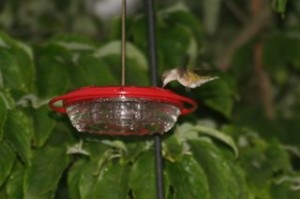
Today’s attempt at a decent hummingbird pic. I envy those of you who can manage it. I’m glad to finally be seeing them in the garden, and love to watch them chase one another around! They’ve been visiting the sugar-water feeders, but also the salvias and the little flowering maple trees.